

In response to reports of a growing number of college graduates struggling to find jobs, The Sandspur was interested in learning how Rollins students are preparing for the evolving job market. As a May 2025 Newsweek article states, “The jobless rate for workers aged 16 to 24 currently hovers below 10 percent, well above the national average of 4.2 percent”
On August 12, 2025, The Sandspur sent a survey to students asking about their professional experiences over the summer. A total of 94 students responded to the form, with some selecting that they would prefer to be quoted anonymously.
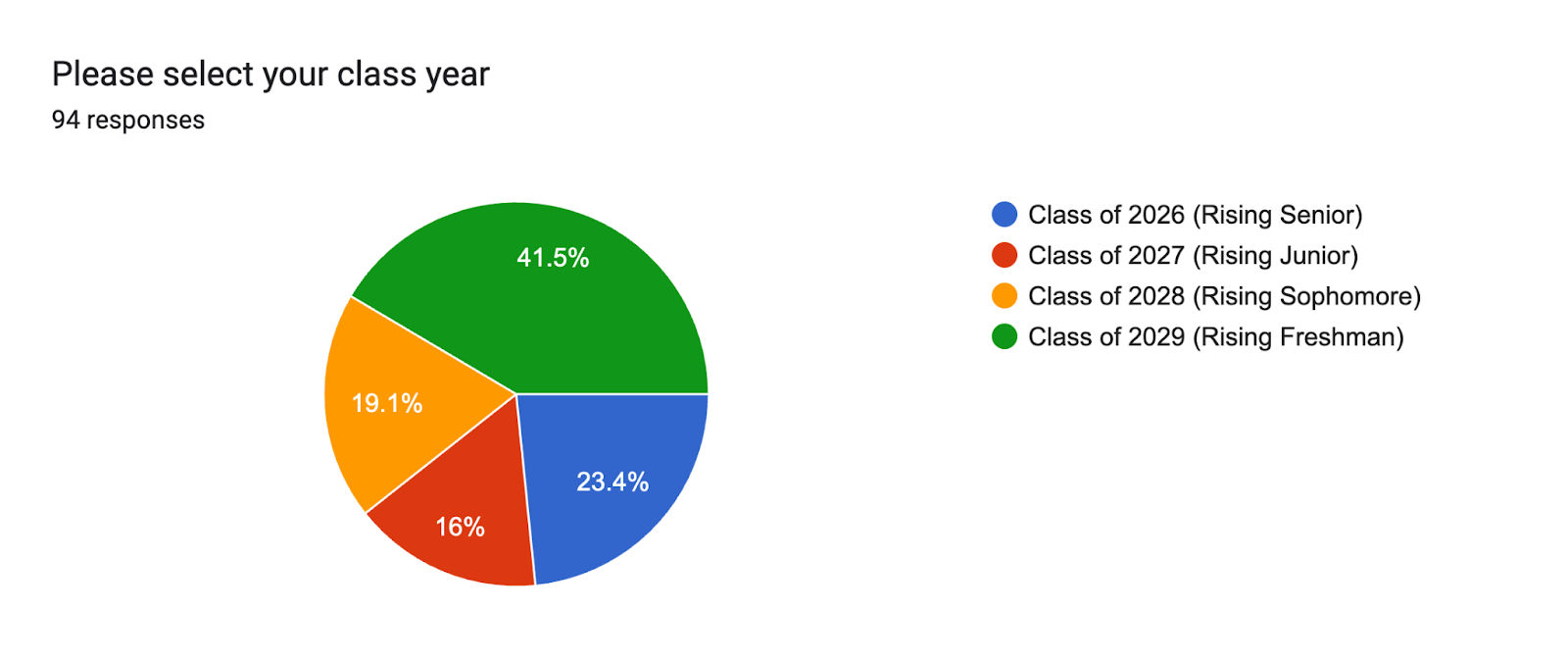
Over 40 percent of respondents were incoming freshmen, roughly 20 percent were sophomores, 16 percent were juniors, and under a quarter were seniors.
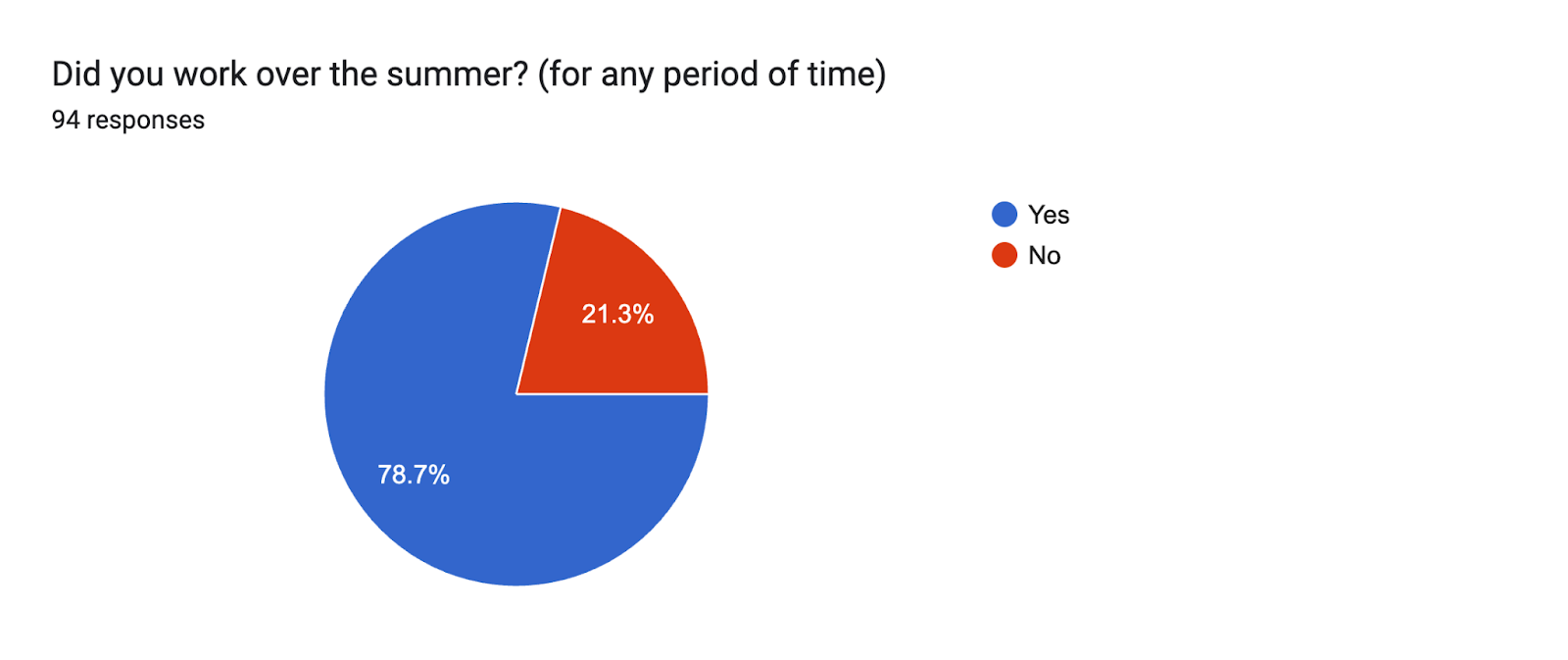
Most respondents reported participating in some form of work experience, while about 20 percent did not.
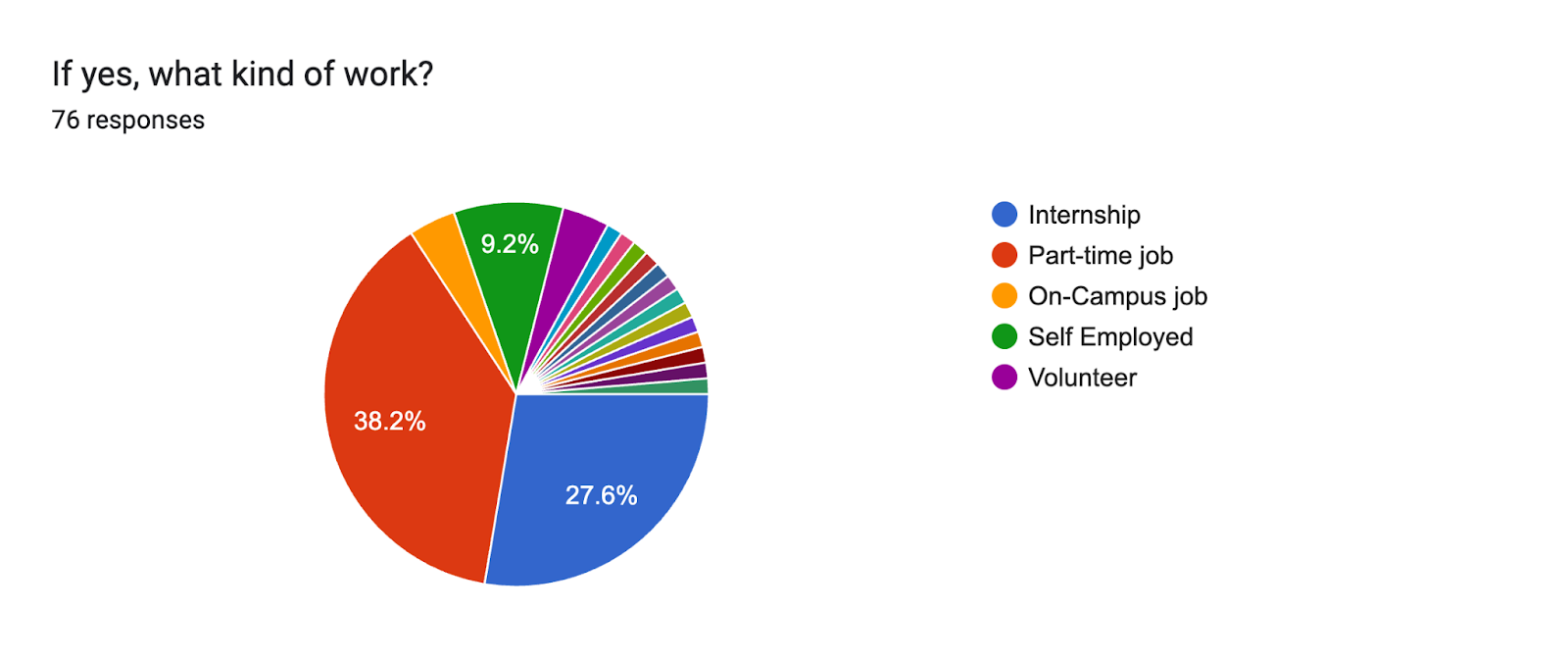
Of the respondents who were employed over the summer, nearly 40 percent worked part-time, while about 30 percent completed internships. Around 9 percent classified themselves as self-employed, and 4 percent each worked on-campus or volunteered.
Students listed a variety of job titles such as sales associate, host/hostess, receptionist, camp counselor, camp instructor, swim instructor, assistant teacher, copywriter, valet, deckhand, and bartender. Internship roles included informational technology intern, data engineering intern, software development engineer intern, lab intern, policy intern, superior court judicial intern, marketing intern, and equity analysis intern.
Several of the on-campus positions included the Bonner Leader internship, working as a peer mentor with the Rollins Inclusive Summer Engagement program (RISE), and volunteering at the Rollins Museum of Art as a docent.
When asked how they found their summer jobs, over 40 percent cited their personal networks. About 8 percent searched directly on company career websites. Almost 7 percent worked with a family business. Around 6 percent each reported using LinkedIn, Handshake, and Indeed.
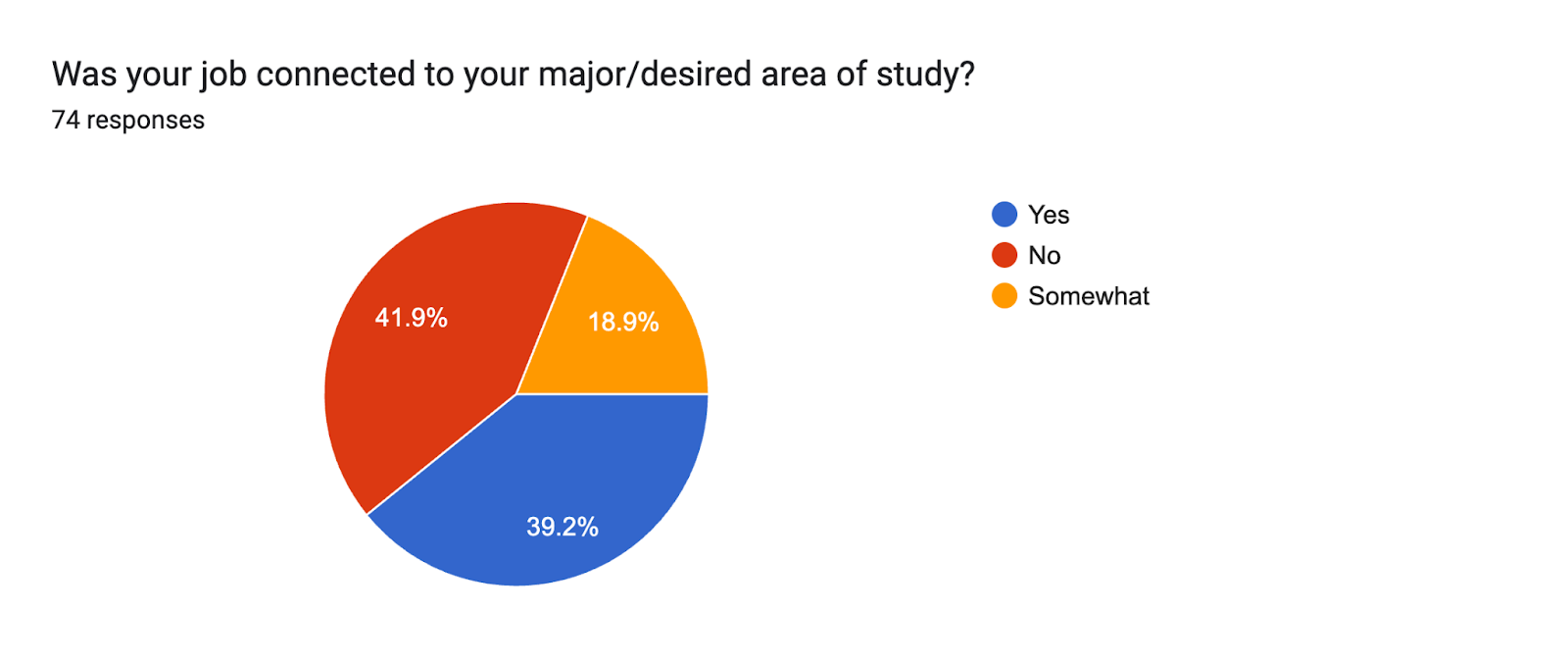
Nearly 42 percent of respondents did not participate in work related to their major or planned area of study. Just under 40 percent did, while almost 19 percent reported that their work was somewhat connected to their field of study.
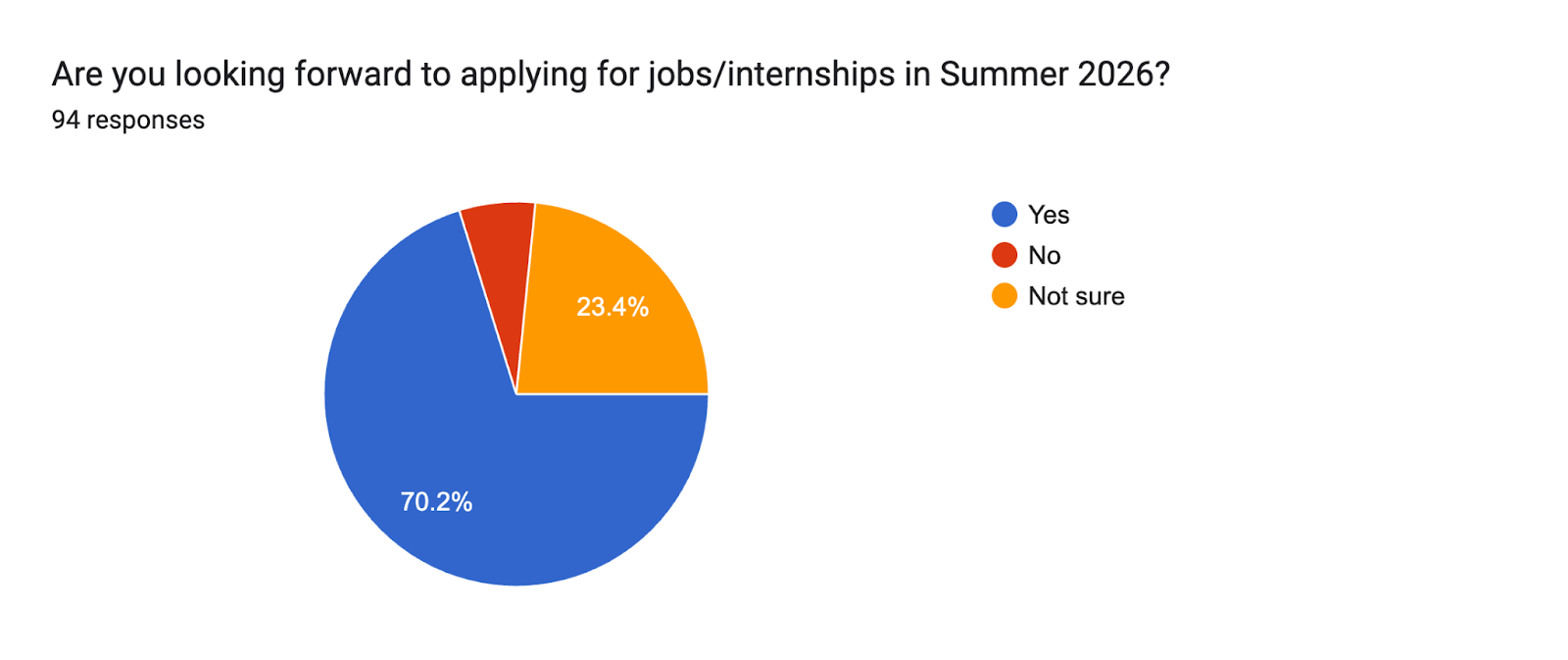
The majority of respondents expressed excitement for next summer’s job search. In the optional comments, some offered advice to students applying next year.
As one student wrote, “You must stand out. Having a degree in a field is a prerequisite. You must present yourself as someone worth investing in by your employer, as you will still have a lot to learn to be effective in your field no matter how well you did in your degree.”
Denise Santiago Sanchez (‘26) advised, “Plan ahead and start early, especially for competitive internships. Take advantage of your resources, whether it’s alumni or campus networks. Resources such as the career closet have boosted my confidence when it comes to building my professional wardrobe as a low-income college student.”
Beyond networking and building soft skills, a common theme in the advice offered was to be open-minded and apply to a variety of positions. Noting that students are not guaranteed to land their dream summer job, Zach McCown (‘26) said, “Any experience on your resume helps for finding jobs after college.”
Another student commented, “Be open to rejection. You might not always receive the intended position, but you will find the one that fits you. All you must do is be willing to put yourself out there.”
Others stressed the importance of viewing summer jobs and internships as opportunities for learning and growth. Madelynn Borgman (‘27) said, “Be confident. You know more than you think. Most importantly, ask questions. Professionals want to help you, so let them!”
Students also encouraged their peers to take chances on positions that spark their genuine interest. As Brett Carlos (‘26) put it, “Apply to whatever speaks to you! Don’t be afraid to apply! Take that chance and it might end up being one of the best experiences of your life.”










Comments are closed.