
College is a large transition. For many, attending college means moving away from home, making new friends, and adjusting to living with roommates, all while juggling the demands of classwork and being an adult.
For many, college planning is prevalent in high school, at least in an academic sense. A previous poll conducted by The Sandspur gathered data regarding students’ experiences with college prep programs, with many students reporting that they came to college prepared for the workload but not for other aspects of the experience.
On Nov. 17, 2025, The Sandspur conducted another poll asking about students’ experiences with the college transition overall and what aspects they have found most challenging. The poll was anonymous but allowed students to provide their names if they wished. We received a total of 30 responses. Though this is a limited sample, it provides insight into what areas of college students struggle with in addition to academics. We would like to conduct another poll in the future to further explore students’ thoughts on these aspects of the college experience.
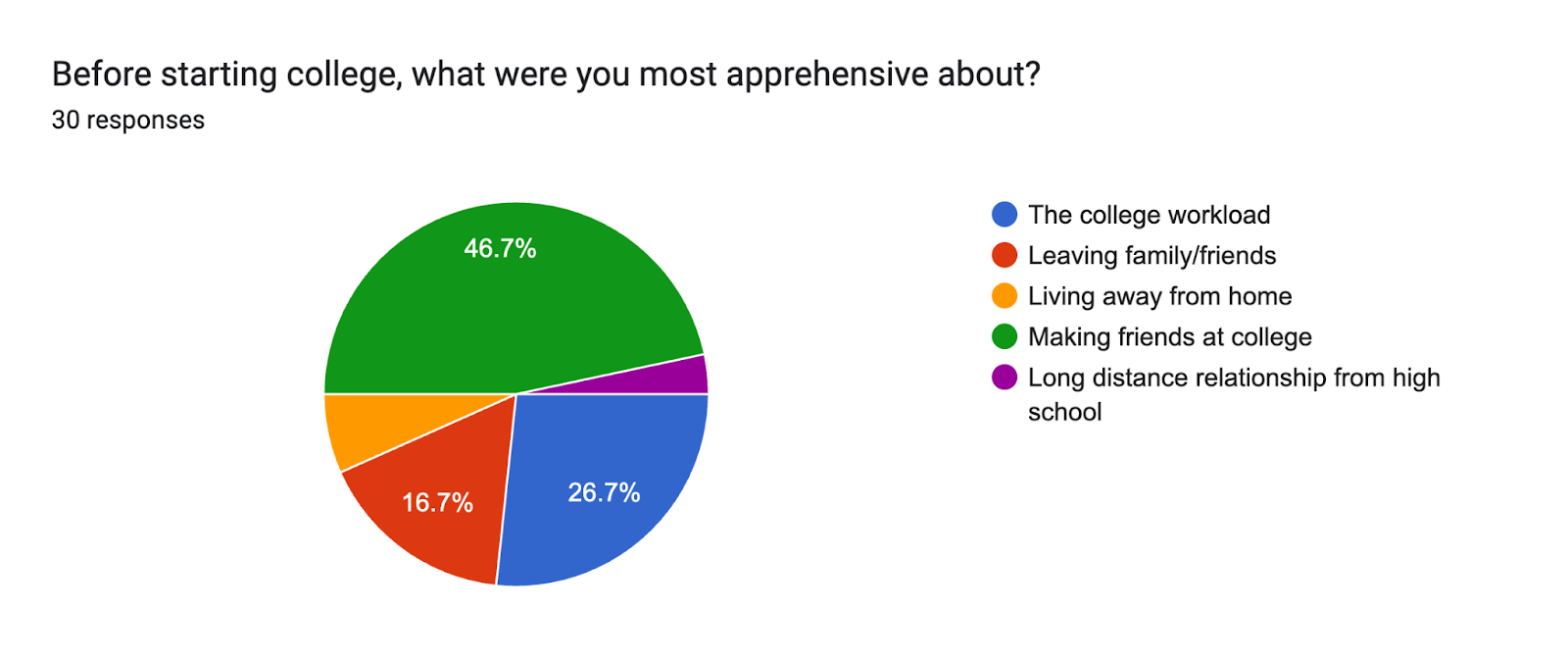
We started by asking about what students were most apprehensive about before coming to college. Around 47 percent of respondents said they were most apprehensive about making friends at college, while around 27 percent said the college workload, around 17 percent said leaving family and friends, and around 7 percent said living away from home. One student added their own option, which was a long-distance relationship from high school.
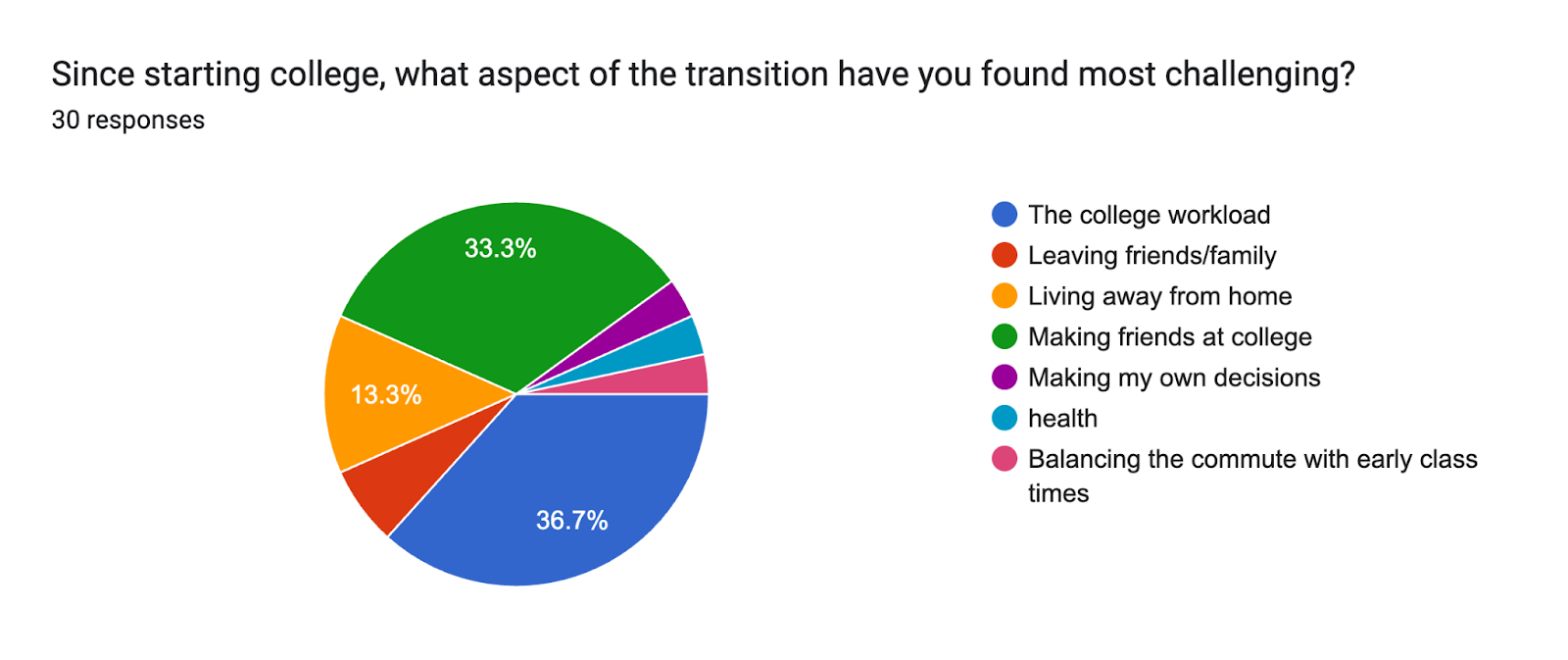
To compare how respondents’ thoughts changed, we then asked which aspect of college they’ve found most challenging since starting and provided them with the same list of options. Around 37 percent of respondents said they’ve found the college workload most challenging, while around 33 percent said making friends at college, around 13 percent said living away from home, and around 7 percent said leaving friends and family. Three students each added their own options, which were making their own decisions, health, and balancing their commute with early class times.
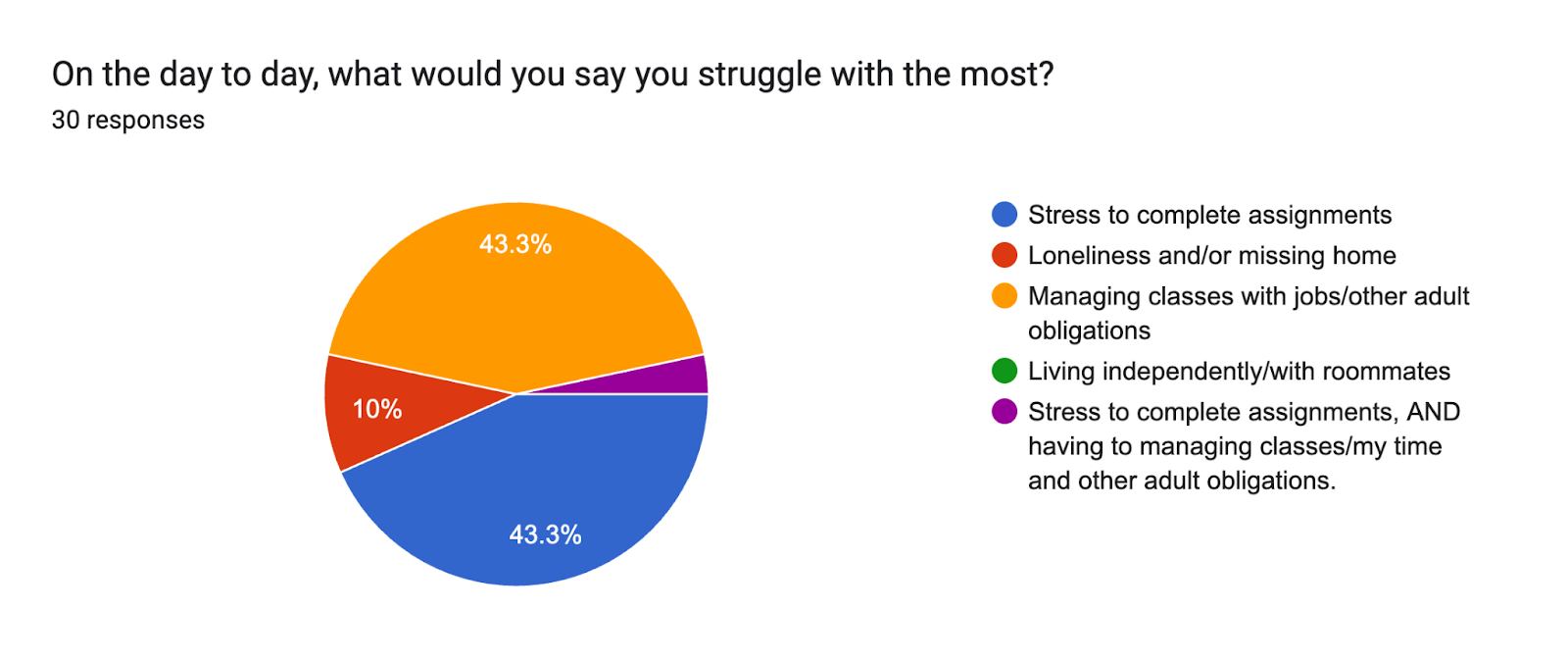
When asked what they struggle with most on the day-to-day, just over 43 percent of respondents said managing classes with jobs/other adult obligations, while another roughly 43 percent reported stress to complete assignments. Another 10 percent said loneliness and/or missing home, and none of the respondents said living independently/with roommates.
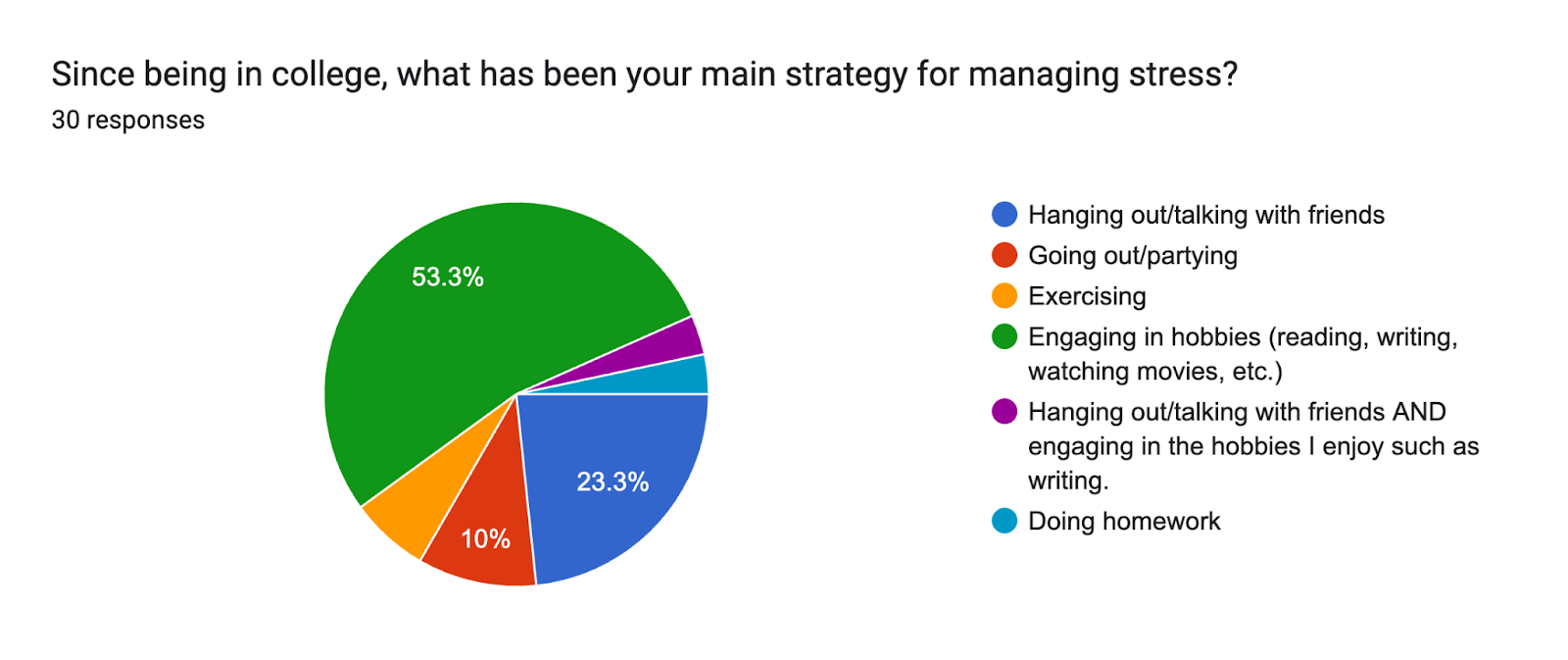
We then asked about respondents’ main strategies for managing stress since starting college. Around 53 percent said engaging in hobbies, around 23 percent said hanging out/talking with friends, 10 percent said going out/partying, and around 7 percent said exercising.
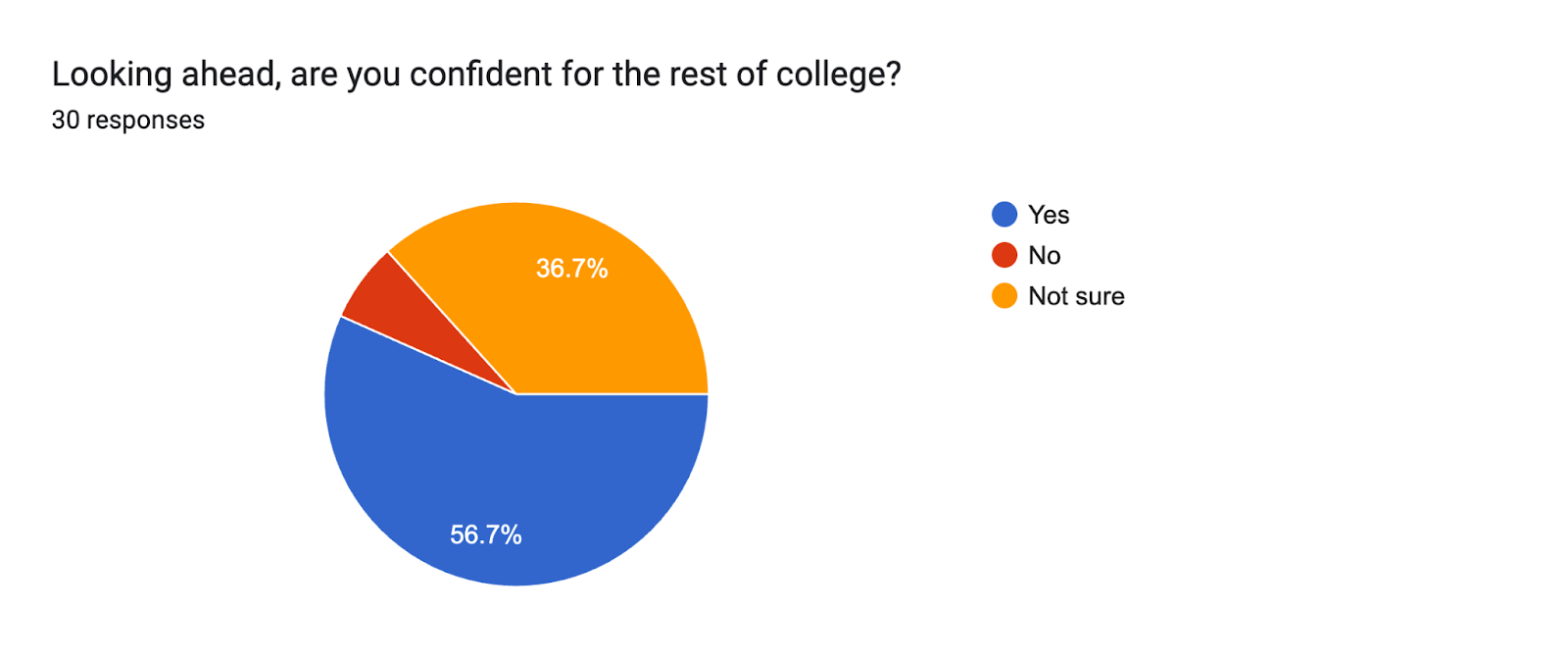
When asked if they were confident for the rest of college, around 57 percent of respondents said yes, around 37 percent said they were not sure, and around 7 percent said no.
Respondents were given the option to comment on whether there is any aspect of their college experience they think could be better. One student commented that the tuition could be lower, while multiple students reported wishing that the school was more accommodating for those with disabilities, some specifically citing learning disabilities. Another student commented on the high standards put on students to excel in their fields. “I feel like a lot of pressure comes from feeling like we as college students always have to strive to love our jobs and work so hard to be the best ever, when in reality, being comfortable and feeling content with your job at whatever level of that job is more important,” the student wrote. “I wish I was told more that it’s okay to not be the most innovative, or most amazing, and instead it’s okay to just get through it at my own personal level.”
Another optional question asked respondents to comment on anything they felt all students should know before starting college. Multiple respondents touched on the importance of taking advantage of opportunities and trying new things. “Don’t doubt yourself; put yourself out there and learn on the hot plate,” one student wrote. “It’s okay if you still feel unsure about what you’re doing,” another student added. “You’re not alone in changing and growing.”
Taking this poll into account, we can see that students’ struggles with transitioning to college are not strictly academic. College is not just about adjusting to class workload, but learning how to be an independent adult and navigate other challenges on top of juggling school. The data suggests that engaging in hobbies and spending time with friends is important, as taking breaks is an essential part of recharging.
Students may find it helpful to remember that college is a phase, and one of many in adult life. As one student commented, “Life doesn’t peak here; college is a steppingstone to a great career and many opportunities.”





Comments are closed.