
Classical violin at a collegiate or conservatory level demands years of time and dedication. High-performing violinists at a conservatory or music department are expected to perform virtuosic pieces, such as Paganini’s 24 Caprices to Wieniawski’s Polonaise. Many pursue further education in masters’ programs, performing in college orchestras and chamber ensembles, and learning musical theory that supports their performance knowledge. Pre-conservatory students at the Peabody Preparatory School are recommended to practice up to four hours a day, in addition to regular rehearsal in ensembles and solo performances. Concertmasters, the principal first violinists in an orchestra, can attract salaries above $500,000 per year.
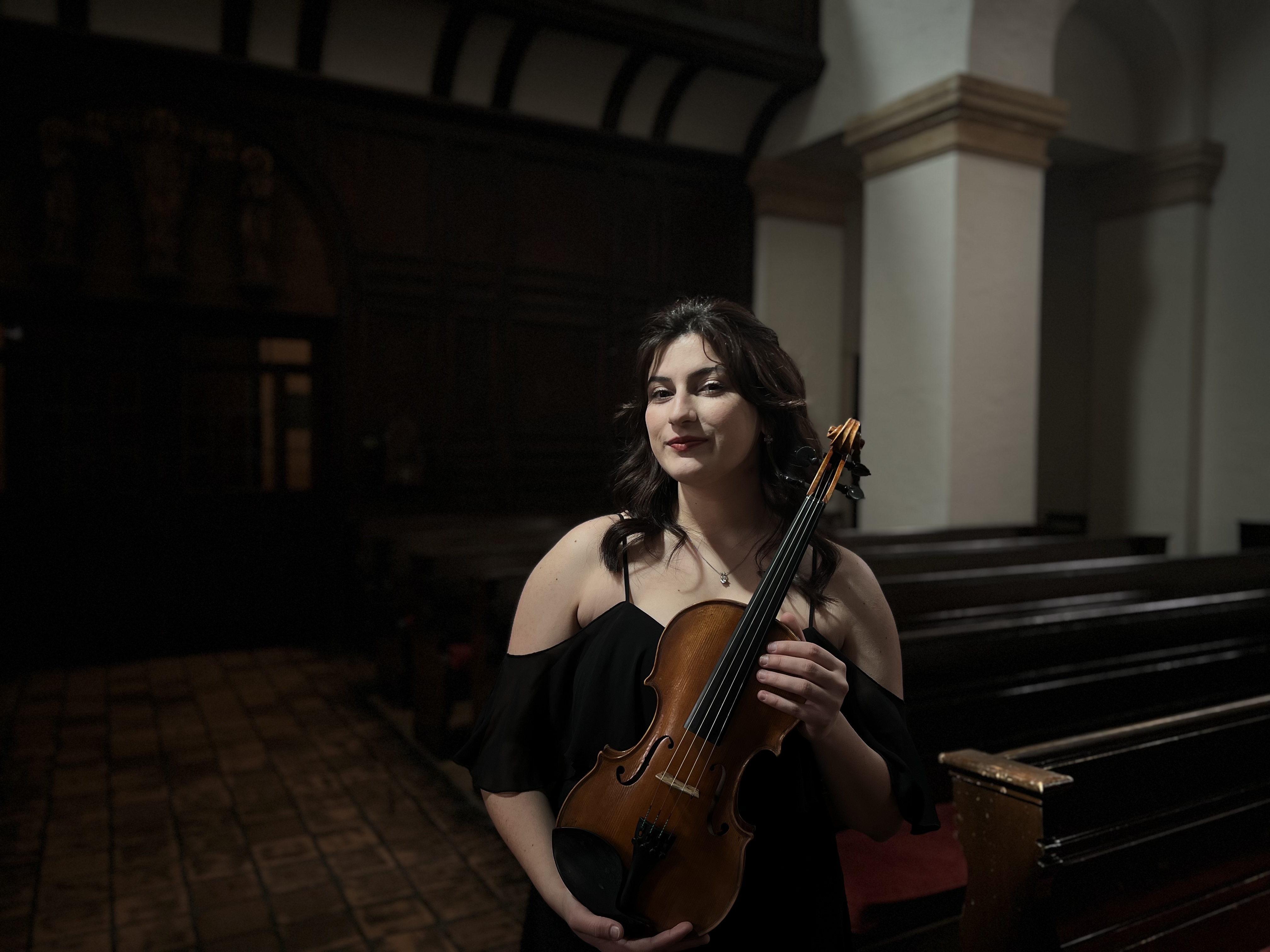
A violinist’s senior recital is a distinct step from student to performer. It is the moment when a student steps onto the public stage with a style and approach of their own, informed by years of technical training and influence from lesson teachers. Rollins student Aysima Anik’s (‘26) recital on Friday, April 3, was that moment, documented by composer and professor Dr. Daniel Crozier as “a tremendous recital in both scope and repertoire.”
Anik performed a program of works rarely heard from an undergraduate student. She opened the hourlong concert with a solo sonata by Eugène Ysaÿe; followed by Brahms’ Violin Sonata No. 3 in D minor, Op. 108; Saygun’s Demet; Crozier’s “Rose of Sharon;” and to close, Wieniawski’s Polonaise de Concert, Op. 4. To be effective, the ambitious program necessitated an “expressive and sincere performance,” as Crozier noted, which Anik delivered with a composed and confident rendition of Ysaÿe’s Ballade that set the tone for the evening. The other pieces were accompanied by Kristine Griffin, a pianist who had been a “staunch advocate” for the program and particularly for Crozier’s composition “Rose of Sharon.”
Anik believes that the opening piece on the program – the Ballade composed by Ysaÿe – was also “the most challenging piece in [her] repertoire.” Solo sonatas such as the Ballade are performed entirely from memory at recitals such as Anik’s.
“That piece was the hardest piece I’ve played, period. The Ballade was written for George Enescu, a friend of Eugene Ysaÿe’s (as all six of his solo sonatas were). The friends,” to whom the pieces were dedicated, “were also amazing composers and violinists.”
“In this piece, Ysaÿe uses a lot of tritone suspensions and uneasy chords. He’s doing almost everything possible on the violin, while still having the original theme,” holding the challenging, virtuosic sections into a cohesive sonata. As to why she chose the most difficult piece to perform first, Anik noted: “opening my recital with the most challenging piece was a statement. Originally, I wasn’t planning to do it, as I wasn’t sure I could learn it so quickly after my graduate school auditions. I knew I wanted to open with a solo piece, I wasn’t sure about the piece, but my professor [Joni Roos] was very supportive, trusted me, and gave me the confidence to perform the piece.”
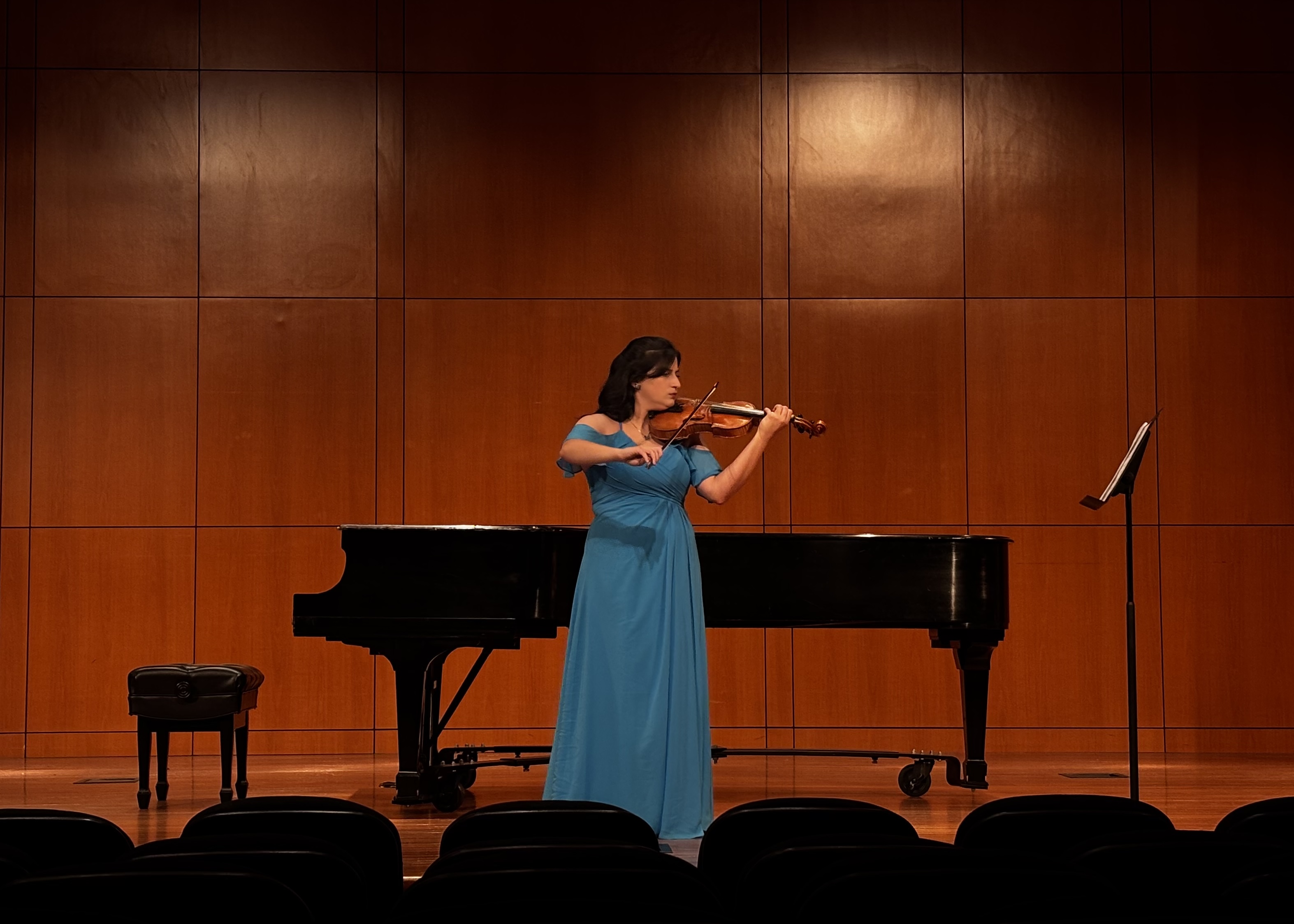
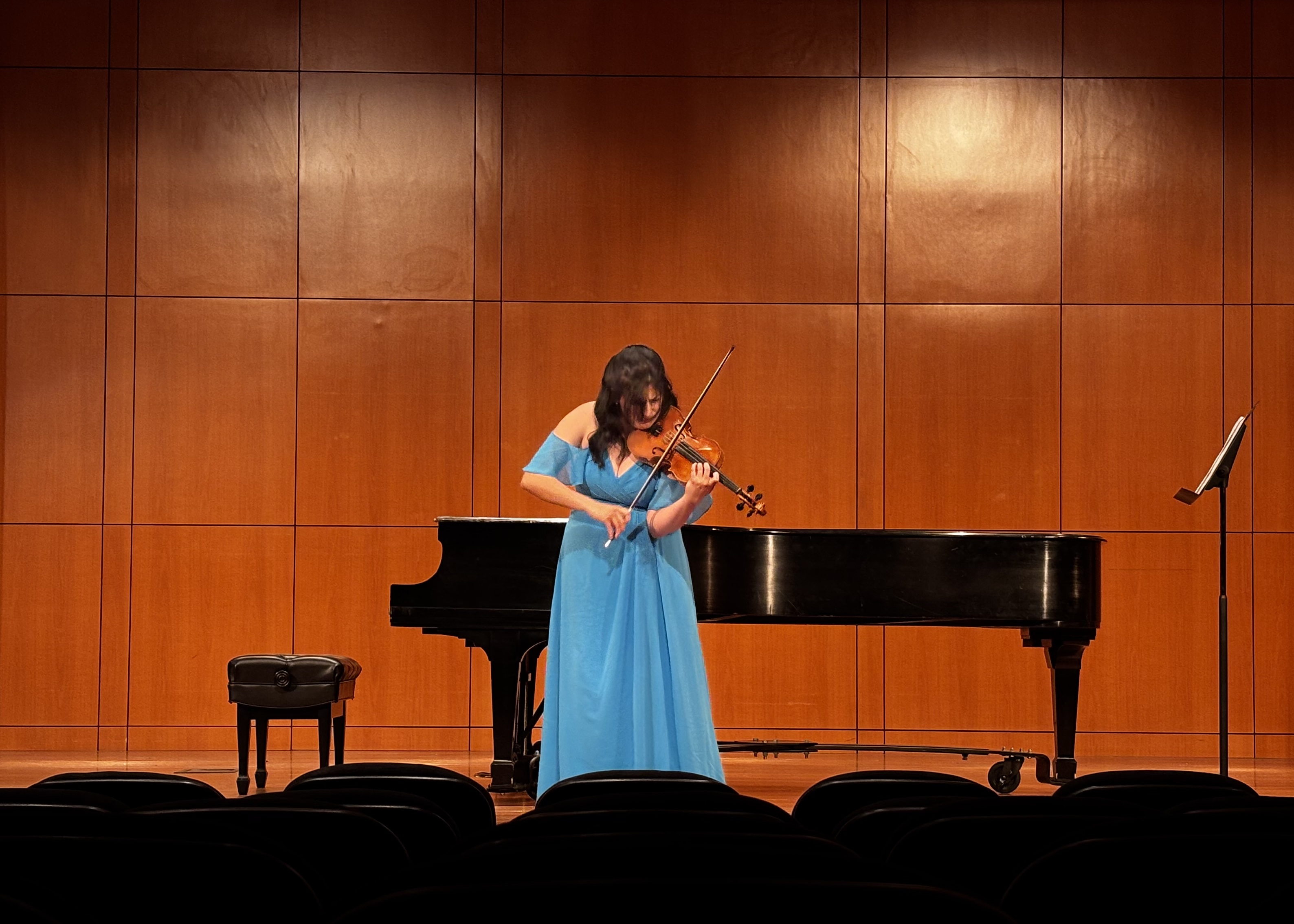
Anik’s approach to her recital – from the Belgian Ysaÿe to the Polish Wieniawski and Turkish Saygun – was rooted in her value of historical context. She has studied the histories of the composers she performs, and she applies her knowledge to her interpretation of their music. Born in Türkiye and having received a music conservatory education from the age of eight, she feels an especially deep connection to Saygun, who composed the violin-piano duet Demet (roughly translated to “flower bouquet” in English). Each of the composition’s movements was written “to represent the local rhythm, dance, and character of the people of the region,” an important fact for Anik, who grew up in Istanbul, but whose family originates from the eastern part of the country.
Anik recalled, “I grew up in the conservatory where Saygun taught as one of the first classically trained Turkish composers and musicians. Classical musicians know the mighty five of Russia and France – well, Saygun was one of the mighty five of the Turkish classical composers. In fact, Saygun’s students had students who were my professors, so I am, in a way, a fourth-fifth generation of Saygun’s music.”
She can still remember when, at twelve years old, she sneaked into the Istanbul State Conservatory’s library to find Saygun’s scores and sightread them. She soon received full access to take on ambitious pieces and continued her studies at the school – which is part of the Mimar Sinan Fine Arts University – before transferring to Rollins in 2023 to continue her bachelor’s degree in music.
A notable piece Anik performed in her recital was Dr. Crozier’s composition “Rose of Sharon,” first written in 2000 and revised in 2013 for violin/piano duet. Its title comes from the Biblical Song of Solomon, as Crozier first composed the piece for a wedding. It has since been performed by several flautists and violinist Alvaro Gomez, who performed it as a duet with Crozier (himself an accomplished pianist) on piano. Regarding Anik and Griffin’s rendition of the piece, Crozier described his goal for the violin part: “I was looking for expressive lines – for the violin’s part to be a melodic arc, starting in the middle register and then soaring. It’s a lush piece, I’d say.”
Her recital was attended by virtually all the faculty in the music department, including Department Chair Dr. John Grau, Dr. Sinclair, Dr. Crozier, and Roos, her lesson instructor and the college’s artist-in-residence for strings. Roos said, “Aysima is highly driven to succeed and has always been at the top of her class. I am amazed by how thoroughly and quickly she learns repertoire.” As to her performance style, she commented that “she frees herself to be creative and artistic.”
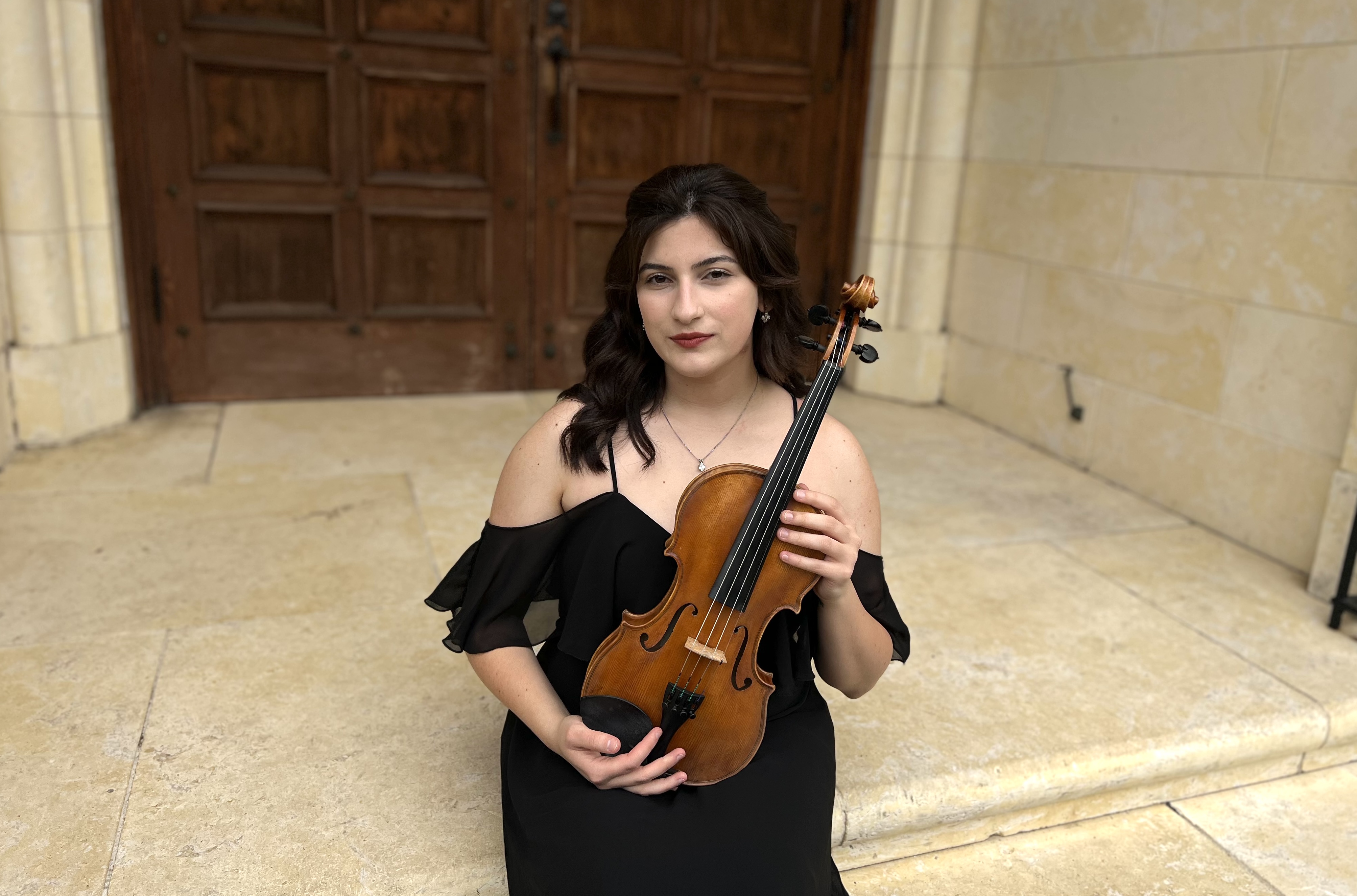
Also in attendance was Rollins’ President Brooke Barnett, who afterward noted that she was “honored” to be invited to Anik’s recital. She said, “She’s incredibly talented, so it was a joy to hear her play.”
As for her plans after graduating this spring, Anik has “always dreamed of teaching while still performing.” Particularly important, she added, was maintaining a range of genres. “I don’t want to focus on one area; I want to perform as a member and as a soloist with orchestras, and I want to perform chamber music. Making music together with others makes me feel more fulfilled. That’s why I love performing for the composition recitals and pieces by my friends. Musicians share an understanding of each other, it’s like telepathy – reading someone else’s mind to find out how they want their composition to come together and how we make music together.” To further pursue her dream career, she is taking an academic route, including a “masters, doctorate, and ultimately PHD and artistic diploma.”
Anik and Dr. Crozier summed up their experience of the recital with admiration for each other’s respective contributions. Aysima noted, “I decided to perform ‘Rose of Sharon’ at my senior recital because it was meaningful to me. I’ve had many professors internationally, and Dr. Crozier has been the most meaningful and inspiring professor I’ve ever had. We had long conversations with him about the piece, the dynamics, and the meaning behind the music. I’m really glad he trusted me to perform his piece.”
For his part, Dr. Crozier commented: “I thought it was a terrific recital all around. She performed the Ysaÿe Ballade, a favorite solo violin piece of mine, really beautifully. I thought it was a tremendous recital in terms of scope and repertoire. It really showed off her gifts.”






Comments are closed.