
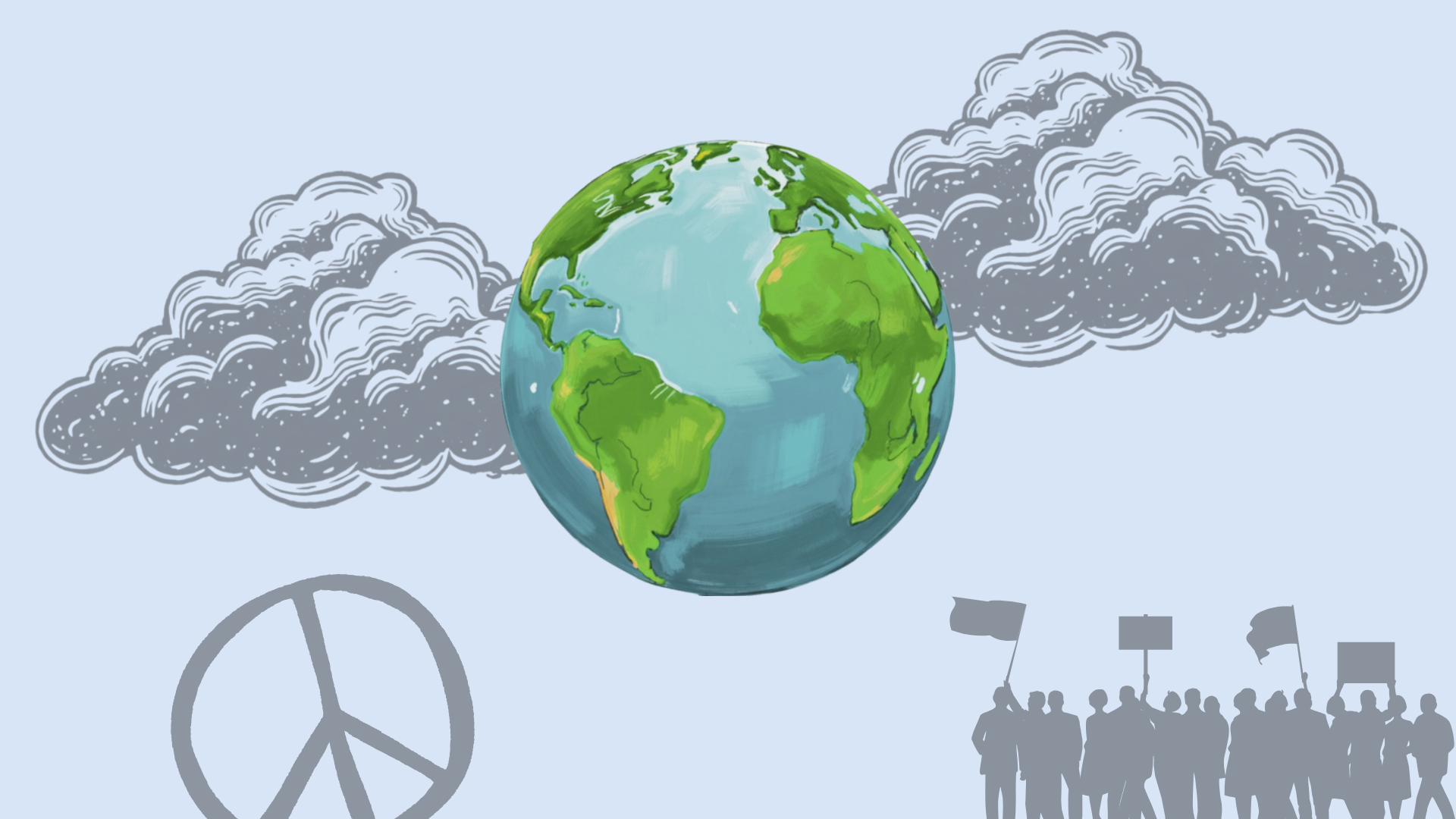
When most people think of Earth Day, what often comes to mind are the lasting impacts of the counterculture movement — an era of idealism that believed the world could be changed simply by loving enough. Tie-dye T-shirts, peace signs, and green recycling logos — the day holds a sense of optimism. A faith that small, collective gestures can add up to something meaningful. Meaningful like the Clean Air Act Amendments and the formation of the Environmental Protection Agency.
While Flower Power, love, and hope certainly influenced the environmental movements of the 1960s and 1970s, what extends beyond the feel-good surface of Earth Day’s origin is the rage that had reached a red-hot boiling point.
The years encompassing the environmental movement were a perfect storm. The growing pressures of the Vietnam War left the American public feeling confused and distrustful.
Teachers and students at American universities were among the first to speak out about the multitude of concerns that radiated from the ongoing war: chemical warfare, the draft, the Pentagon Papers. Campus protests and sit-ins grew far and wide, reaching universities from coast to coast in states like Washington, Florida, California, and New York. It was this model of student-driven advocacy — fresh, urgent, and impossible to ignore — that caught the attention of Wisconsin Senator Gaylord Nelson.
Adam Rome writes in a journal article titled The Genius of Earth Day, “The antiwar teach-ins had been empowering. They pushed students and faculty to think more clearly, and then to act. An environmental teach-in, Nelson thought, would be even more likely to empower people.”
Nelson recognized that the same frustrations driving the antiwar movement — distrust of institutions, demand for transparency, fighting for the future — could be aimed at something hiding in plain sight: the environmental crisis.
You could take your pick of the environmental crises happening in the 1960s and 1970s. Black smog filled the air of cities like Los Angeles and New York, oil saturated bodies of water from spills like the one off the Santa Barbara coast in 1969, and the Cuyahoga River in Ohio became so polluted from industrial waste that it caught fire — also in 1969.
These environmental concerns were observable to the naked eye, but public health concerns were embedded in hidden pockets of everyday life. Improper chemical waste disposal throughout the country was poisoning Americans alongside the smog that filled their air and the oil that sat on top of their water.
Take, for example, Love Canal in Niagara Falls, New York — a neighborhood built in 1953 on 21,000 tons of hazardous waste material disposed of by the Hooker Electrochemical Company a decade prior.
Or DDT, one of the first modern insecticides developed in the 1940s, that was routinely sprayed around neighborhoods, agricultural crops, forests, and coastal wetlands and was also linked to increased cancer rates and irreversible ecological damage.
It wasn’t until Rachel Carson’s book Silent Spring, released in 1962, that public perception of DDT began to shift — after Carson chronicled the ecological and human health impacts of its widespread use.
It was these factors — the visible and invisible, the accidental and intentional — that created a sense of frustration so deep that it enacted nationwide change. Change that still guides modern environmental policy.
Those protesting weren’t just long-haired lovers — it was also mothers who had been lied to about the health of their children. It was factory workers, teachers and students, and scientists emerging from a new discipline that would soon be known as ecology.
Earth Day serves as a reminder that some of the hardest times can create the conditions for change. Some of the most disastrous and darkest moments within the nation’s environmental history resulted in the framework for legislation that has gone on to protect countless species and their habitat.
Crisis didn’t kill the movement. It built it.
And it can continue to do so.
The opinions on this page do not necessarily reflect those of The Sandspur or Rollins College. Have any additional tips or opinions? Send us your response. We want to hear your voice.



Comments are closed.