
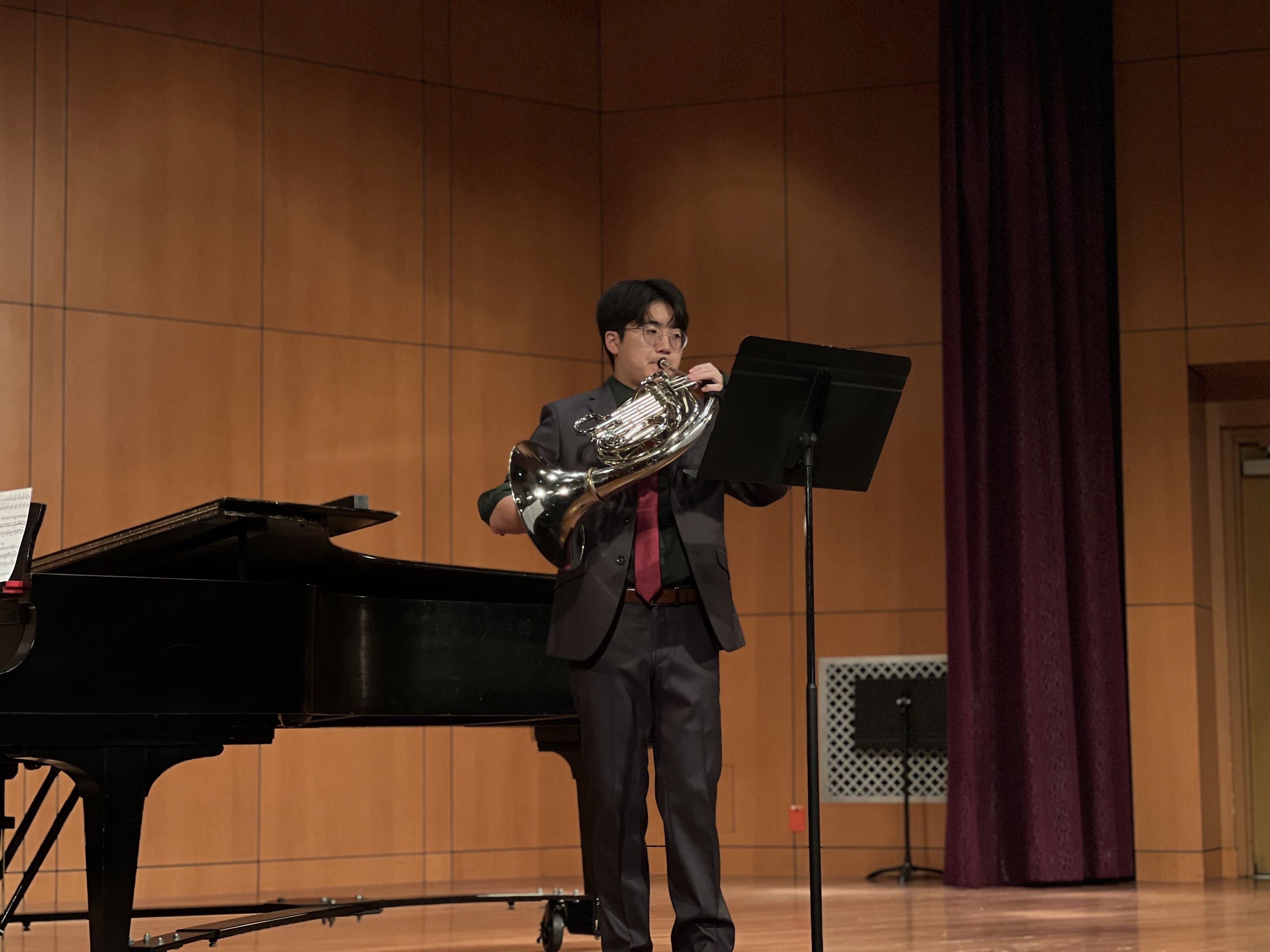
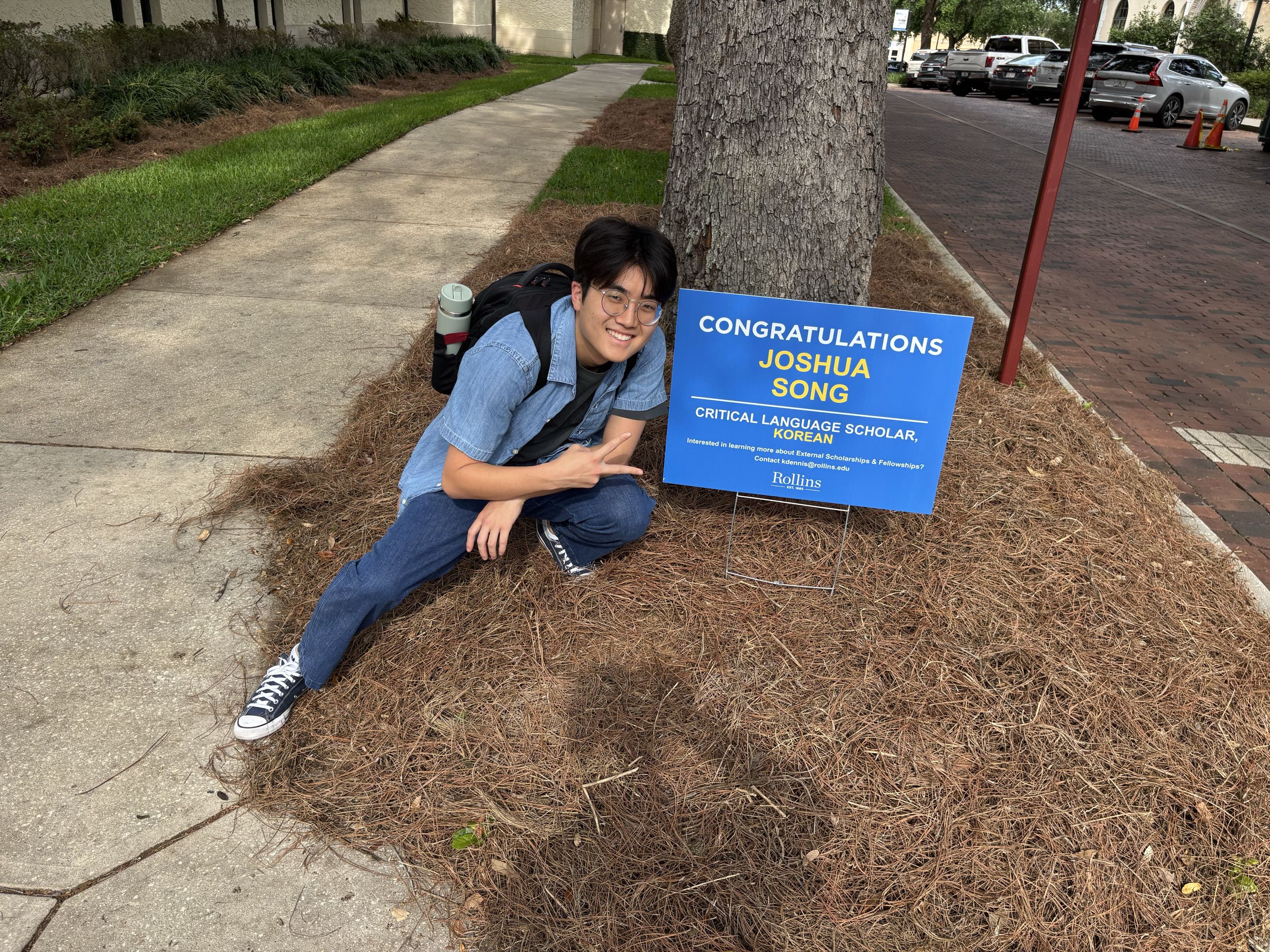
French horn player and Major in Music Joshua Song (’26) was this year’s only recipient of the Critical Language Scholarship (CLS) from Rollins College.
The motives of students from other colleges in the program varied: some wanted to gain business experience abroad, while others looked to travel or learn more about international relations. However, as an American of Korean descent, Song’s motivation stemmed from growing up with relatively few opportunities to develop his Korean language skills. Formulating questions, or having conversations with his family in the language, was a challenge that he hoped to overcome through the CLS’ immersion-based program. Song “grew up in America in communities without Koreans,” and “never got to practice Korean, so when talking to Koreans” in America, he couldn’t get his words across.
The CLS program appealed to Song due to the scholarships and financial support that it offered. Successful applicants, such as he, have their flights and housing covered to their particular country, and they receive a stipend to cover living costs such as food. In return, students spend “four to five hours of immersion each weekday” learning to read, write, and listen in the language—in Song’s case, in Korean. Afternoons are also spent socializing in the language or traveling.
Song spent his summer program in Busan, one of the largest cities in South Korea. On the southeastern coast of the country, it is known in history books for being a bastion of the South during the Korean War, which devastated the peninsula between 1950 and 1953. One of Song’s most vivid cultural experiences while in the country was visiting Gamcheon Culture Village, a now-brightly-painted neighborhood of Busan that was originally settled by refugees from other parts of the Korean Peninsula. Today, the village has been restored with its characteristically striking paint colors and been transformed from a shanty town to a tourist attraction. Visiting the village during the program was a powerful moment for Song, who said that the historical site is “inspiring because of the grit that people had during that time.”
While in the country, Song traveled to another major city, Daegu, along with the suburbs of the capital, Seoul. Becoming comfortable with living in the country for a while was important to Song, who notes he “wanted to explore [his] heritage.” Reflecting on spending time living among Koreans, Song says: “It strengthened my Korean, but it also enabled me to learn more about myself. There’s a common phenomenon among Asian Americans to feel that you don’t belong in either Asian or American communities. Being in Korea has enabled me to accept my American-ness more. My Korean side was also strengthened by being able to visit.”
Another realization for Song was the difference of music in the Western world versus that of Korea. A classical brass player, Song saw how “Western music,” for comparison, “was historically for the nobility and upper-class, while in Korea, musical instruments were enjoyed and played by the common people.” He was able to see traditional dances and musical performances while traveling the country, which come from a genre known as Minsokak.
Song noticed a drastic improvement in his ability to speak Korean across the two months that he was in the country, as he had hoped when beginning the program, due to being surrounded by Korean speakers.
“When I started, I could say one sentence that I knew beforehand, and I avoided conversations during the first part of my stay. For example, the first day I arrived, I went to a convenience store, and someone asked me for recommendations about different flavors of coffee. I almost panicked because I wasn’t ready for conversations yet. But as time went by, I became less worried about talking to people in Korean, and by the end of the program, I could communicate with locals.”
On the other hand, though, there were moments when Song felt homesick, as there were aspects of American life that he missed. Being in an unfamiliar environment all the time was exhausting and returning to San Francisco Airport was a relief. “When I first landed, just taking a breath felt revitalizing. We take for granted the different biomes and the air here in the United States,” he said.
Another aspect Song missed was the peace and quiet of American neighborhoods. “In Florida, you go outside anywhere that is not in the city, and it’s quiet. In Korea, it’s never quiet: there are always streetlights and people out and about. That’s something I missed in America – being able to enjoy a quiet walk.”
Overall, Song, who ultimately hopes to pursue a graduate degree in Music, looks back positively on broadening his knowledge of the world and of himself. It informed his perspective not only as a Korean American, but also the perspective of being a focused musician while studying at Rollins. He notes that Rollins’ liberal arts approach made studying abroad—something considered extracurricular for many music majors at American colleges—a realistic option for him.
Song believes that because of going to Korea, “my eyes are open to a lot more things in life. I’m not thinking of just my major anymore, but more about what I can do to impact my community more.”










Comments are closed.