
Fall 2025 has presented a new challenge to commuters and all students who have a car: a lack of parking. While available parking spaces on campus have decreased over the years, this semester has hit especially hard for students. Some cannot find parking spaces anywhere at the college and have resorted to hourly public parking on the streets of Winter Park. The shortage of spaces has consistently peaked on Monday, Wednesday, and Friday mornings.
“I find myself frustrated with the parking situation, especially as a student living off campus,” said Pixie Alfond (‘26). “It can also be difficult to see on-campus students reserving the majority of the already limited parking spots, to the point where off-campus students like me rely on public (and sometimes paid) parking just to make it to class.”
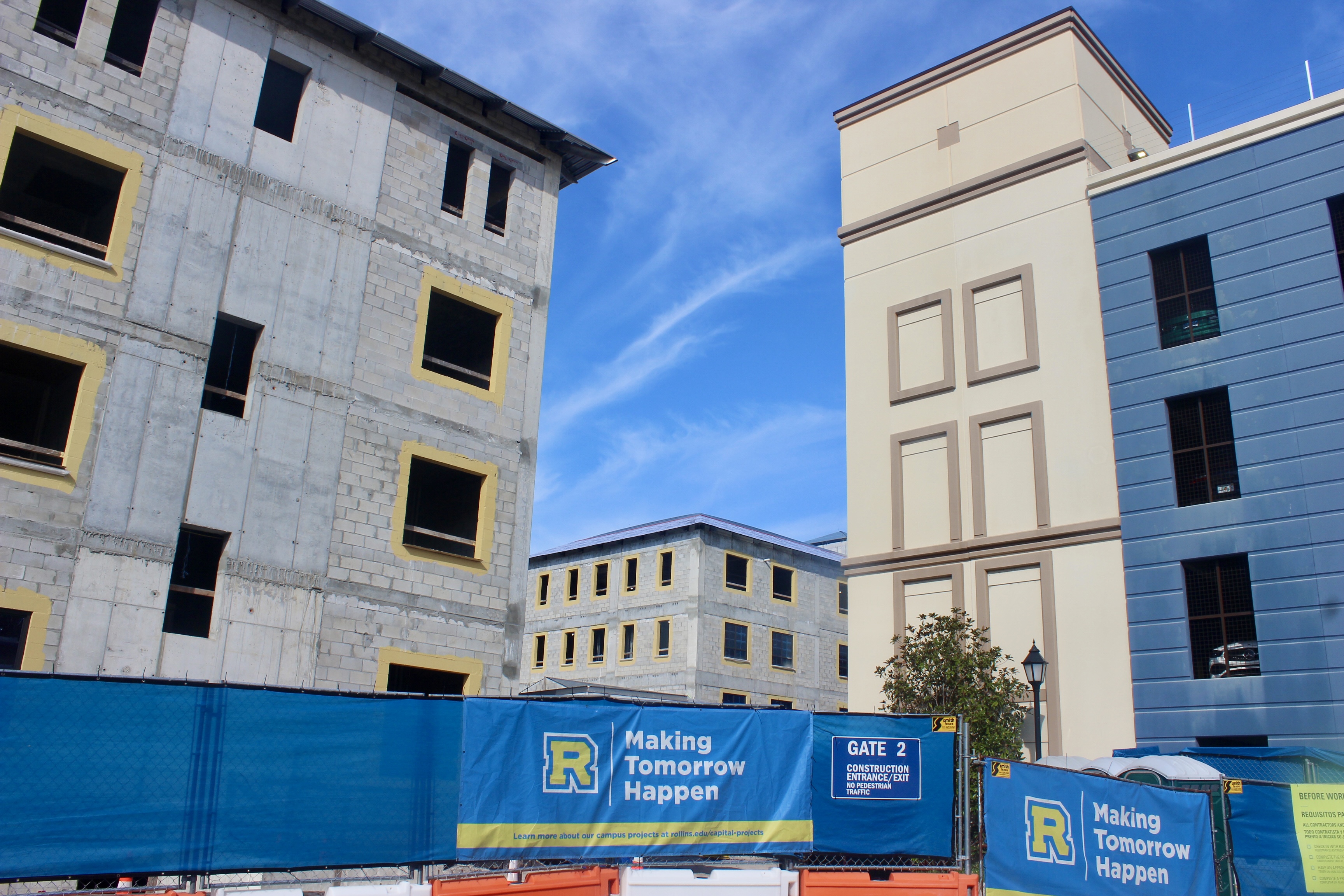
Several factors have contributed to the lack of parking in what Campus Safety Assistant Vice President of Public Safety Ken Miller describes as a “perfect storm.” The largest contributing factors are three construction projects: the Tennis and Golf Center, East End Neighborhood, and the Innovation Triangle. Construction workers park in the college’s garages and open lots, and while administrators converted empty space to parking for workers to reduce disruption, parking demand caused by construction has risen significantly higher than the college predicted.
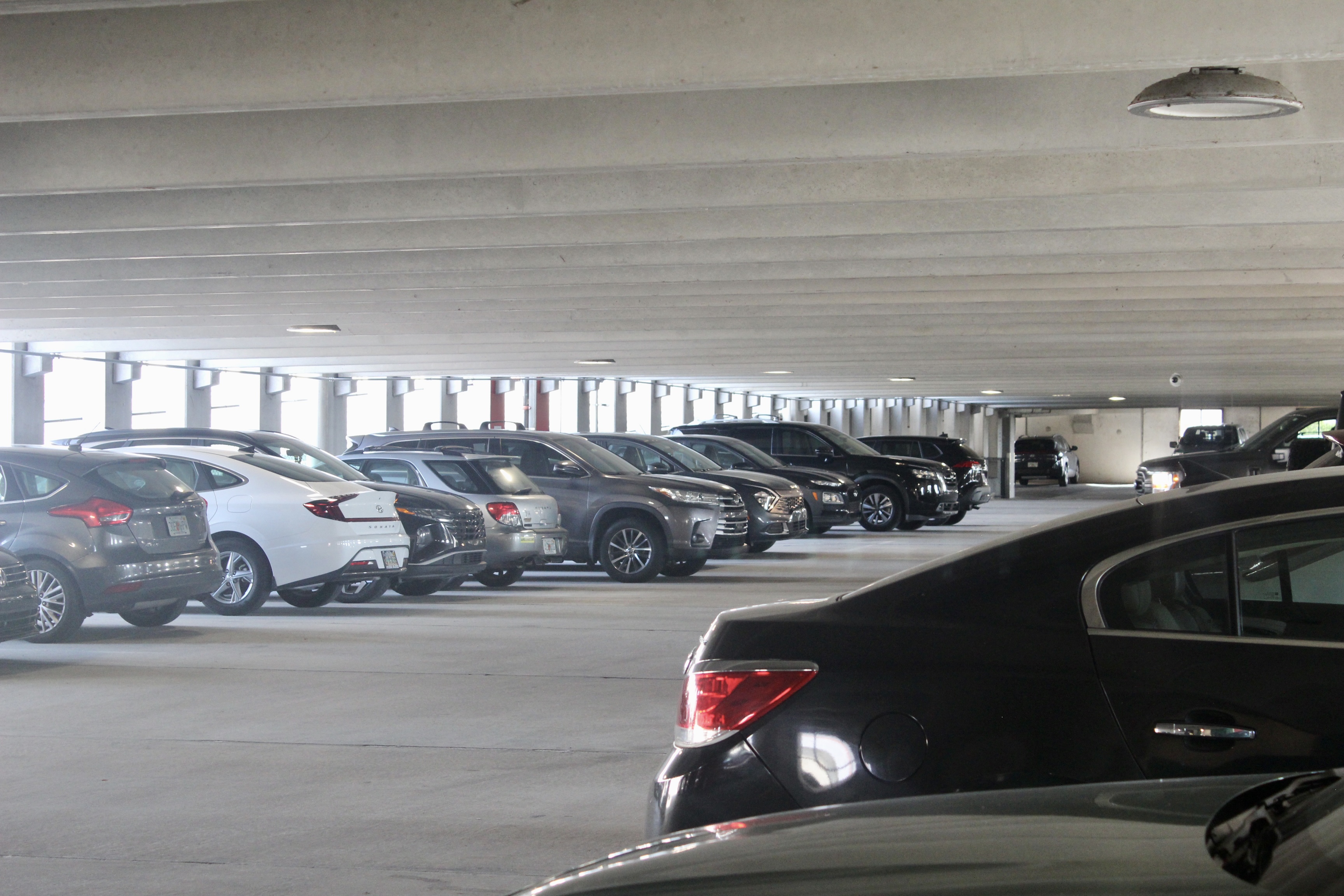
When plans were made for building the East End Neighborhood and the Tennis and Golf Center, peak construction activity (and consequently, peak parking demand) was expected to occur in June and July during summer break. However, Miller noted that “a delay led to peak parking demand for construction workers to move into the fall semester.” Estimates for the number of tradesmen on-site, meanwhile, increased from 120 to more than 150.
Another 80 parking spaces were taken offline due to the construction of the Innovation Triangle. Workers who once parked there have relocated to the Truist Garage, highlighting a key challenge in parking management on campus. If a certain number of spaces are reallocated, the fundamental parking shortage remains – the problem is simply shifted somewhere else. Miller describes the constant decline in parking and the increase in demand as “a closed system experiencing death by a thousand cuts.”
While demand for parking rises, costs to increase parking supply have increased as well. Miller estimates that, when building a parking garage, each space costs at least $20,000. That scales into millions of dollars for an entire garage, not to mention the underlying land, which itself can be worth several million dollars.
The college’s master plan from about twenty years ago – which has been revised several times since – began the push toward elimination of surface lot parking, relocation of spaces to parking garages, and use of the remaining land on campus for other building projects.
The college is considering steps to alleviate the parking problem. The first step will likely be an electronic board showing available spaces per floor in Rollins Garage. The board will be connected to an app that students can access to know in advance if parking is available. However, as the app will not by itself increase the number of available spaces, more consequential steps are being considered by the college, such as restricting first-year students’ ability to park on campus.
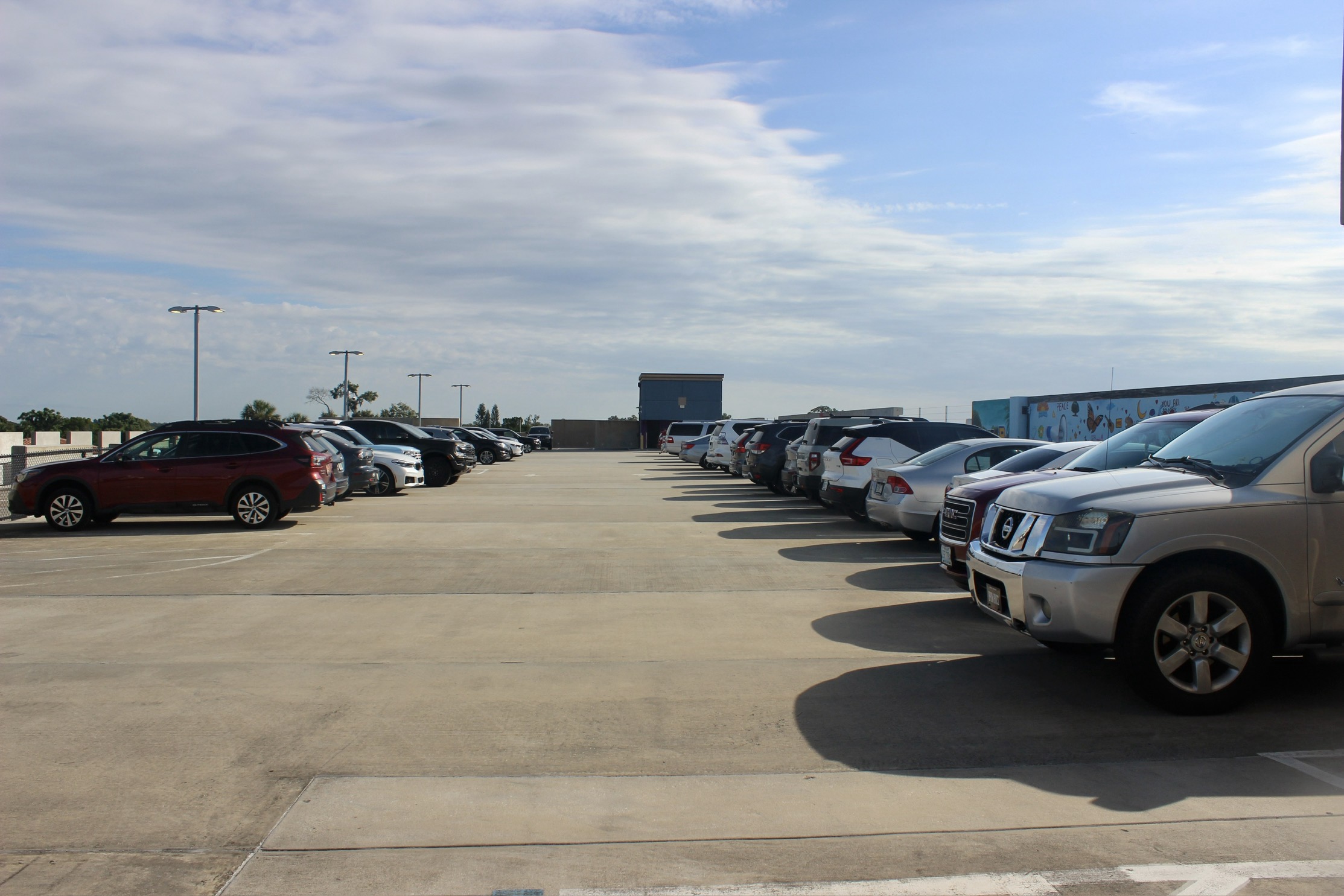
According to Miller, Student Government Association legislation to allow first-year students to park on the fifth floor of Rollins Garage is not the cause of the parking shortage. Truist Garage continues to have the worse parking shortage of the two garages, and students who are unable to park there may have more luck at Rollins Garage.
Miller says that the goal of Campus Safety is to accommodate students. “If there’s a reason you need to park somewhere, you can always call campus safety and often they can accommodate you.” He believes the current parking shortage will begin to ease later this semester as parking demand from construction workers decreases.
In the meantime, students’ challenges to find parking on campus continue. Alfond notes, “The current system leaves commuters without options. Rollins needs to address it.”
This article was edited on Sept. 22 to clarify the location of construction.









Comments are closed.