
The use of Artificial Intelligence (AI) is rapidly increasing, especially among young adults. Among those 18-29 years old who use AI, some of the ways they use it are for searching for information, creating or editing images, and, less commonly, companionship. AI seems to be growing more prominent on college campuses, with 43% of college students using AI for school, and 90% of these students saying that ChatGPT is “more effective than traditional tutoring.” Given the increased prevalence of AI in the classroom, The Sandspur was curious to learn how this affects Rollins in particular.
On Sept. 15, 2025, The Sandspur sent an anonymous survey to students to assess how they use AI tools and the roles that such tools play in shaping their academic experience. We received a total of 119 responses. (Note: in the third and fifth charts, students were able to select multiple responses, so the percentages do not add up to 100).
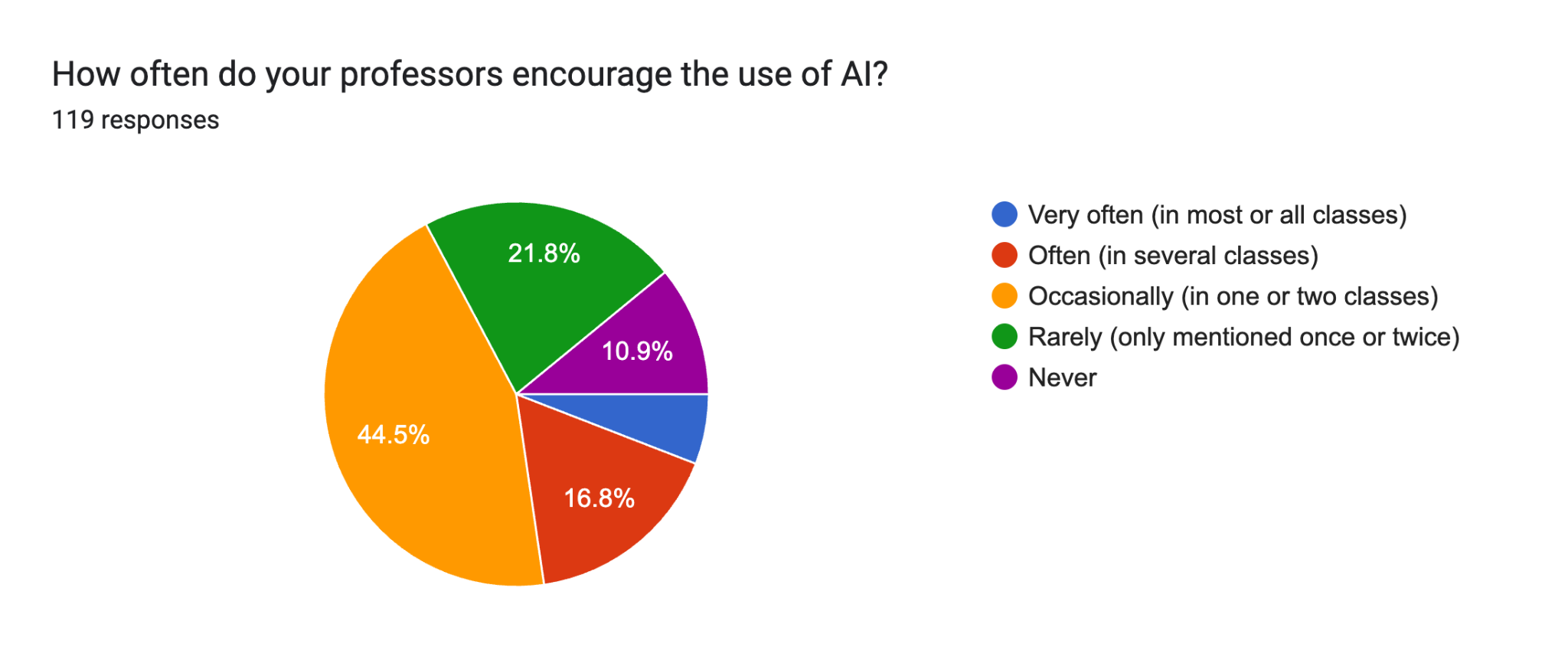
Just under 6 percent of respondents reported that using AI tools was encouraged very often in their classes. Roughly 17 percent said professors encouraged it often, over 44 percent said it was encouraged occasionally, about 22 percent reported it was rarely encouraged, and under 11 percent said it was never encouraged.
In future polls, it may be interesting to ask which departments encourage using AI tools the most.
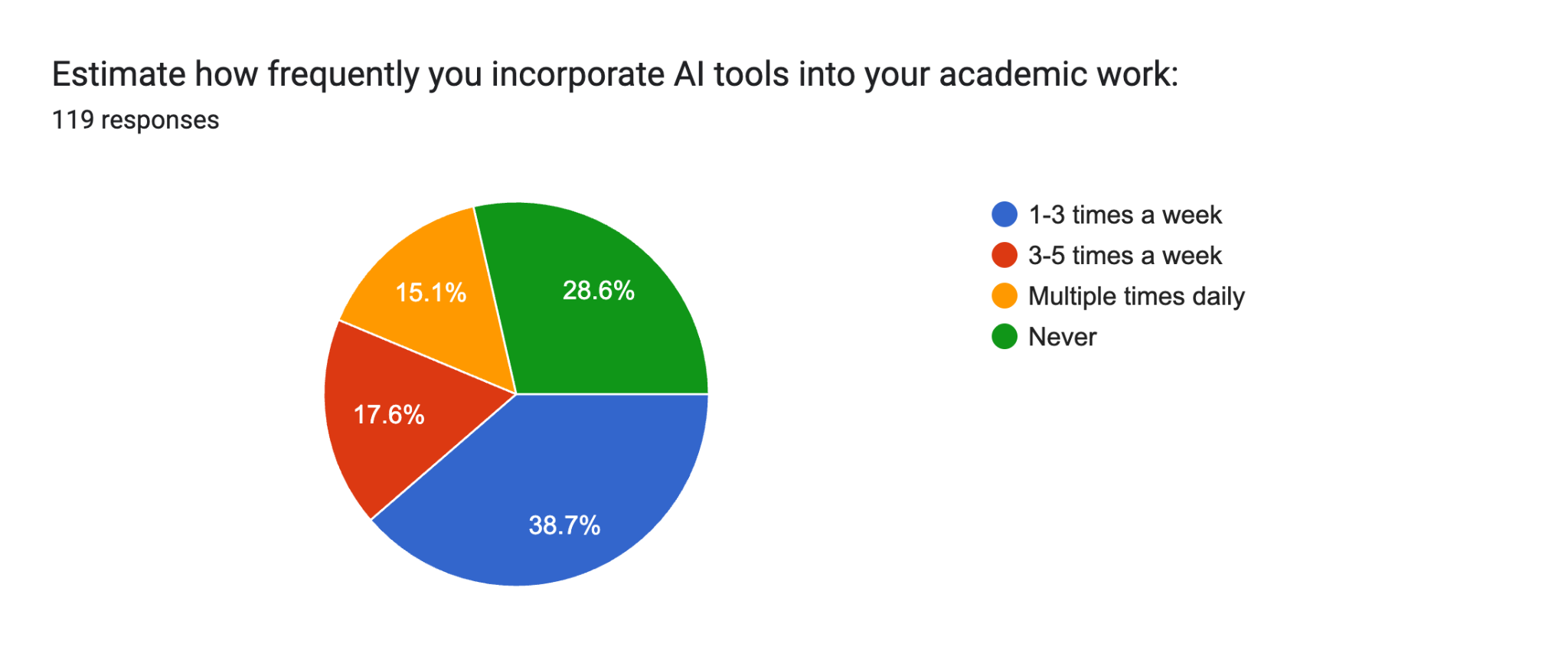
Almost 39 percent of respondents estimated incorporating AI tools into their academic work 1-3 times a week. Nearly 18 percent claimed to use AI tools 3-5 times a week while just over 15 percent use them multiple times a day. In contrast, over 28 percent of students reported never using AI for academic work.
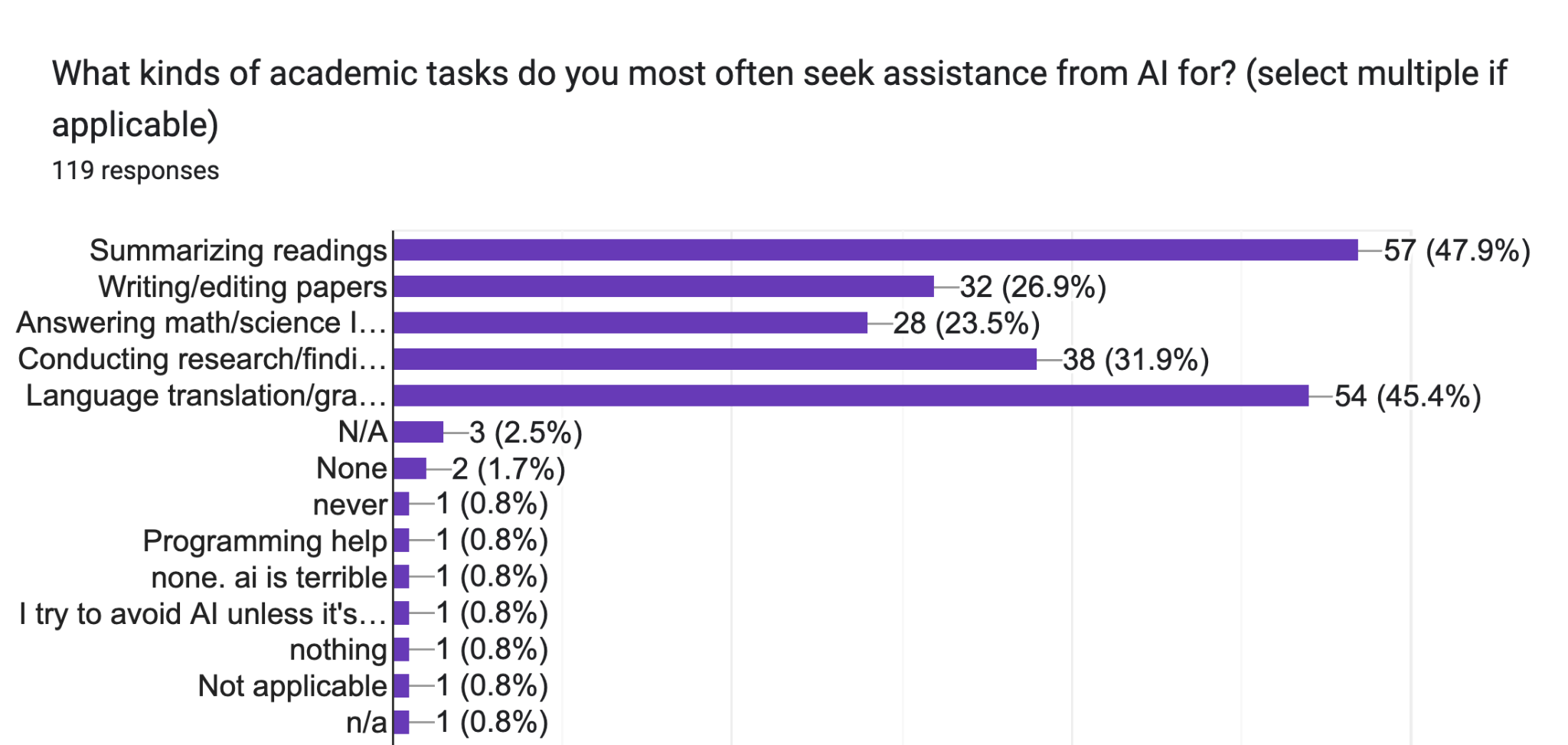
Focusing on the five most common ways students seek assistance from AI, 48 percent of students reported using AI to summarize readings, 45 percent said they used it for language translation or grammar checks, almost 32 percent used it for conducting research or finding sources, about 27 percent used it for writing or editing papers, and under 24 percent used it to answer math or science-related inquiries. Several students listed tasks such as reviewing code, brainstorming ideas, and creating study guides in the “other” section.
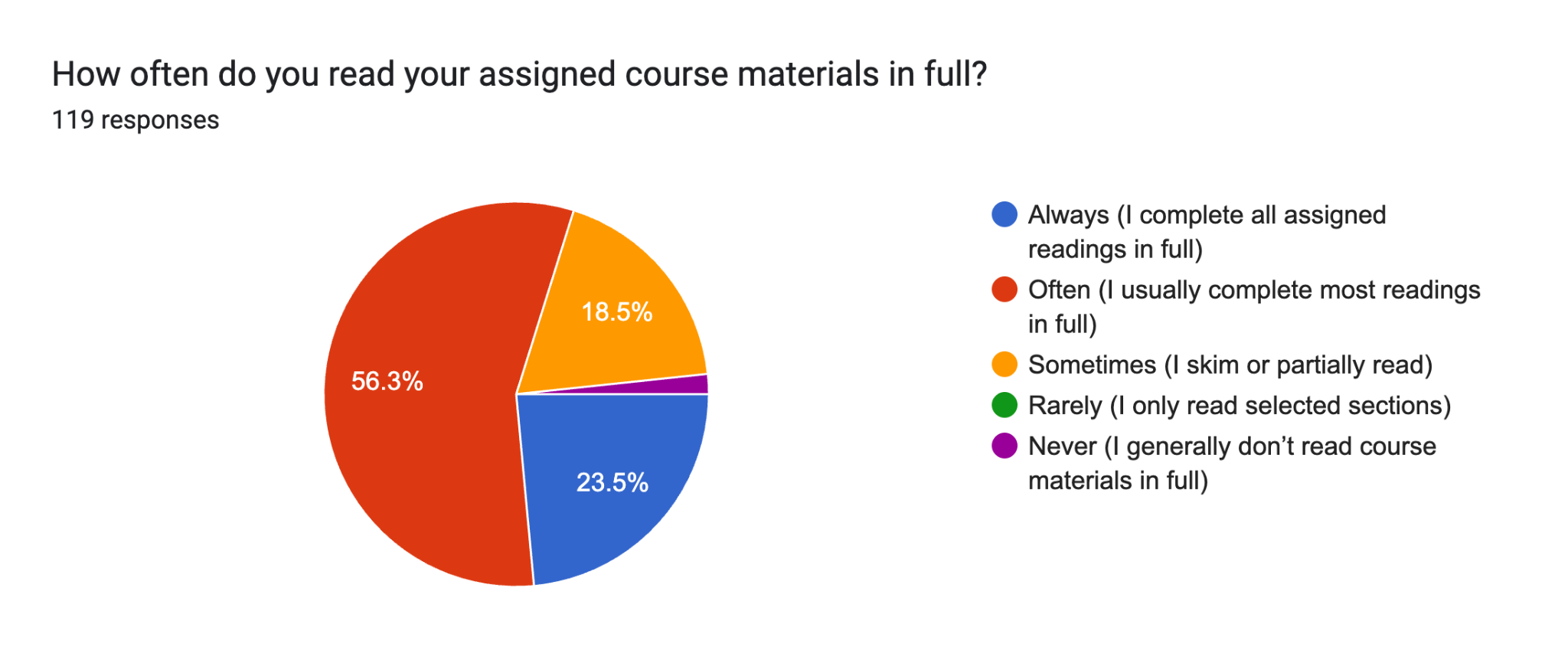
When asked to evaluate how much of their assigned readings they complete, the majority of students – about 56 percent – answered that they complete most readings in full. Under 19 percent admitted to skimming or partially reading, while under 24 percent claimed that they always completed all assigned readings. Only two respondents (1.7 percent), answered that they generally don’t read course materials in full.
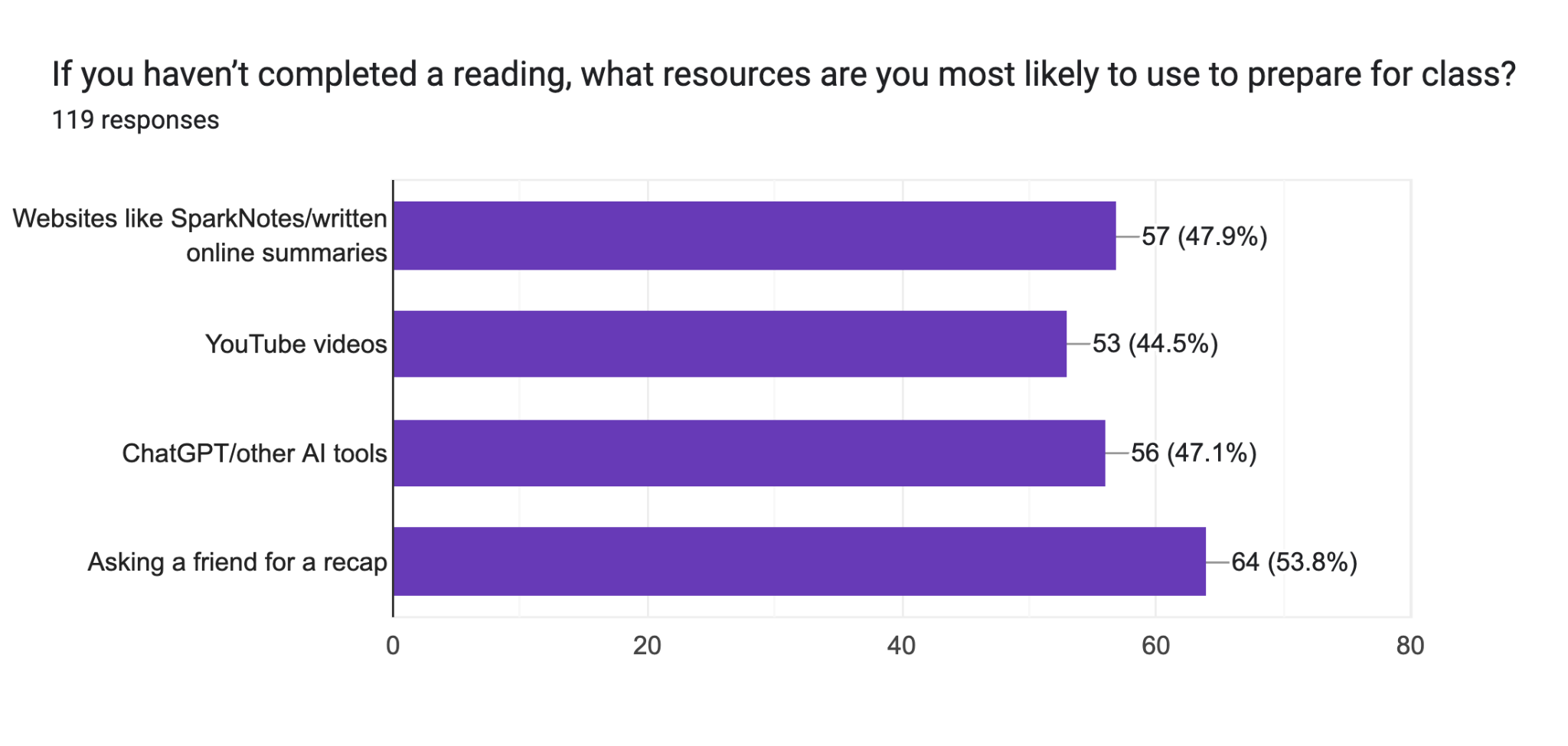
If they have not finished an assigned reading, most students (53.8 percent) said they would ask a friend to help them recap the material. Other popular options were using websites like SparkNotes (47.9 percent), consulting ChatGPT or similar tools (47.1 percent), or watching YouTube videos (44.5 percent).
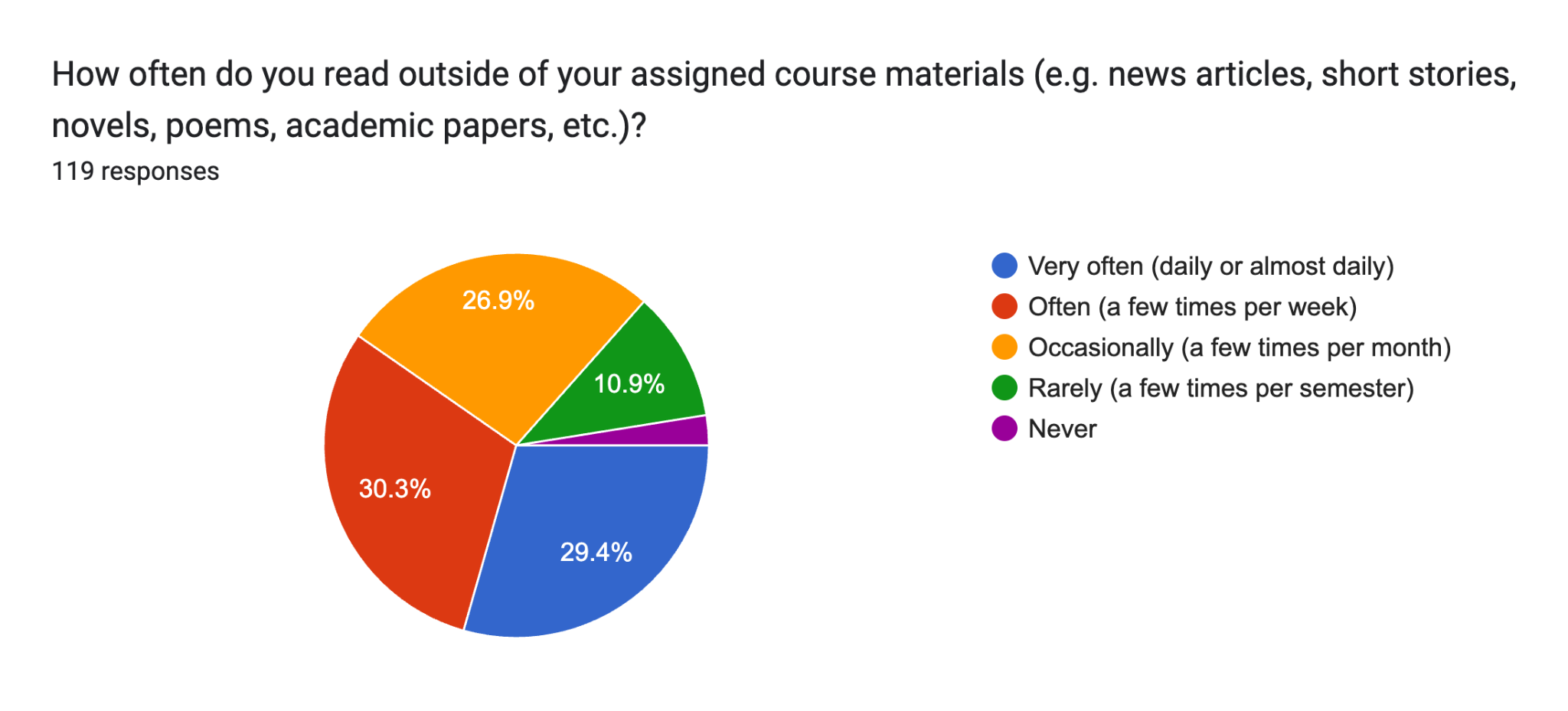
Aside from AI usage, we were also interested in how much students read outside of their assigned coursework. About 30 percent each reported either reading daily or a few times a week. Nearly 27 percent reported reading a few times a month, almost 11 percent said they read a few times a semester, and just 3 respondents (2.5 percent) answered that they never read outside of assigned materials.
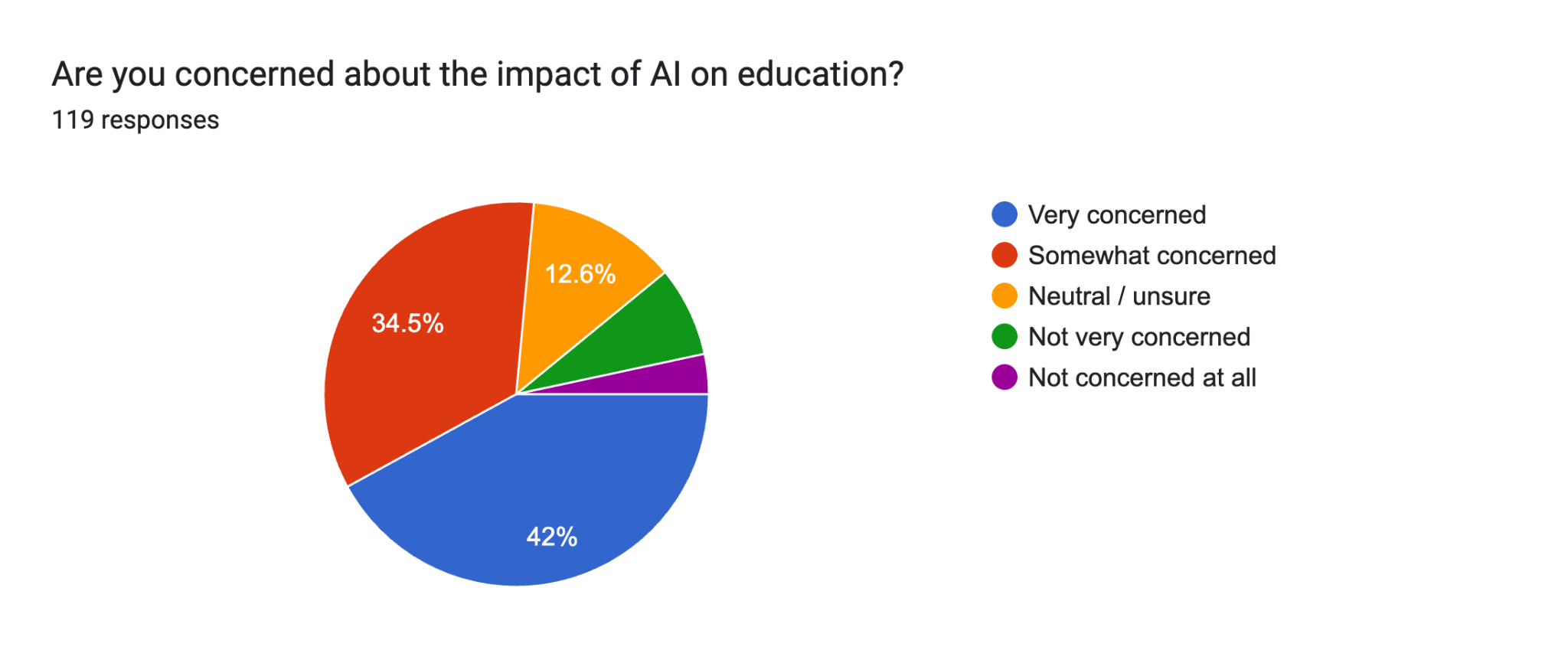
When asked how concerned they were about the impact of AI on education, 42 percent answered that they were very concerned. Roughly 35 percent said they were somewhat concerned, while almost 13 percent claimed to be neutral or unsure. Only 11 percent reported feeling not very concerned or not concerned at all.
In the optional comments, a common theme that emerged was concerns about over-reliance on AI. One student said, “It’s made me procrastinate more and put off my work. Concerns about AI are not overstated, it has genuinely kept some people from learning properly.” Another added, “Since I use it so often to correct my grammar, I’ve found my grammar has gotten lazy. We should be cautious in off-loading our thinking to AI.”
Others pointed to the benefits of spending less time on tedious tasks. “AI is fantastic for doing tasks that I don’t need to, like generating citations for my sources, fixing small grammar mistakes, formatting, and debugging,” said one respondent. Another discussed how they use AI-generated summaries to prepare for class: “By having ChatGPT summarize the reading for me, I gain the same understanding (which is then refined in my in-class lectures) and save so much time.” It’s worth noting that the accuracy and depth of AI generated summaries is debatable.
Many stressed the importance of using AI “the right way.” As one student summarized, “AI is just a tool. It doesn’t do the thinking for me; it helps me streamline and organize my thoughts so I’m not wasting time. It should be used the same way people use Google or Grammarly. Between work, school, and everything else on my plate, AI is the only thing helping me stay on top of all of my responsibilities. Telling students not to use it (outside of actual cheating) does more harm than good.”
Another student described a hybrid approach of relying on their own judgement and AI generated analyses. “I rarely use it as a substitute for the actual readings. Rather, I simply use it to validate what I think I learned from the materials I’ve read,” said the student.
So, what does this data mean for the future of education? Well, with a significant percentage of students using AI for their academic work, the next step is teaching students how to use it responsibly. While a significant percent of students in the poll expressed concern over the impact of AI on education, AI, when used properly, has the potential to enhance the learning process. For example, a course at the University of Texas teaches students the fundamentals of AI, and Ohio State University is working to train faculty how to incorporate AI into assignments.
At Rollins, the Olin Library lists resources and guidelines meant to help faculty outline their expectations on AI use. You can learn more about responsible ways to use AI, the AI tools provided by Rollins, and the policies that academic journals have implemented to regulate AI usage here.








[…] area she said requires ongoing attention is the role of artificial intelligence in higher education. As AI technology becomes more common, Slater said institutions need to […]
[…] an anonymous survey conducted by The Sandspur last semester, we found that based on a sample of 119 students, over 71 […]