
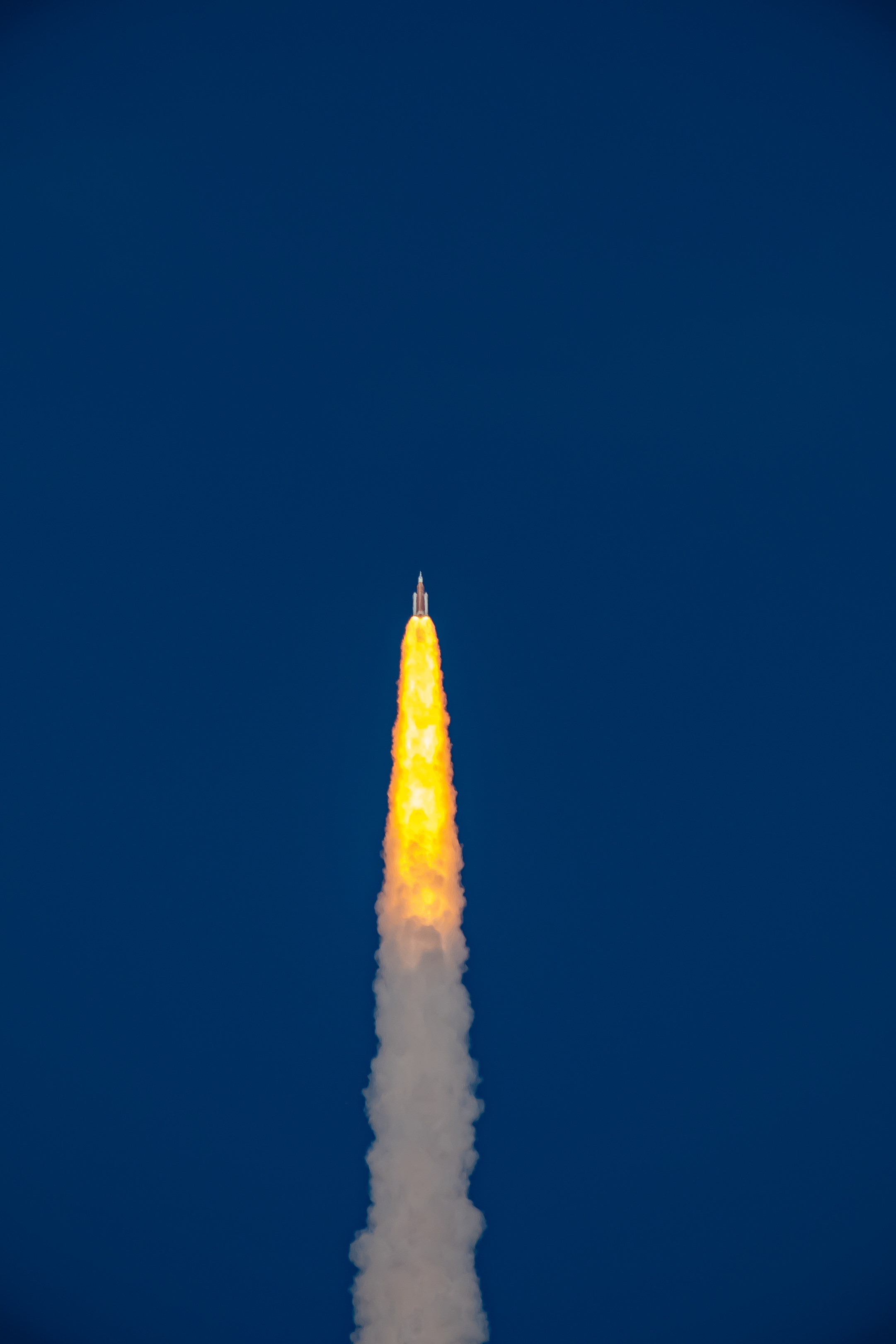
Ten, nine, eight…
The state is frozen, waiting, watching, for history to be made.
In the four years since the first Artemis launch, much of the world has changed; but one thing hasn’t changed … people still want to go to the moon.
After a first delay in early February due to winter weather and cold temperatures, followed by another delay that month, Artemis II made its rollout to Pad 39B on March 20.
The first launch window was set for 6:24 PM, April 1, 2026.
Seven, six, five…
Named after the twin sister of the Greek god Apollo — the namesake for the first space program to go to the moon — the Artemis program ushers in a new era of space travel. With the conclusion of the Shuttle program in 2011, space travel found itself populated by private companies like SpaceX and Blue Origin. In the shadows, however, NASA was developing a new program: the Artemis program.
The idea was to once again send people to the moon, and then one day, to Mars.
Four, three, two…
The mission itself will last ten days before the Orion capsule splashes down in the Pacific Ocean.
The schedule is as followed:
Day One: Launch and Earth Orbit
Days Two-Four: Journey to the Moon
Days Five-Six: Moon Orbit
Days Seven-Ten: Return to Earth and Splash-Down
With a mission objective like that of Apollo 8, Artemis II will bring humans the closest to the moon since 1972 and take them the furthest from Earth.
One, “godspeed Artemis II…”
Christina Koch and Victor Glover.
Reid Wiseman and Jeremy Hansen.
These aren’t the astronauts of the past; they’re the astronauts of today, and those of tomorrow.
At 6:35 p.m. on April 1, Artemis II lifted off from the Florida coast. In two years, we’ll see humans on the moon’s surface once again, but for now the crew of Artemis II is changing history one day at a time.










Comments are closed.