
Fiona Harper (PhD), who teaches in the biology department, sat across from me at her desk, eyes twinkling. I had just explained to her my reasoning for featuring faculty research in The Sandspur — because students don’t often hear about their professors’ research, I wanted to create more opportunities for professors to share their work with students in new and meaningful ways.
“I’m not sure I agree with the premise of the project,” she said, smiling. “My students all know what I do. And that’s the case too, for many of the others in the biology department. But outside of the sciences? They don’t know.” She says that she wouldn’t be surprised if some of her colleagues weren’t fully aware of what she does. “It’s great that you’re doing this.”
Professor Harper has been instrumental in the development of Rollins’ marine biology program. She created the marine biology major at Rollins in 2005 alongside Kathryn Sutherland (PhD), who has since left Rollins College.
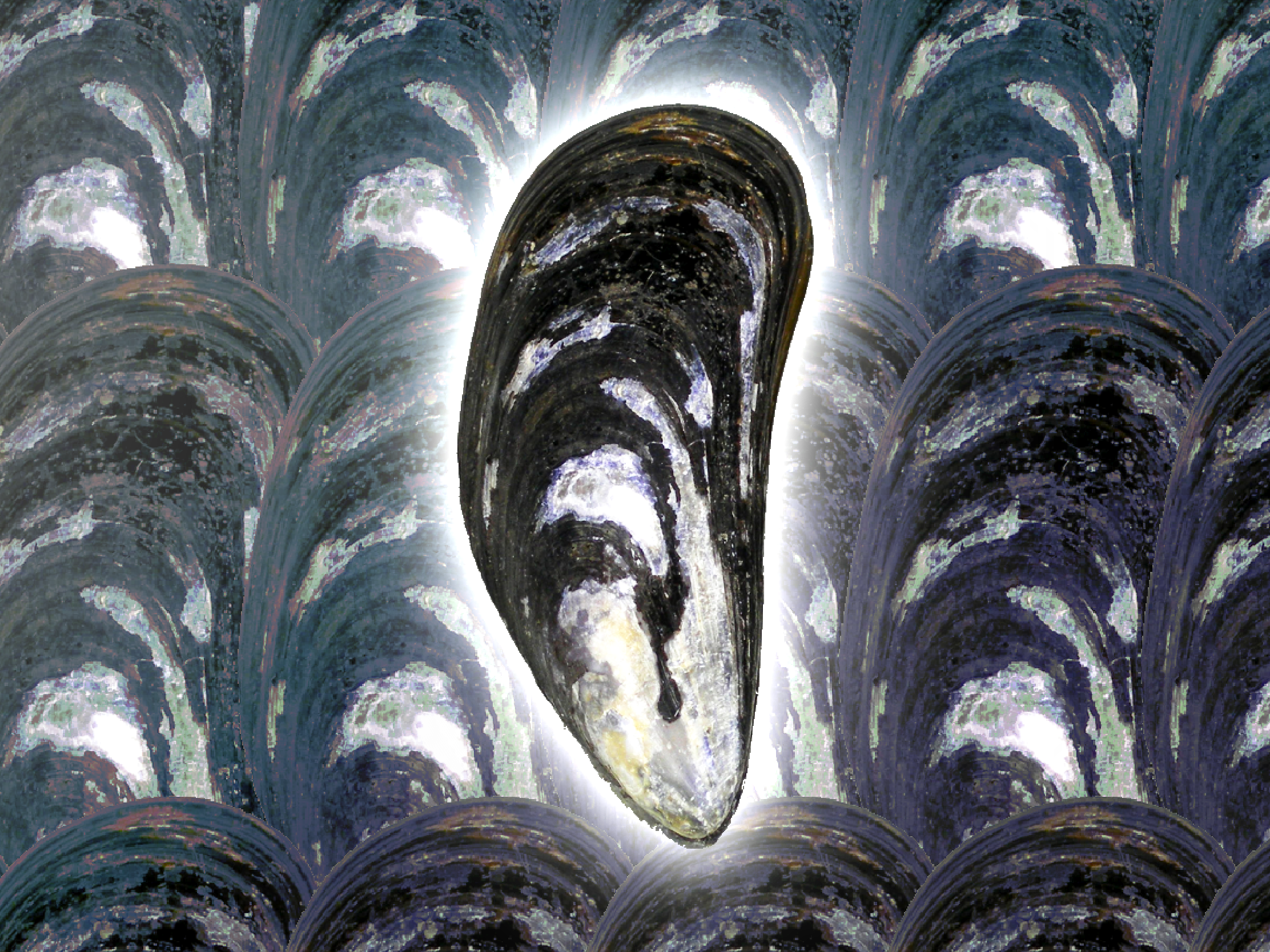
She primarily studies invertebrates (animals without spinal cords), and she has researched hybridization of sea stars and historical distribution of blue mussels. Harper’s most recent paper, published in 2017 with Paul Rawson (Ph.D) from the University of Maine, focuses on the reproduction mechanisms of two different blue mussel species, Mytilus edulis and Mytilus trossulus.
“It’s a question of speciation,” Harper said. “How do species stay separate? Digging down into the biochemistry [of] species… that are found in the same area, that eat the same, that [spawn at the same time] … what keeps these species separate? How do their sperm and eggs recognize one another?”
Generally speaking, groups of living beings are classified as different species when they are different enough that they cannot produce fertile offspring together.
But despite being different species of blue mussel, Mytilus edulis and Mytilus trossulus are capable of cross-fertilization. Proteins on the surface of the mussel eggs control the fusion of sperm to egg and allow for successful fertilization to occur.
In zones where both species of mussel exist, Harper said that only 15 percent of the mussel population are hybrids. This means that in most cases, when sperm and egg meet, the proteins on the eggs’ surfaces fail to recognize the sperm, despite the species’ clear ability to hybridize.
“Where it’s important is that there is a significant percentage of human infertility that is still unexplained,” Harper said. By studying egg surface proteins and understanding why different species of blue mussel don’t always hybridize, Harper hopes her work may help to shed light on the mechanics behind unexplained human infertility. “There are protein interactions that are happening on the surface of human sperm and egg we don’t understand, and that leads to infertility.”
Harper emphasized that when people question the value of basic scientific work, they look past a wealth of knowledge that could be enormously beneficial to humans, just waiting to be discovered: “‘Why do I care if the sperm of one [mussel] doesn’t fertilize the eggs of the other?’ Because there’s absolutely human application in understanding human infertility. So what if we don’t know how it actually applies to humans at this time? At some point, we might be interested.”
In the spring, Harper plans to go on sabbatical — not only to rest and recharge, but also to catch up on her latest research project, studying recent changes in the distribution of her two blue mussel species in Maine.
Residents of Maine often go out to the mussel beds and harvest mussels for personal consumption. Part of Harper’s work includes following up on anecdotal belief from the locals that the mussel beds may be disappearing. “It helps to support the local economy… [and] ecologists, land management, [and] aquaculture,” she explained. Knowing where each mussel species exists helps these specialists do their jobs.
Of M. edulis and M. trossulus, the former tends to live in warm water, and the latter in cold water. Harper and Rawson hypothesize that warming seas fueled by climate change are pushing M. trossulus out of its native range in the northwestern Atlantic and up toward colder waters.
Harper and Rawson still have more samples to process before their research is complete, but already there is no ambiguity in her verdict. “It’s gone,” Harper said firmly. “We’ve done some preliminary work. You can imagine we have questions that we don’t want to wait for, so while I was in Maine, we actually ran some initial trials, and it’s gone. The cold-water species is pretty much gone.” Over the course of a mere decade, the distribution of M. trossulus has been pushed north by warming seas, rendering them locally extinct in Maine.
M. trossulus’s retreat toward colder waters is an example of the species-level impacts of climate change. “Having [this information] is interesting, certainly for the ecologists, but it also goes towards the body of evidence that climate change is real,” Harper said. “Because we still have deniers.”
I asked why she chose mussels, of all animals, as her subject of study. “It’s not that we love a mussel, but the kinds of questions we want to ask can be answered in this system,” she said. Since blue mussels exist all over the world, the genus (grouping of similar species) is very well-documented compared to other animals that share a similar ecological niche. “Starting from scratch is a lot harder than knowing you have a community of people who work on mussels.”
Despite her certainty about the results of her research, Harper still has lots of work to do. Since M. edulis and M. trossulus are visually nearly indistinguishable, she identifies her samples by searching for specific landmarks in their DNA. In total, with 400 specimens to identify, she has 3,200 individual tests to complete, spread across around a hundred sessions. “It is not for the faint of heart,” Harper said.
For students who have never worked in a lab, the transition from undergraduate coursework to graduate-level research can be daunting. Half of Harper’s marine biology majors go on to attend graduate school, meaning that competence in the lab is critical.
“One of the cons of being at a small liberal arts school is that my students do not have access to what graduate school is like, and how extraordinarily different it is from undergraduate,” she said. “90 percent of your graduate work is [in the] lab.”
“[There are a] multitude of things that can go wrong, so that on any given day, [it] doesn’t work,” she said. “You don’t know why. But you have to come in the next day and try again, and again, and again, until it works. The number one indicator of a successful graduate student in my mind is persistence, that you don’t give up in the face of adversity.”
For that reason, Harper bakes guidance for her undergraduate students directly into the marine biology major. Junior and senior students are expected to carry out their own research projects and present their work in the form of a poster presentation. “If you haven’t had that before, in a supportive environment,” Harper said, “that can cause people to drop out.”
“It’s simulating grad school,” she added. “I don’t grade them. I have other faculty come, who know nothing about what happened in their projects. It requires a lot of time investment… I think it’s one of the most valuable experiences that they have in their undergraduate. That’s the kind of thing we’re doing in this building that people don’t realize.”
Professors who would like to share their research with the Sandspur are encouraged to reach out to sandspur@rollins.edu.
The opinions on this page do not necessarily reflect those of The Sandspur or Rollins College. Have any additional tips or opinions? Send us your response. We want to hear your voice.





Comments are closed.