
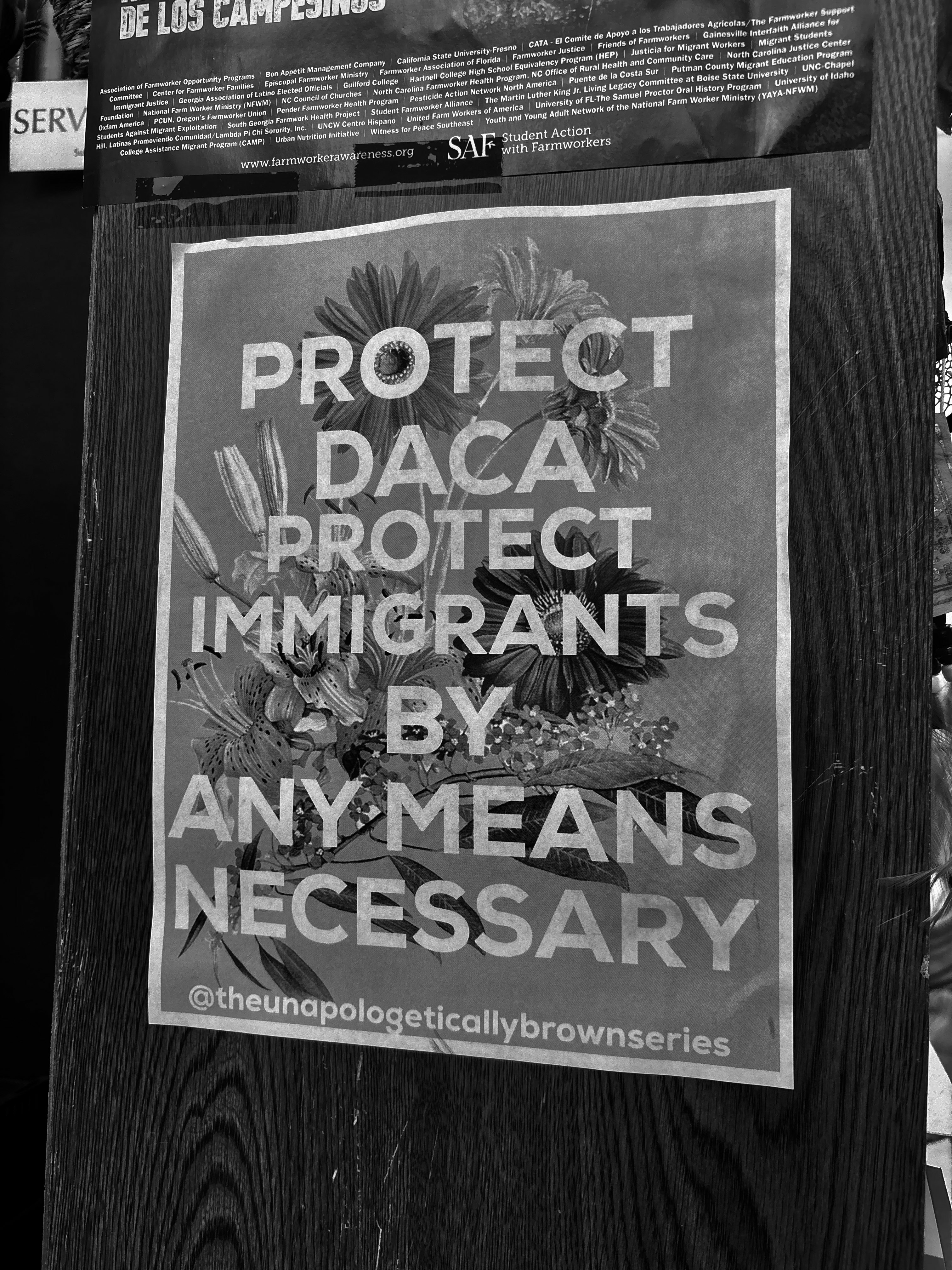
The fight is never about grapes or lettuce.
It is always about people.
–
Cesar Chavez
What did you have for breakfast today? In Central Florida, the answer often begins closer to home than we realize. Maybe your breakfast, in one way or another, included oranges, blueberries, strawberries, bell peppers, or tomatoes. Or maybe you didn’t eat breakfast at all, but those same foods might be sitting in a bowl on the counter, wilting in the crisper drawer, or ending their lives as peels and stems in your trash can. There’s no denying how much we eat, but to what extent do we know where this food came from, or who made it possible for it to be here?
The Farmworker Association of Florida (FWAF) was founded in 1983 by unemployed farmworkers left without any assistance after several devastating freezes in the early to mid 1980s. Today, the association has over 10,000 members of various national backgrounds and tackles issues centering on environmental, political, economic, health, and social injustices. On Friday, Feb. 6, 2026, I was able to meet with several members of the Farmworker Association of Florida to gain perspective on some of the major issues affecting Florida farmworkers today.
America’s Farmworkers: Overlooked History
Farmworkers in the United States have been subjected to generations of abuse. Many work in fields saturated with cancerous pesticides and chemicals known to cause rashes, chronic illness, and reproductive harm. Days are mentally and physically taxing, with workers spending long hours in the hot sun. Many are paid wages that barely sustain survival. These issues, though more prominent in earlier years, still remain today. Just last month, the Supreme Court announced they will be reviewing Monsanto v. Durnell, a case with major implications for whether people harmed by pesticides can still bring failure-to-warn claims under state law.
These are not isolated incidents or unfortunate exceptions. Few understand this better than Jeannie Economos, Pesticide Safety and Environmental Health Project Coordinator for FWAF. The depth of these issues became apparent as my conversation progressed with Economos and Mike Sheffield, the organization’s Communications and Climate Justice Assistant. 2026 is marking an unprecedented grim reality for farmworkers not only in Florida, but nationally.
In late Jan. to early Feb. of this year, Florida experienced a massive cold front, with temperatures dropping below 20 degrees Fahrenheit. Many farmworkers around central Florida experienced devastating losses from the freeze, as crops were damaged and destroyed, leaving many farm workers left without work or assistance.
In Apopka, known as the Indoor Foliage Capital of the World, crops such as blueberries, cabbage, and various ornamental plants are typically harvested at this time of the growing season. The recent freeze has brought work to an indefinite halt, disrupting the livelihoods and security of Florida’s farmworkers.
“Most of the paycheck from the year comes from this point of the year,” said Sheffield.
The Farmworker’s Association of Florida kicked into gear, providing as much rapid response relief as possible to ensure people are able to mitigate the economic hardships caused by the freeze. Rapid response relief during freezes or when work is unavailable is not the only form of advocacy FWAF does. Increasingly, their work has expanded to include protecting farmworkers from ongoing battles regarding recent ICE enforcement procedures.
Picked Apart: The Real Cost of Anti-Immigration Rhetoric
In 2024, Donald Trump centered his campaign on promises to enforce policies against illegal immigration. These far-reaching promises have shaped the current narrative around undocumented immigrants that has become increasingly prominent as we enter the second year of his presidential term.
“Mass Deportations are Improving the Quality of Life” headlines an article published by the White House just last month.
The article continues
“Mass Deportation = higher wages”
“Mass Deportation = more jobs”
“Mass Deportation = lower crime”
In the United States, many immigrants sustain industries and communities, unlike other countries that may seek to regulate immigration. Take, for example, the 73% of immigrant farmworkers that create The United States’ agricultural workforce. What distinguishes the Trump administration’s approach is not the existence of deportation itself, which has long been part of federal policy, but the story being told about who immigrants are. Increasingly, they are described not as workers or families, similar to me or you, but as threats: inherently violent, inherently deceptive, inherently criminal. Language shapes policy, and policy shapes people’s lived experiences.
In this climate, executive enforcement has taken on a more visible and forceful presence. Immigration and Customs Enforcement agents detain individuals at mandatory court hearings, conduct searches without judicial warrants, and remove people from public spaces, often masked and in government-issued uniforms. Immigrants in the United States don’t just sustain so many of our industries, they form the foundation of the cultural landscape that makes the United States so unique. From Miami’s Little Havana to San Fransico’s Chinatown, from Little Vietnam right here on Mills Avenue to the Slavic boroughs of Chicago, these cultural enclaves enrich the United States through traditions, cuisines, and languages.
“The way immigrants are portrayed in media is not the reality we see,” said Economos.
She continued, “These people are not criminals, they are our neighbors, they are helping to feed you, it’s not a population you can just divorce from everyone else.”
In the United States, the agriculture sector is an enormous industry employing over 2.6 million people, with 1 million of those workers being “hired” workers (many of which are undocumented migrants.) Hired workers are temporary contractors brought in to fill temporary agricultural jobs, oftentimes under the H2-A Program. This program allows U.S employers to bring in people from other countries to complete these temporary jobs with visas up to 264 days, and an extension for up to three years. However, due to the temporary stipulations for hired workers, and the necessity to bring money back to their families, many hired workers are limited in their ability to speak out against improper working conditions, inadequate pay, or abuse within the workplace.
“We have a very schizophrenic immigration policy in our country,” said Economos. She continued, “[when] we have a labor shortage, we look for cheap, exploitable labor, we look for brown people on the southern border, and before that it was black people.”
Economos said, “We exploit them for their labor, and then when we have a surplus of labor, then we are anti them coming.”
This ‘schizophrenic’ immigration policy Jeannie described isn’t just theoretical. To learn how recent immigration narratives have been affecting Central Florida communities, I sat down with Rene Gomez, the farm civic engagement coordinator who witnessed the policy pendulum swing firsthand.
I asked Gomez if he’s experienced distinct changes with the transition into the current administration.
Gomez replied, “when you go back to 2008, the Obama administration, people say, well, we got a lot of our people deported at that time too. What’s the difference to them in the end?”
He continued, “it wasn’t as spoken about in the media, not as much anti-immigrant rhetoric. But to them, the result was the same.”
As for immigration enforcement in Central Florida, Gomez recounted experiences with ICE officers on the west side of Orange County, throughout Apopka, Pine Hills, and Ocoee.
A crucial aspect of my conversation with Rene came from what I learned from him about 287 (g) agreements. Authorized by Section 287 (g) of the Immigration and Nationality Act, these agreements allow law enforcement agencies to “perform specified immigration officer functions under ICE’s direction and oversight.” With three different models — the Jail Enforcement Model, The Task Force Model, and The Warrant Service Model — these agreements allow the identification, processing, and removal of alleged illegal migrants without the need for ICE to be present. Although these agreements are not mandatory, with states like California, Washington, and Illinois banning or restricting agencies from getting involved in 287 (g) agreements, as of Sept. 2025, Florida had over 300 287 (g) agreements within the state. Some Florida agencies and universities partnered with ICE include 15 universities — such as The University of Central Florida and The University of Florida — Florida Fish and Wildlife Service, and every county jail within Florida.
One article from The Leadership Conference on Civil and Human Rights stated, “In Florida, sheriffs who resist the program are facing legal threats from the governor and state leaders are pushing universities to sign 287(g) agreements, turning campuses into surveillance zones.”
Gomez shared a similar sentiment when asked about the relationship between public agencies and Immigration and Border Control: “I think also due to the fact that we’re in Florida, and Florida is such a staunch supporter of whatever the federal government does. I mean, we have the most 287G contacts out of any other states in the country.”
You, Me, US: rejecting division
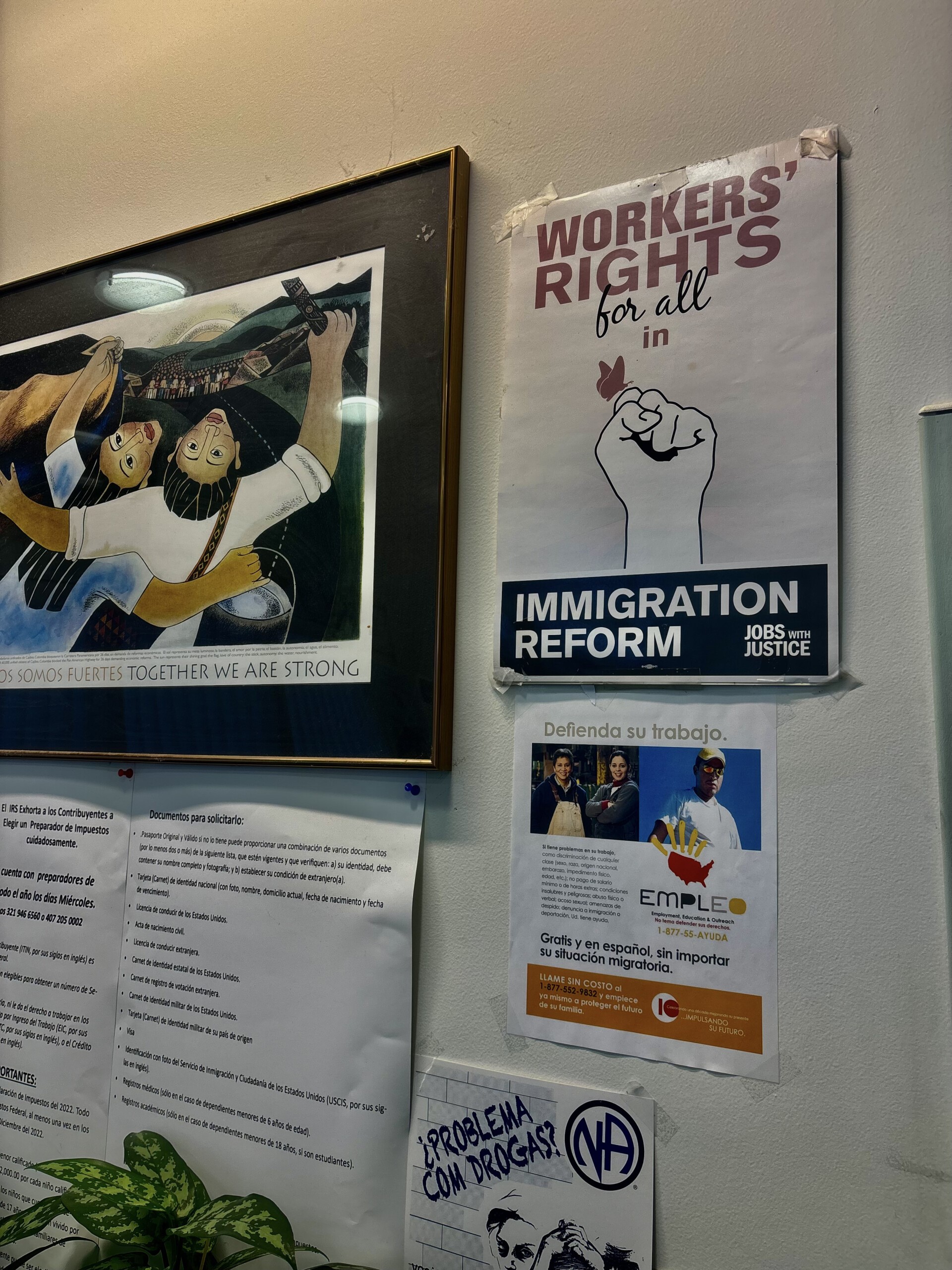
“Divorcing the immigrant population,” in Economos’ words, is an easy thing to do when they are responsible for the illness that plague this country; violence, rape, theft, the list goes on. It’s a much harder thing to do when the reality sets in that there are very few things that make people truly different. While cultures may seem worlds apart in terms of diet, traditions, social norms, and language, most people are ultimately driven by the same fundamental desires: to survive and to care for the ones they love. When the government is allowed to racially profile immigrants and subject them to unlawful searches, detention, or mistreatment, it sets a dangerous precedent. If these constitutional protections can be ignored for one group of people, they can be ignored for anyone. Farmworkers are essential workers, quite literally nourishing the nation. When we fail to protect their rights, we undermine the very principles of equality and justice that define this country.
Below is some information from the American Civil Liberties Union in the case of ICE officers coming to your house.
- Ask if they are immigration agents and what they are there for.
- Ask the agent or officer to show you a badge or identification through the window or peephole.
- Ask if they have a warrant signed by a judge. If they say they do, ask them to slide it under the door or hold it up to a window so you can inspect it.
- Don’t lie or produce any false documents. Don’t sign anything without speaking with a lawyer first.
- Do not open your door unless ICE shows you a judicial search or arrest warrant naming a person in your residence and/or areas to be searched at your address. If they don’t produce a warrant, keep the door closed. State: “I do not consent to your entry.”
- If agents force their way in, do not resist. If you wish to exercise your rights, state: “I do not consent to your entry or to your search of these premises. I am exercising my right to remain silent. I wish to speak with a lawyer as soon as possible.”
- If you are on probation with a search condition, law enforcement is allowed to enter your home.
The opinions on this page do not necessarily reflect those of The Sandspur or Rollins College. Have any additional tips or opinions? Send us your response. We want to hear your voice.





Comments are closed.