
I’m a student of the Crummer School of Business’ class Introduction to Design Thinking. The class focuses on the importance of empathy gathering, in which an interviewer asks questions that focus on interviewee’s own feelings about practical, day-to-day issues.
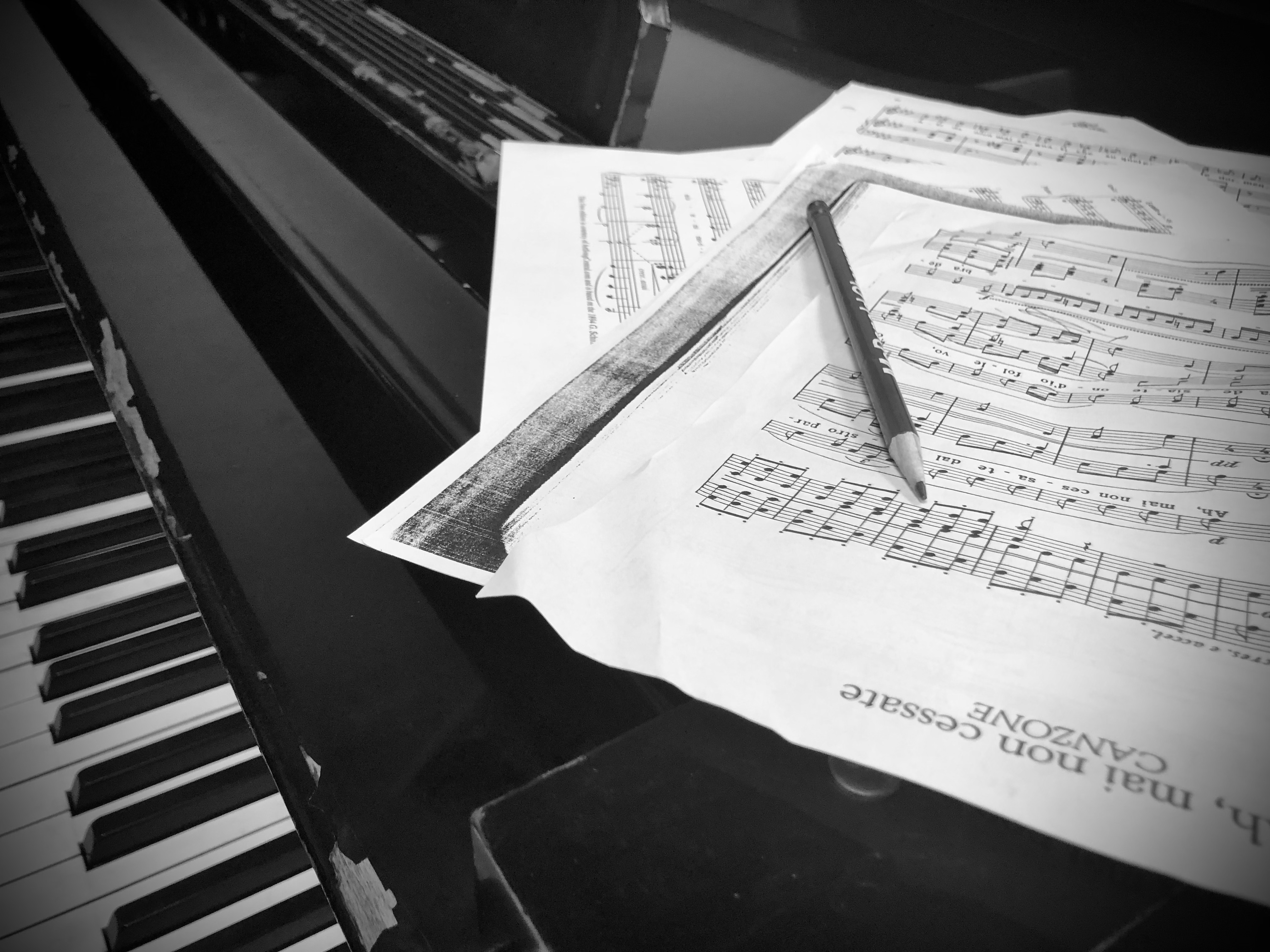
Over the last four years I’ve noticed the distinct challenges and opportunities that undergraduate performing arts majors face. Hence, I decided to have conversations with music and theater students that gathered empathy on the highs and lows of their lives: the moments they felt stressed and overwhelmed, the moments they felt ecstatic about their shows, and all the ordinary ups and downs of life.
On How they Came to Rollins
“Kind of a funny story: I wasn’t even planning to go to college, and I was dating a Rollins student in my senior year of high school. My GPA was bad at high school, and I was going through a lot. My ex-boyfriend suggested taking a lesson from one of the voice teachers. I talked to my choir teacher from high school, and I threw together my audition pieces and applied only to Rollins.”
“Initially, I wasn’t going to come here because it was too expensive, but then I got my financial aid and my scholarship. With Rollins only 10 minutes down the road, I decided to come, and now I’m in my fourth year!”
—
“I heard about Rollins from my high school choir professor, and I liked it because it is close to home (I live in Orlando), it’s a small college, and it seemed beautiful. I just applied without thinking too much about it, and I got accepted so that was just it.”
—
“I had options. My main three were Rollins, UCF, and Stetson. I wanted to come here. I didn’t bother with UCF because they seemed to care more about grades than musical ability. I also didn’t hear great things about Stetson’s guitar program.”
“When I visited Rollins, Stella [Monner] (’25) was my tour guide, and she told me to come to Acoustic Ensemble that night.”
Regarding whether there was a particular lesson teacher with whom they wanted to study at Rollins:
“Yeah, the main reason I came here was my guitar teacher, Bobby Koelble. He was my teacher before college, and I wanted to study with him. He spoke highly of Rollins and wrote me a letter of recommendation. I get a lot of everything – not just jazz or just classical – by studying with Bobby here.”
On their Expertise
“I think I’ve grown to be good at the technical aspects of singing, and I’ve become versatile in different styles. I understand the significance of being a performer for me versus what it means to others.”
“I love just having fun and being realistic it’s not always going to go my way, but it’s really fulfilling when it does. It’s hard sometimes to not take yourself too seriously when you’re in the performing profession. A vulnerability in solo performance is that it’s entirely on you. You can’t blame anyone, or your instrument, when something goes wrong. I’m comfortable with that vulnerability and I know that regardless of what happens, I’m putting my best foot forward. I’ve mastered a healthy mindset for a sustainable career.”
—
“My first semester I was thinking about going fully down the classical guitar route. I thought that was cool, but I wanted to give jazz a try – everything I could try, really. But I wondered, should I tell my teacher I don’t want to specialize in this one genre?”
“And then I found the things I wanted to do most: bluegrass and fingerstyle. But I also did blues and bossa nova last semester, and different niches of fingerstyle.”
—
“I sing, and always have loved it, but I never studied music at all prior to college. The only choir experience I had before here was in high school, but it was very limited because my two high school years in choir – junior and senior year – were mostly online due to COVID-19. My years here have been the entirety of my music education and I’ve loved it.”
On Stress and the Work-Life Balance
“A professor brought a due date forward a couple days. I had to lock in very late that night when I saw it on Canvas and freaked out, because I’d already worked and performed at a concert that day.”
Regarding how satisfied they are with their work-life balance:
“I can’t change any of it, so I’m happy with it.”
—
The lyrics of a song composed this semester for a songwriting class:
“Drowning, but no time to let go
I did it, so I suppose
This is how
I’ve built my house
Limp with cards
Waiting to be scattered on the ground.
I’m crying, but you wouldn’t know
‘Cause they’re streams of glitter, but oh
I will make it worth it
I must make her proud
Sincerely, your past, present, future self”
—
“In one class I took, every assignment took about two hours. I would stay up all night to do assignments, which led to me to do poorly in assignments because of the workload of the one class.”
I asked about a time when it felt difficult to keep up with coursework.
“Probably in the fall, because I had two Holt classes that had a significant workload. I had two jobs at the time. I felt very stressed, overwhelmed, and upset about that, but I had to work. That’s when I was starting work at 6 am and then at night I would work a second job at Jeremiah’s.”
—
“One time I remember having to stay up until around 3 studying for a test that was at 8 am and going to bed for a few hours before waking up around 6 to study before the exam again.”
On All Saints’ Coffee Shoppe
“I love All Saints’ because I commute, and sometimes, I need a quiet, comfortable place to study, and sometimes I just need a snack.”
Why music students in particular like it there:
“I don’t know! Maybe because having a nice, calm place at a walkable distance is good for all of us?”
—
“The people there are very nice, and it’s a good place to wind down after long rehearsals or class. In the music building there’s music going on 24/7, and sometimes you need to decompress and clear your mind of music. Especially when someone’s shredding on the violin in one room, someone’s performing in Tiedtke, and there’s class downstairs.”
“The walk from here to All Saints’ is such a lovely walk.”
How often they go:
“I usually go twice a day.”
—
“Not as much as some people do, but I go once or twice a week.”
Whether they see other music students when they go:
“Sometimes. I saw them more last semester, because I had a class that ended just before common hour, and we’d all walk over together. This semester, I’m not on campus until 2 pm. When I do go, I usually see at least two or three music students – not as much as I used to, but I still do.”
On the Joy of Performing
“That was the first time Dr. Crozier saw me really play.”
—
“Our duet song ‘Chiquitita’ was a fun and fulfilling part of my recent recital that satisfied me on an emotional level, since I’ve been friends with the other singer since junior year of high school. The two of us take every opportunity to do fun and silly performances together.”
How they feel after their recital:
“It felt like everything paid off when I did my recital. I was satisfied with the end result, and I knew that I did a good job. It wouldn’t have mattered what someone said to me about how I performed, because I knew the work I put in to make it happen.”
Whether their experience is different from the experiences of others they’ve noticed before their recitals:
“Before recitals, performers often work themselves to the bone, hour after hour. I didn’t do that. I had an interlude each day between choirs when I’d practice, plus my voice lessons and practice sessions with my piano accompanist each week.”
“I’m glad I didn’t put myself at risk of vocal injury because that wouldn’t have made it fun anymore. I felt fulfilled the entire time I worked on it. Frankly, it’s easy for recitals to become a less fun process, but I never had to kill myself with hours of practice because I trusted my abilities and timeframe. So yes, it was really satisfying for me.”
—
“I’d rather perform in an auditorium than for two people.”
—
“A memorable concert was the last performance we did of Treble Vocal Jazz with Michelle Mailhot” – a voice instructor and jazz ensemble leader at Rollins until 2025 – “because it was her last year here at Rollins. I remember being super grateful to be part of that ensemble and to learn from her before she left.”
—
“Even though it’s stressful, I love theatre and couldn’t imagine doing anything else. It becomes worth it to see all your hard work come together. Being able to major in it is truly a dream and so fulfilling; even though at times it can be a lot, that’s part of the fun in a way.”








Comments are closed.