
The year was 1968.
American troops were engaged overseas in Vietnam.
Martin Luther King Jr. and Robert F. Kennedy were both assassinated.
In response to the Vietnam conflict and the Civil Rights Movement, protests exploded across the nation.
Richard Nixon won the presidential election against Hubert Humphrey.
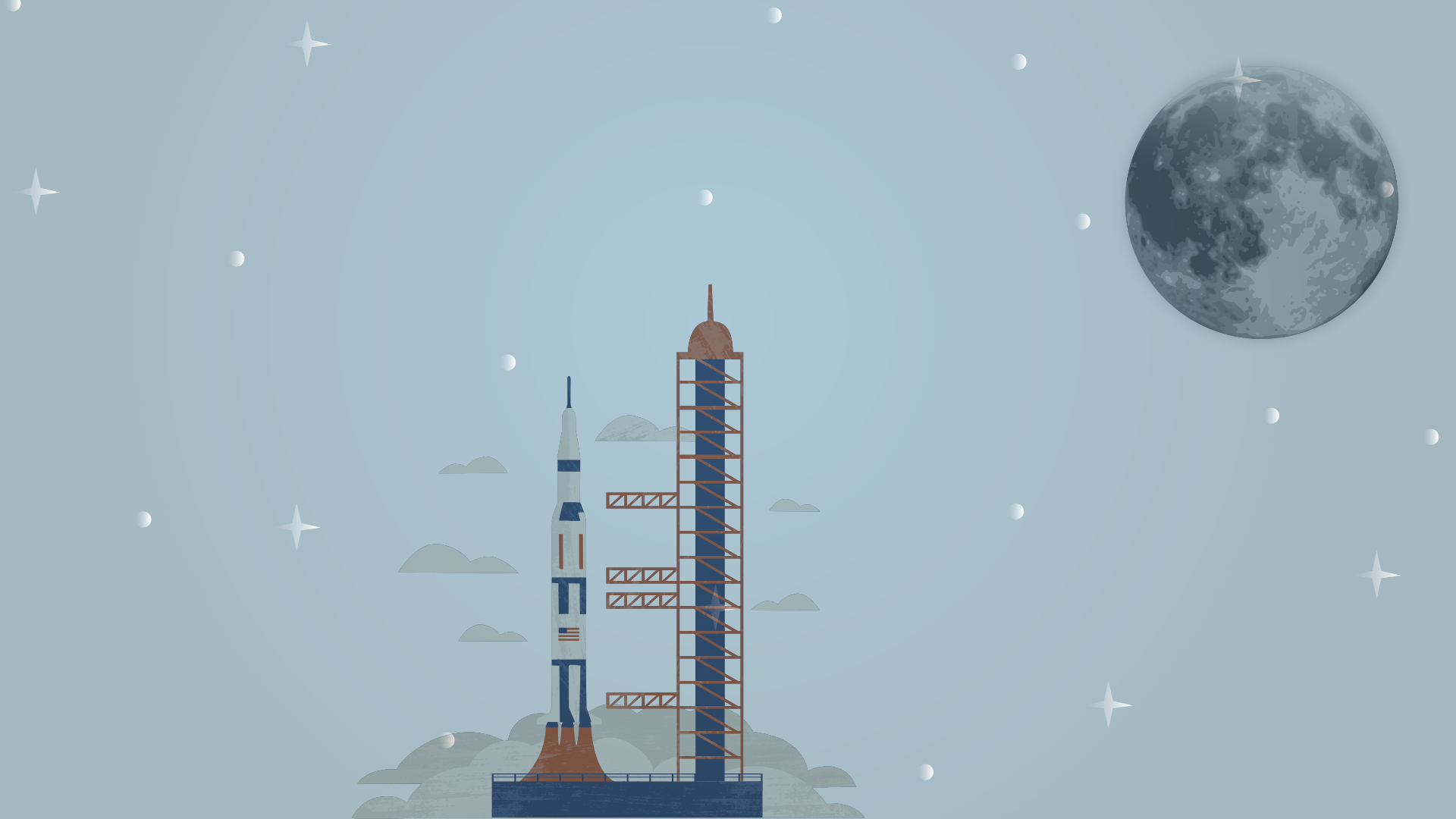
On Dec. 21, four days before Christmas, the crew of Apollo 8 — Jim Lovell, Frank Borman, and William Anders — strapped atop a Saturn V rocket launched from Florida’s Cape Canaveral. They were the second crewed Apollo mission and the first to the moon.
The intention of Apollo 8 was to see if it would be possible to bring a craft close enough to the moon to officially leave Earth’s orbit — a precursor to Neil Armstrong’s first steps on the moon’s surface almost seven months later.
“Earthrise,” taken by Anders on Christmas Eve, changed the way the world looked at space. No longer was space seen as a far-off land inhabited by only the greatest imaginations; instead, leading to the beginning of the environmental movement, the whole world could see Earth, untouched by the war and violence that had plagued 1968.
Seven months later, on July 20, as Neil Armstrong made his first steps on the moon’s surface, he said one of the most famous phrases in space history: “That’s one small step for man, one giant leap for mankind.” History, science, and the world as we knew it were forever changed. forever changed.
It’s not 1968, though.
Now it’s 2026.
Once again, the country is at war.
The government is unpopular.
Gas prices have skyrocketed.
Man has not set foot on the moon in 54 years.
They will not come close for another two years, but sometime, as soon as Apr. 1, man and woman could return to the moon’s orbit.
Pad 39B, one of two launchpads originally designed to launch Apollo’s Saturn V rockets, and the site of the 1986 Challenger disaster, is about to be the site of history once again when Artemis II blasts off, back to the moon.is about to be the site of history once again when Artemis II blasts off, back to the moon.
Following a similar route to the crippled Apollo 13 flight, Artemis II will circumnavigate the moon, going farther into space than any man has gone before at 46,000 miles beyond Earth’s orbit.
Playing the same role that Apollo 8 did, Artemis II will once again bring humans within the moon’s orbit, a precursor to Artemis III, scheduled for mid-2027, which will practice docking the command module with the lunar lander, all in preparation for the 2028 Artemis IV mission, which will, for the first time since 1972, bring humans back to the moon’s surface.
For those wanting to catch the historic Artemis launch from Florida’s east coast beaches, there are available launch windows from Apr. 1 to 6, as well as on Apr. 30. All of these run for two hours and open in the late afternoon or early evening.
The launch also marks a new kind of history, with NASA astronaut Christina Koch becoming the first woman to travel to the moon, and Canadian Space Agency astronaut Jeremy Hansen becoming the first Canadian to travel to the moon.
Gone are the days when astronaut selection was determined by test pilot and military experience, when the capsule could only fit astronauts of a certain height — the maximum height requirement was 5 feet 10 inches. Now scientists with a dream and children who once upon a time saw the Space Shuttle and thought “that could be me” get to inspire the next generation of astronauts with a dream.
The opinions on this page do not necessarily reflect those of The Sandspur or Rollins College. Have any additional tips or opinions? Send us your response. We want to hear your voice.






Comments are closed.