
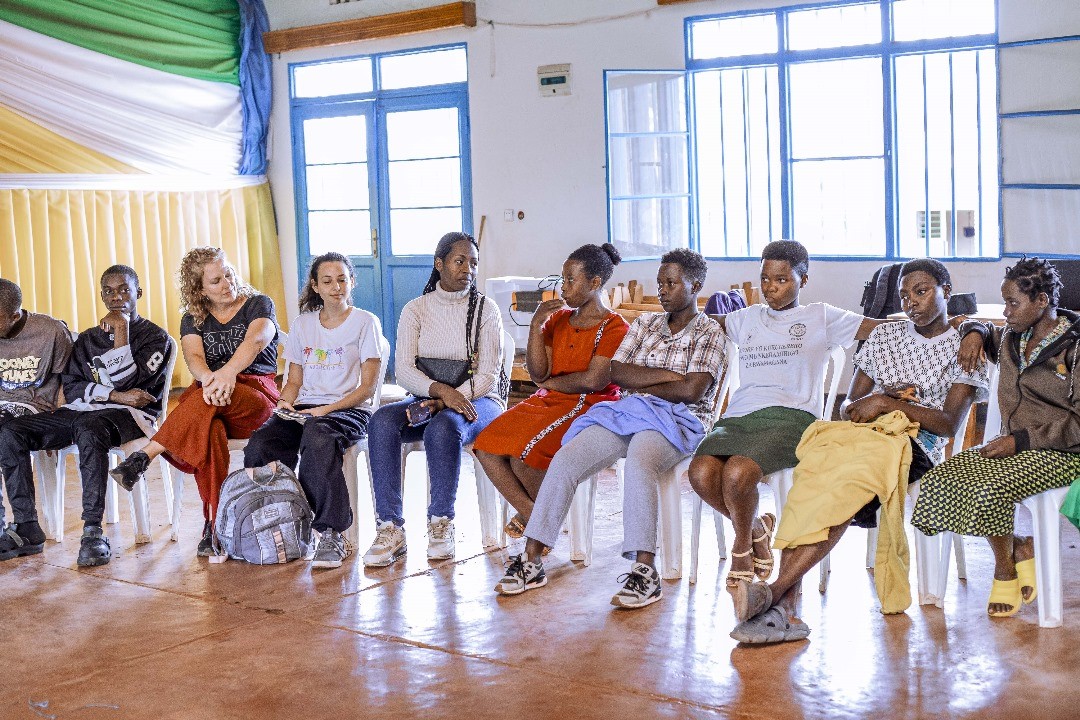
This past summer, I traveled to Rwanda for a field study. Before leading a mental health workshop in Rwanda, I was told that mental health could be a sensitive topic. I came to understand that it was essential to listen, investigate, and comprehend rather than expect that the methods I was accustomed to would be understood. I had to avoid imposing my own cultural framework and adapt culturally responsive approaches to a community with its own cultural history and values. I quickly realized that I was there to learn as much as to share. I spent time learning about Rwanda’s cultural context and history, including the country’s collective healing process following the 1994 genocide. That research led me to Ubuntu.
Ubuntu is a philosophy originating from South Africa; therefore, I decided to lead a mental health workshop focusing on Ubuntu. Ubuntu translates into “I am because we are.”
This philosophy focuses on interconnectedness and reciprocal support. The workshop placed a strong emphasis on mental health as a collective issue rather than an individual one. Important cultural aspects were uncovered by this observation, such as Rwandan customs surrounding post-genocide restoration, communal perseverance, and expressing one’s feelings. The workshop emphasized group discussion and collective reflection rather than individual therapy sessions. Community members supported one another, shared experiences, and listened with empathy. This connects to Rwanda’s restoration journey post-genocide, where group support and communal encouragement were largely utilized.
Having grown up in a Hispanic culture and spent a large portion of my life in the United States, I have been exposed to both collectivistic and individualistic approaches to mental health. Therapy in the U.S. often emphasizes self-reflection and individual growth, which are approaches that can be very effective. Seeing Ubuntu in practice did not diminish the value of these methods; instead, it expanded my understanding of what mental health care can look like when community is placed at the center. As I listened to the individuals talk about their feelings and see how they comfort others, I started to see how beneficial it is to be surrounded by a community, to constantly realize that you aren’t by yourself and that others have experienced your anguish. I saw how connection itself can be therapeutic.
What I learned in Rwanda was not that one culture approaches mental health “better” than another, but that effective care must be culturally responsive. Working across cultures, especially in global contexts, is not about exporting solutions; it is about building bridges. By basing the workshop around this philosophy, I was able to interact with people in a way that was meaningful and respectful of their culture. What stayed with me most was the love, warmth, and unity I received from the community. I was struck by the depth of their humanity, the joy they carry despite their circumstances, and the way dance serves as a powerful form of expression and connection.
My perspective of emotional well-being was completely altered by a significant cultural difference that I discovered after leading the mental health workshop. I discovered that connecting with people may be just as important to restoration as reflecting oneself through the Ubuntu perspective. It introduced me to a comprehensive perspective on mental health that emphasizes reciprocating support, communal discussions, and openness. Moving forward, I hope to create environments where connectivity is valued, and therapy becomes a shared process rather than a personal strain.
The opinions on this page do not necessarily reflect those of The Sandspur or Rollins College. Have any additional tips or opinions? Send us your response. We want to hear your voice.





Comments are closed.