
At a screening for pneumoconiosis — better known as “black lung” — three veteran miners reminisce about their lifelong careers. These careers, of course, are the reason they are here to begin with; long hours, substandard pay, and confinement in the cramped, dusty bowels of a coal mine are not exactly conditions conducive to lasting health.
Nevertheless, they laugh.
One, an African American man, fondly remembers the solidarity with his fellows: “We done made every color when we came in,” he says. “[We] all [looked] the same when [we] came out.”
In a too-small tin washtub, a mother scrubs her daughter clean and tells her about the ongoing strike. She makes her child lofty promises: if the Harlan County miners win a contract, her father, a coal miner, will come home victorious — with a big enough paycheck to afford “hot running water, and a big ol’ bathtub.” She does not wrestle with the question of how she will explain the very concept of a union to her child, who cannot be older than six or seven. She doesn’t need to explain anything. If this little girl’s concerns are to be believed, she and her mother have already had run-ins with the law for trying to defend the head of the family from “scabs.”
A man tells a gruesome story about a workplace accident. “I had about 300 pounds of steel on my head,” he recounts. “They took me to the hospital, sewed my head up. [I] had a hole cut through my nose here.” His superintendent’s only concern after he came back? “Get him to come on back up here and work.”
These stories, all real and equally stirring, tie into the greater narrative of Barbara Kopple’s 1977 documentary Harlan County, USA: a seminal work following the 1973 Brookside Mine workers’ strike against Duke Power Company. The impact of this documentary, aside from its powerful pathos, is not to be understated. The first blockbuster of its kind, Harlan County exemplifies Kopple’s deftness in cinéma vérité even this early in her career. Kopple got so involved with the lives of her subjects, in fact, that she risked hers — albeit unknowingly — to complete the film. Suffice it to say, that Academy Award was more than well-deserved.
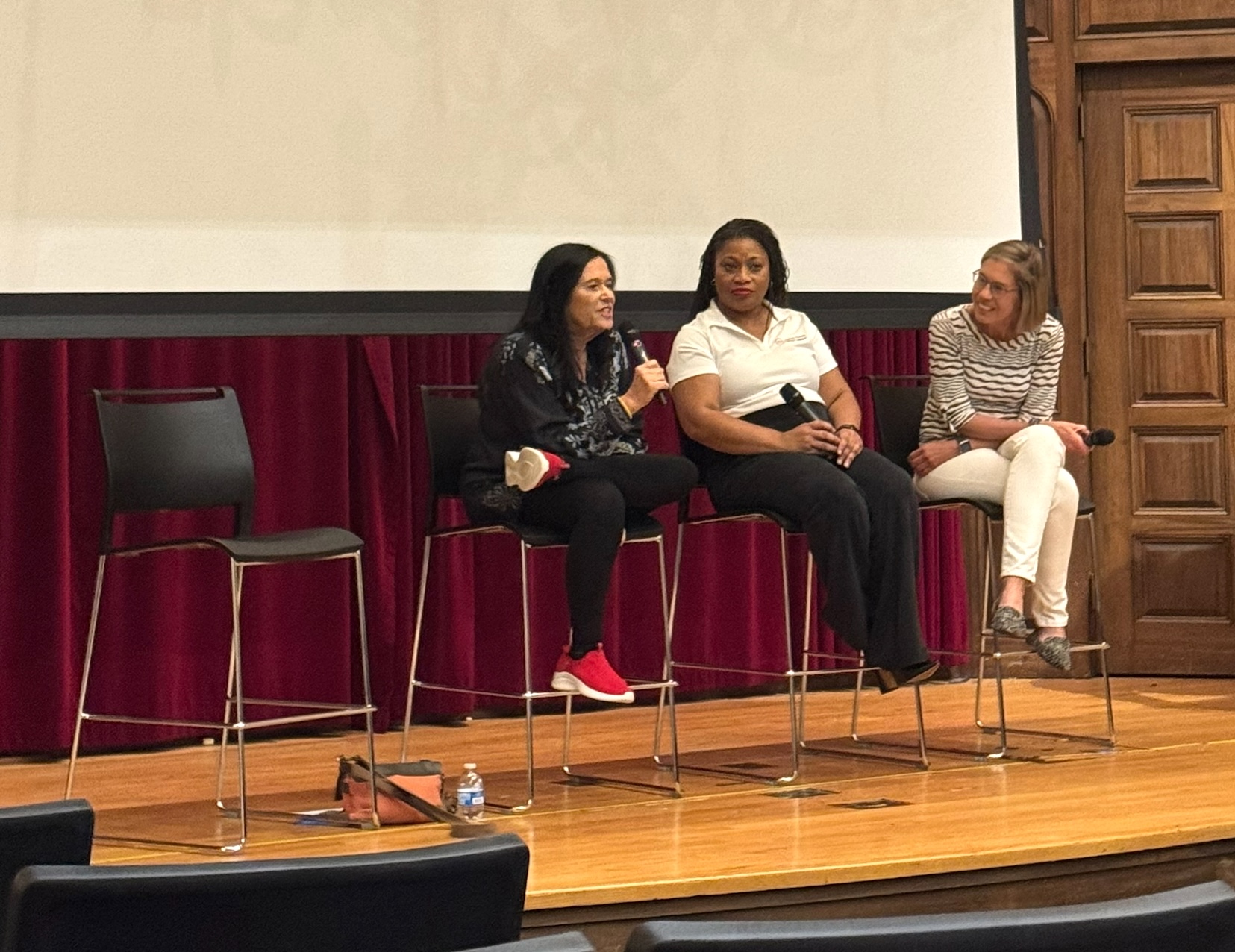
And, perhaps most serendipitous of all, on Sept. 19, 2025, Rollins students had a unique opportunity to watch a screening of the film at the annual Global Peace Film Festival and meet with Kopple herself. A renowned master and a lively personality who has yet to lose her spirit after almost 50 years of filmmaking, Kopple was generous enough to answer a volley of questions during the Q&A session.
Q: What advice do you have for students, especially socially conscious students, preparing for careers in media?
A: “I think, now more than ever, we’ve got to make films because they’re trying to erase history. I think you’ll find people who will back you up, who will help you and talk about it, wherever you’re going, to do something. We cannot stop doing this work. There’s not a lot of money out there and it’s very difficult, but I wouldn’t give it up for the world, because we have to keep saying the things we’re saying.” (Kopple also notes the importance of asking for help.)
Q: Your films are somewhat difficult watches in hindsight, but we see so many scenes of love, hope, and joy — even humor — among these activists. How do they hold onto that, even during such difficult uphill battles?
A: “I think it’s what makes them come alive. It’s what their politics are all about: to make change, to make sure there’s justice. That’s what they believe in, and to take that away from them would be to totally deflate them.”
Q: Given the challenges you’ve observed — and personally experienced — with censorship, are you aware of contemporary avenues for media preservation like the Internet Archive? If so, how do you feel about them?
A: “The Academy of Motion Picture Arts and Sciences has all of my films. Warner Bros. and other places used to just toss all their films out when they were done with them; so, to have somebody who will keep them securely, and to have good archivists, is just so important.”
Every year, Rollins College students have the privilege of watching films like Harlan County, USA, from directors with a similar interest in advocacy, justice, and freedom of expression at the on-campus Global Peace Film Festival. Like the many GPFFs before it, this year’s has undoubtedly been a success — thanks in no small part to directors like Kopple, and their persistent willingness to share their philosophies and creative processes with live audiences.
The opinions on this page do not necessarily reflect those of The Sandspur or Rollins College. Have any additional tips or opinions? Send us your response. We want to hear your voice.





Comments are closed.