
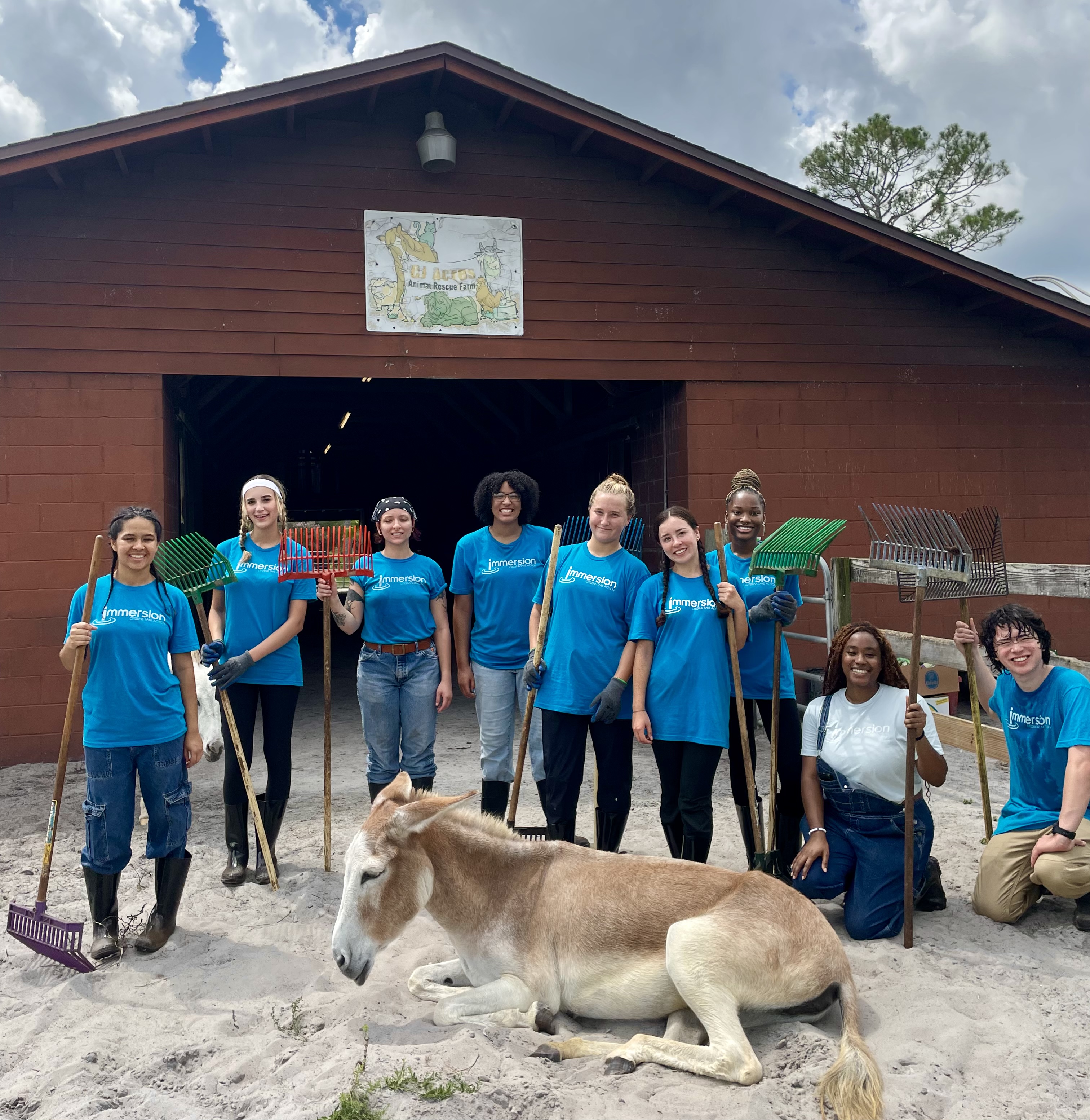
What does it really mean to eat ethically? For most of us, that question stays theoretical, something we debate in class, skim in a reading, or discuss briefly. But during a recent immersion trip to CJ Acres, a nonprofit animal rescue farm run entirely by volunteers, I got the chance to wrestle with that question in real time.
CJ Acres is home to animals who have survived abuse, abandonment, neglect, and even natural disasters. Their mission is simple: rescue, rehabilitate, and reintroduce. Each day on the farm starts the same way, feeding the donkeys, pigs, chickens, ducks, and goats. What comes next isn’t glamorous—shoveling poop, scrubbing feeding containers, fixing fences, cleaning barns. You quickly realize that animal welfare isn’t just an abstract idea, but rather the daily labor of care.
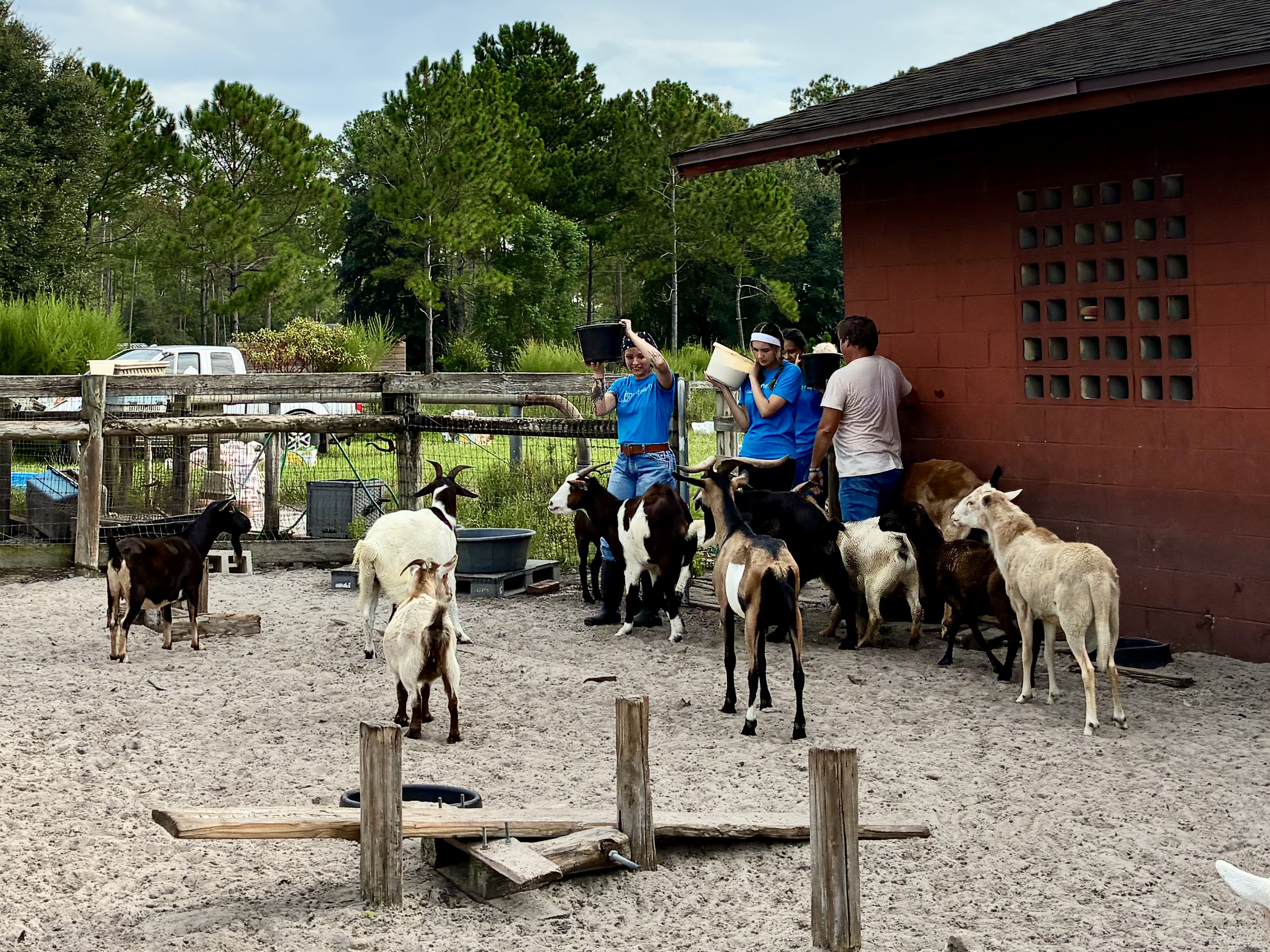
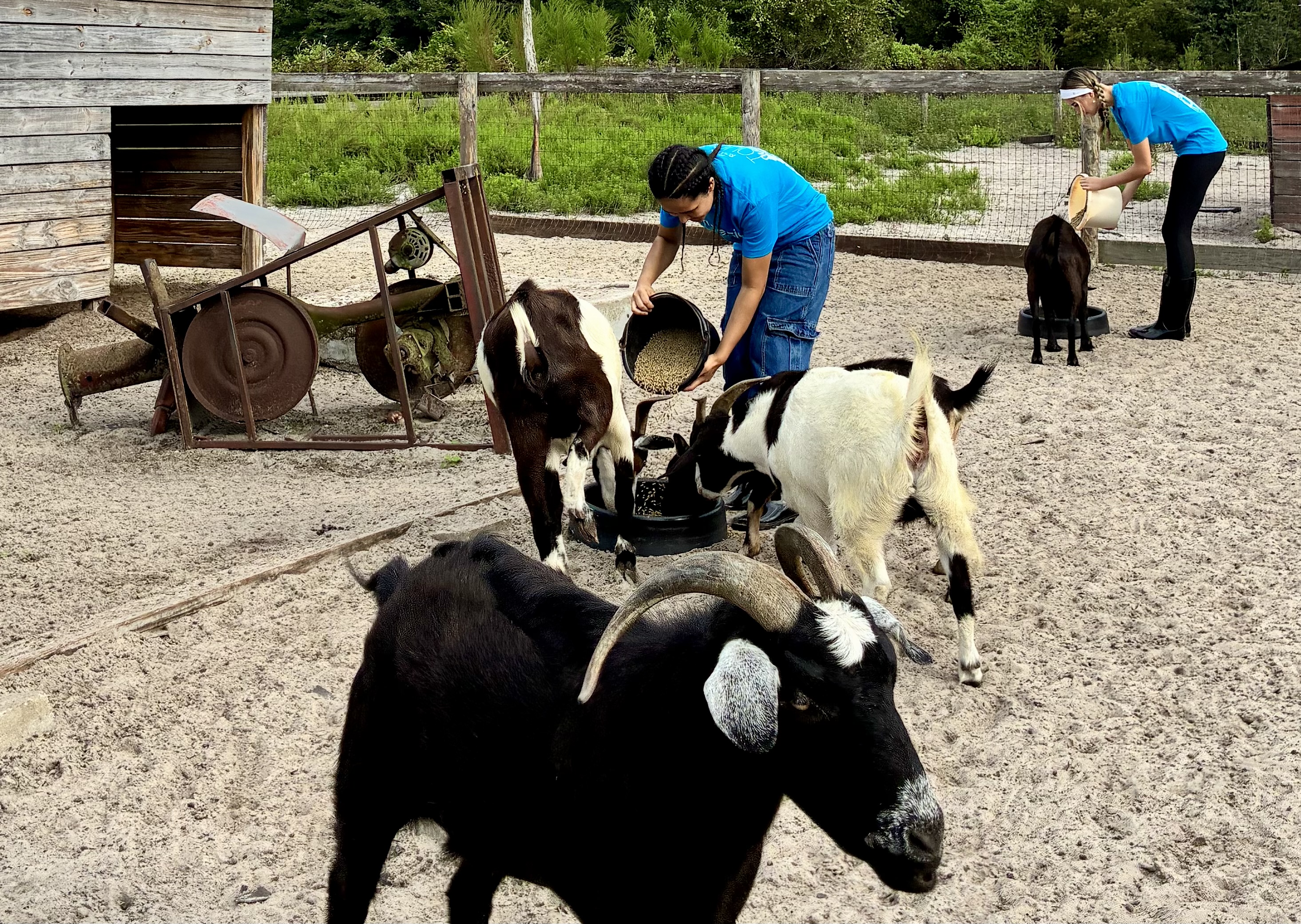
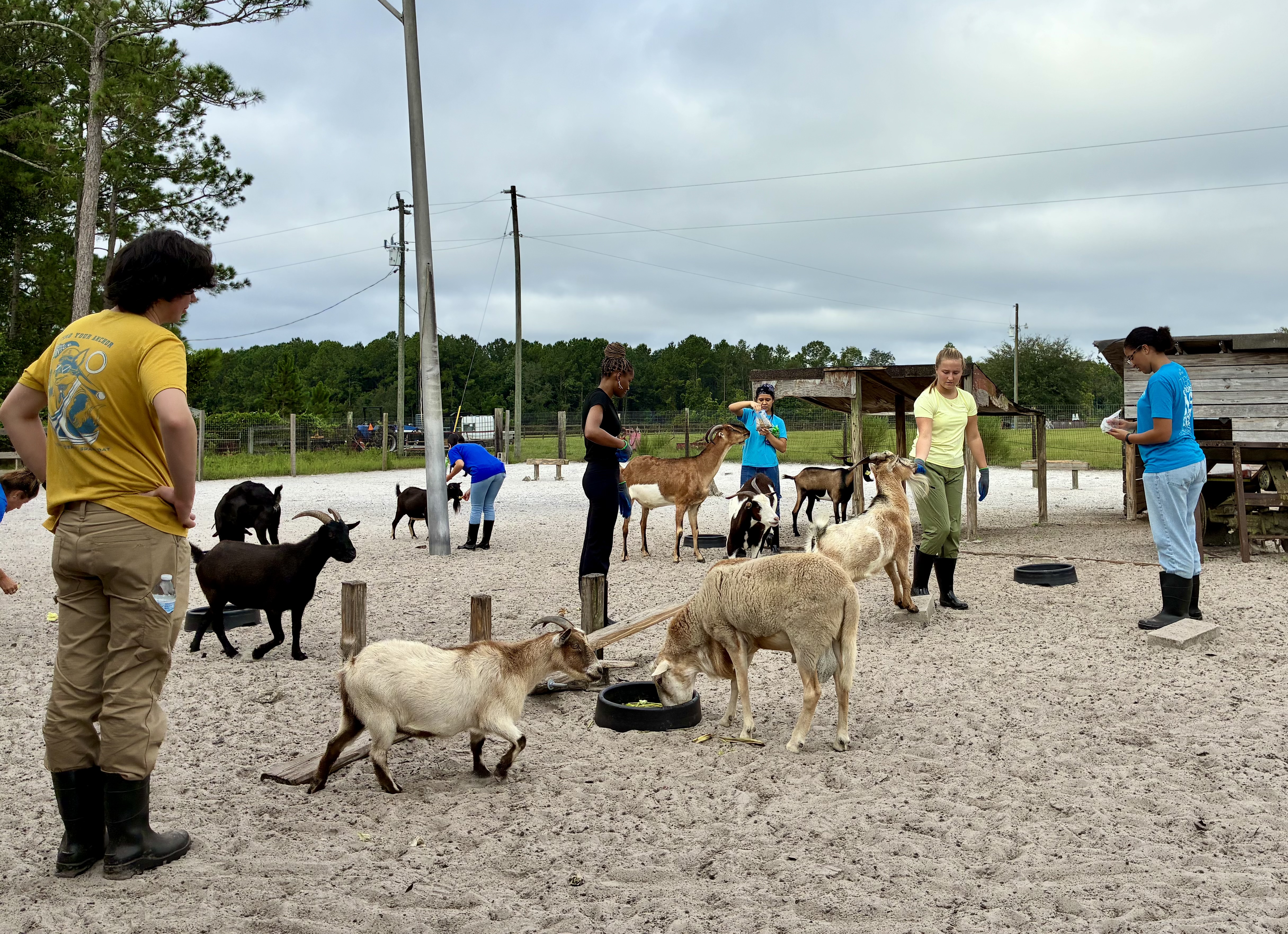
Most of the students on the trip weren’t vegan, me included. But that wasn’t the point. What mattered was the chance to be present with these animals and think critically about the systems behind the food we consume. As a facilitator, I made it a priority to spark those conversations: Where does our food really come from? How do we know if it’s ethically sourced? And is true ‘ethical consumption’ even possible?
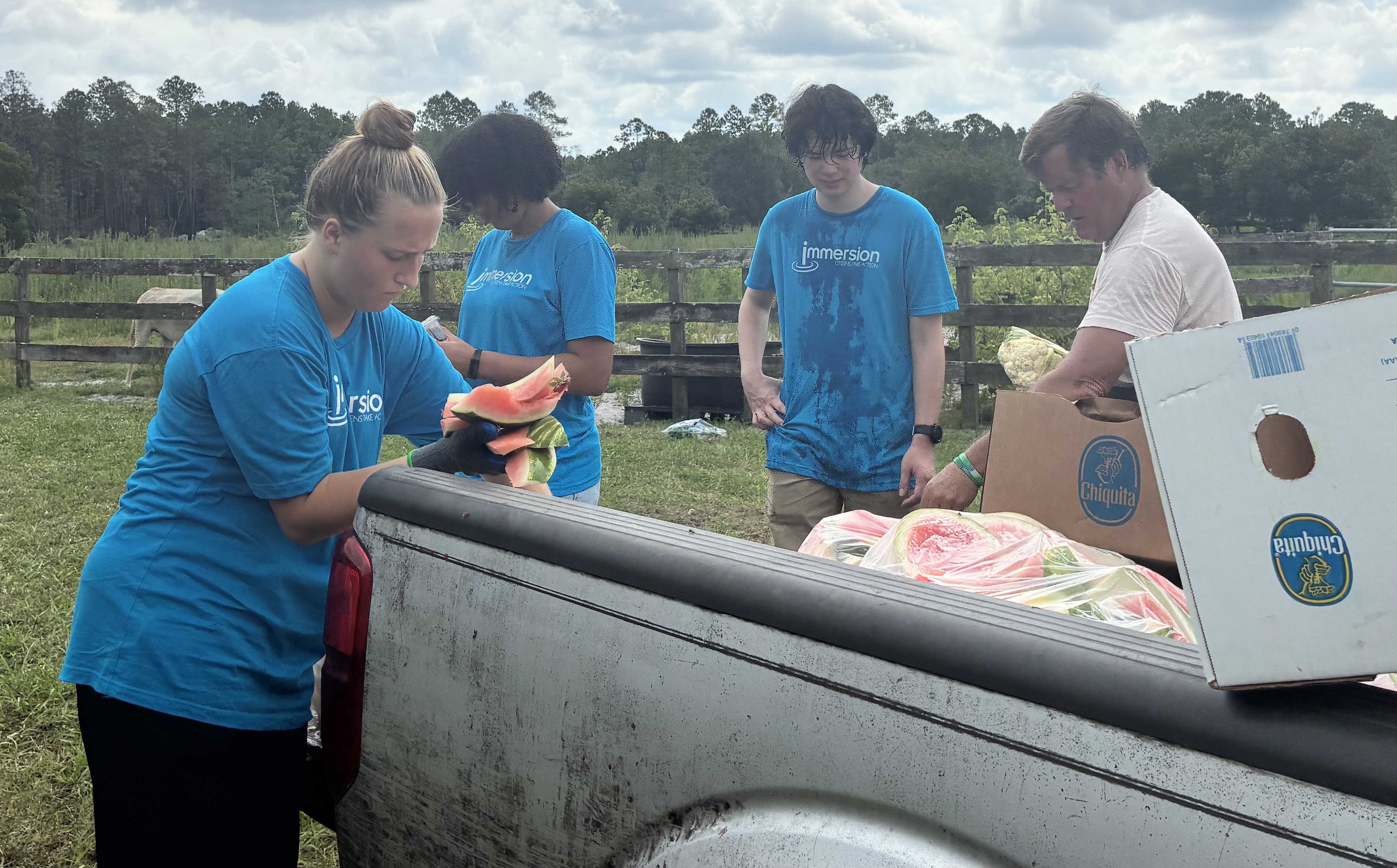
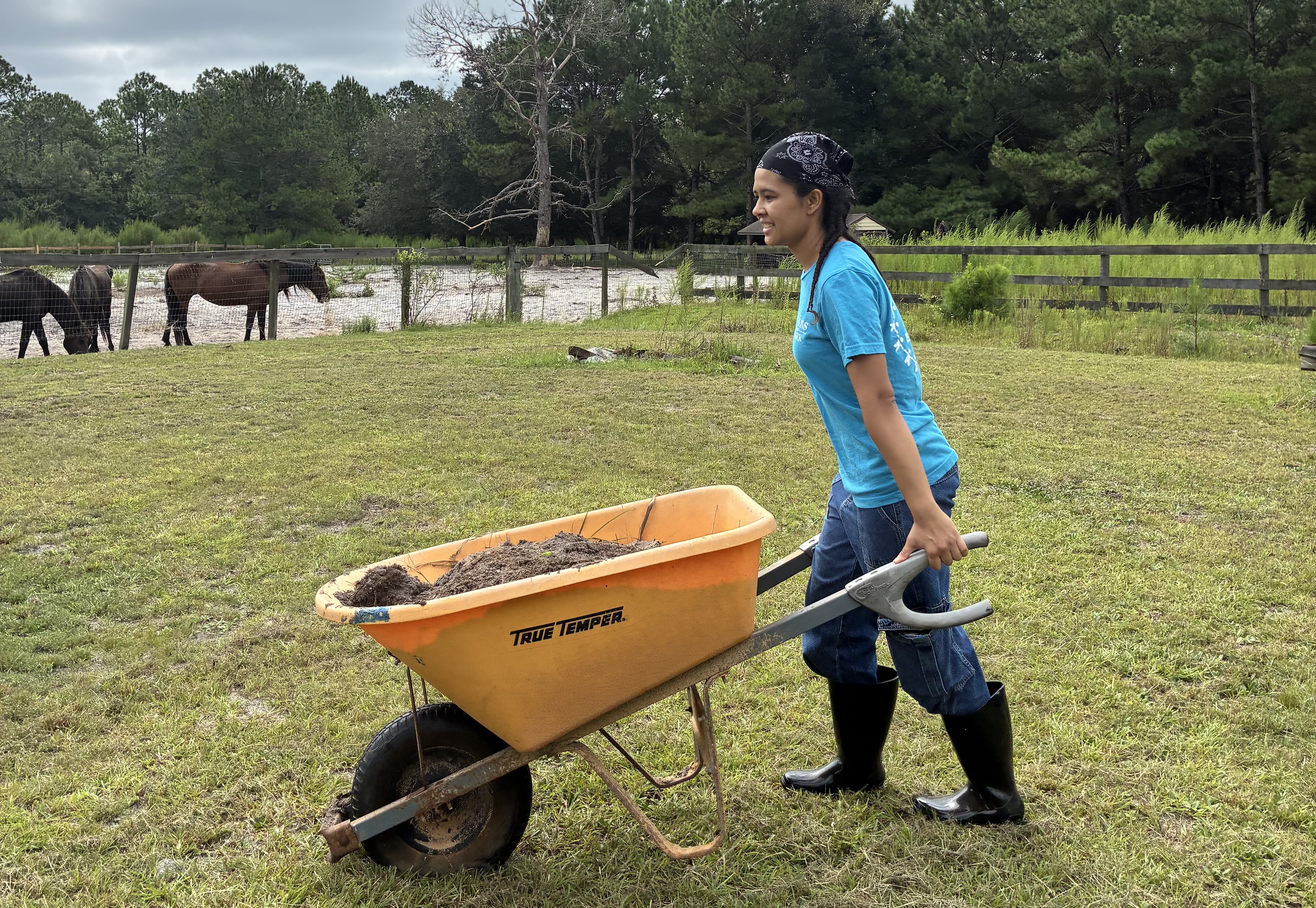
The answers aren’t simple. One student left with a deeper sense of what animal welfare looks like in practice, noting how Lee, CJ Acres’ owner, prioritizes the animals’ wellbeing every single day while for us students it was just a weekend. Others admitted they were more conscious about their food choices and the trade-offs behind them.
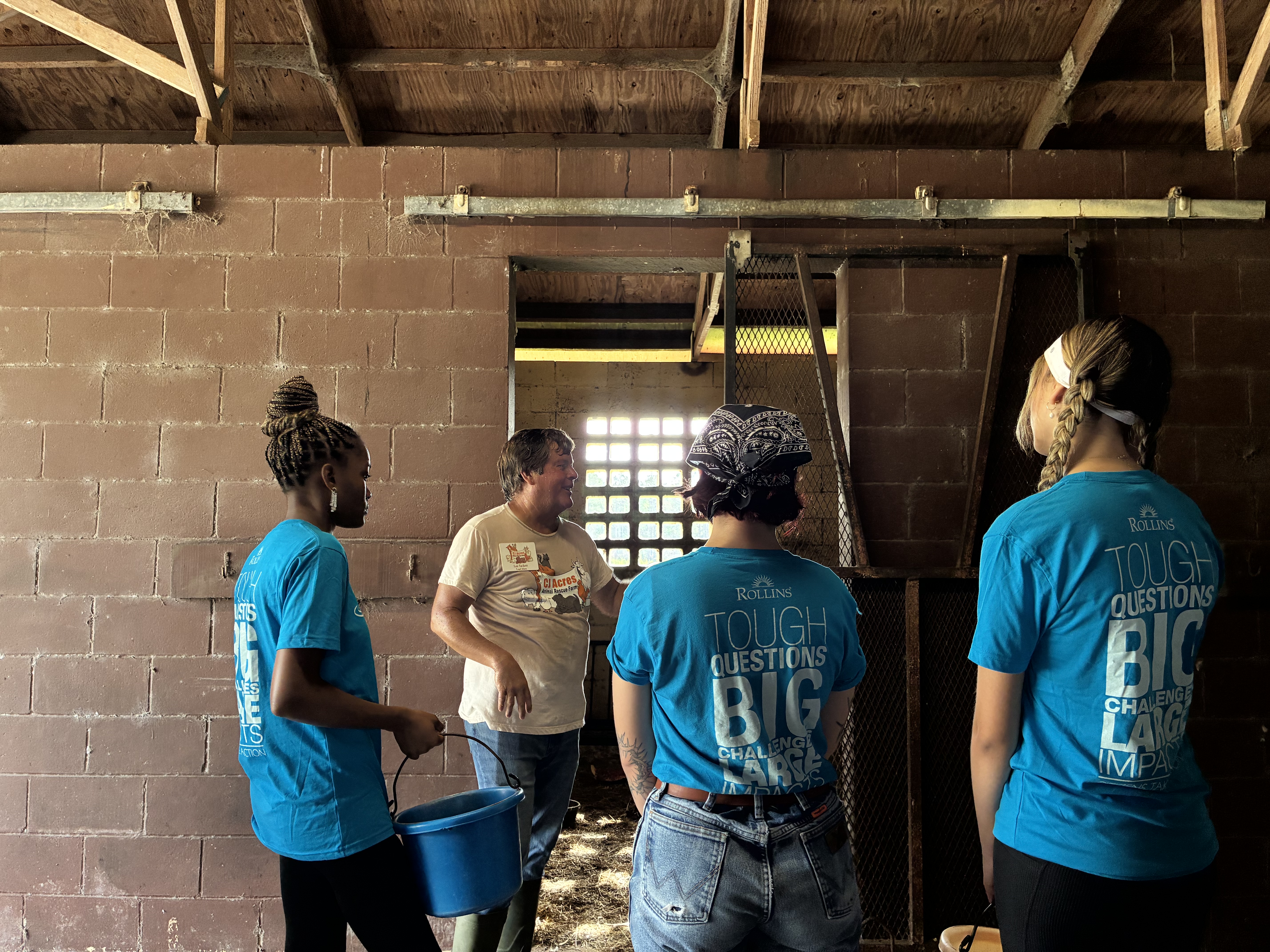
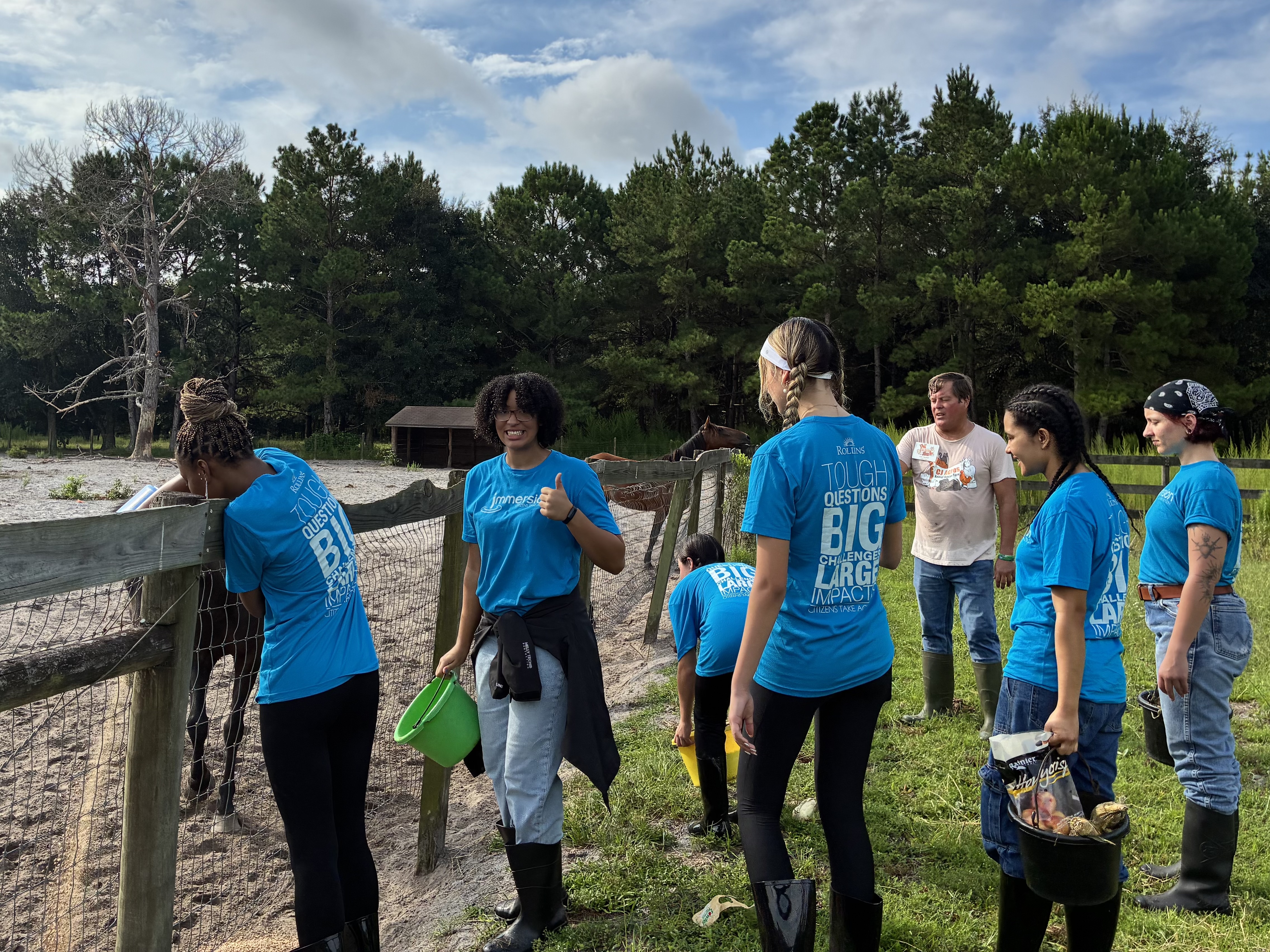
Personally, I walked away with a new respect for both animals and the quality of life they have. Giving up meat completely feels culturally unattainable for me, but that doesn’t mean I can’t make more thoughtful choices. I can support farms that value quality of life. I can pay attention to sourcing. I can live with more intention.
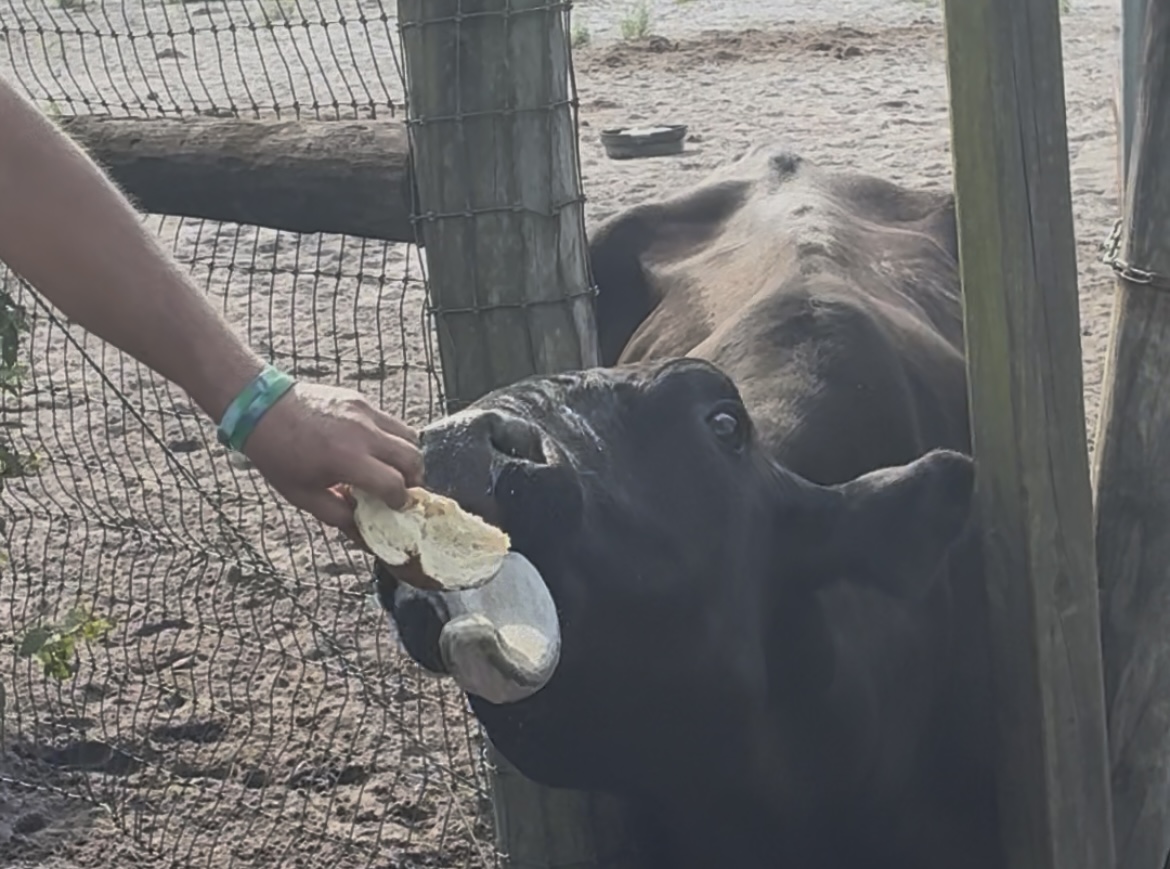
Immersions like this one matter because they push us out of the classroom and into the messy, complicated reality of the world we’re studying. They remind us that ethics isn’t just theory, it’s practice and sometimes that practice looks like a shovel, a barn, and a cow with a really long tongue.
The opinions on this page do not necessarily reflect those of The Sandspur or Rollins College. Have any additional tips or opinions? Send us your response. We want to hear your voice.






Comments are closed.