
The Rollins College Department of Environmental Studies hosted a screening of the documentary “River of Grass,” marking the film’s Orlando premiere and launching a “four-part series that explores the human-nature connections in Florida ecosystems.”
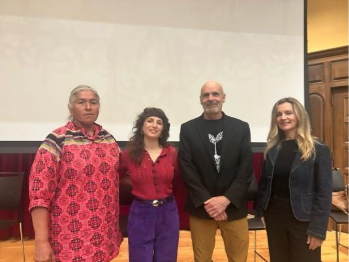
The screening was followed by a panel discussion featuring, from left to right, environmental activist and educator Betty Osceola of the Miccosukee Tribe of Indians; film director Sasha Wortzel; Pulitzer Prize-winning author Jack Davis; and Friends of the Everglades executive director Eve Samples.
Released in 2025, “River of Grass” visualizes and reimagines environmentalist Marjory Stoneman Douglas’ 1947 book “The Everglades: River of Grass,” which “brought the world’s attention to the need to preserve The Everglades,” as well as transformed the public perception of the everglades from a worthless swamp into a vital and complex ecosystem.
Wortzel said the film aims to display her view of the Everglades, which she described as “vibrant, abundant, resilient and beautiful,” while also addressing environmental threats such as climate change and infrastructural development. She said one question throughout the filmmaking process was, “What is my responsibility as a Floridian who calls this place home?” The documentary encourages viewers to reflect on their relationship with Florida’s ecosystems, making a call for action.
Both the book and documentary explore the Everglades’ natural and human history, including Indigenous relationships to the land, conservation efforts, and the impact of development on the ecosystem’s wildlife and water systems. Douglas’ work highlighted the Everglades as an essential source of freshwater, and the panelists emphasized the urgency of protecting Florida’s limited water resources. “We need more people that are going to stand up for the Earth,” Osceola said. “We are water and other aspects of the environment. In order to save the environment, we have to advocate for it.”
Davis addressed concerns about increasing water consumption in Florida, including the impact of emerging industries such as artificial intelligence. “Florida is at a crisis for clean water,” he said, “to sustain the population that we already have, the last thing we need is more industries using our water.” He added that water conservation is a shared responsibility, encouraging people to stay informed and get involved with Everglades advocacy organizations such as Friends of the Everglades and The Everglades Foundation.
Samples urged attendees to remain engaged with advocacy and appreciation of our environment. “Don’t succumb to apathy,” she said. “When [you’re] immersed in the ecosystem, you’re forced to slow down and appreciate your surroundings. Just driving down is like watching a movie through your windshield,” said Davis.
The event drew Rollins and community members, creating a space for education, consciousness, and reflection on environmental stewardship.
As a follow-up to the screening, Rollins College will host an art and advocacy discussion on the Everglades on Tuesday, Feb. 10, 2026, at 6 p.m. at Mary Jean Plaza, featuring artists Samuel Tommie and Sister Robin Haines Merrill.
More information about the Distinguished Visiting Scholars and Artists Programs at Rollins College is available at https://www.rollins.edu/tpj-program/.







Comments are closed.