
In 2023, Senate Bill 266 was passed into law in the state of Florida. The stated aim of the bill is to “prohibit institutions from spending federal or state dollars on discriminatory initiatives.” Under the bill, this includes diversity, equity, and inclusion (DEI) programs.
According to Jerry Edwards, staff attorney at the American Civil Liberties Union (ACLU) of Florida, “This law weaponizes fear and vague standards to silence professors and erase important parts of history, culture, and lived experience from the classroom.”
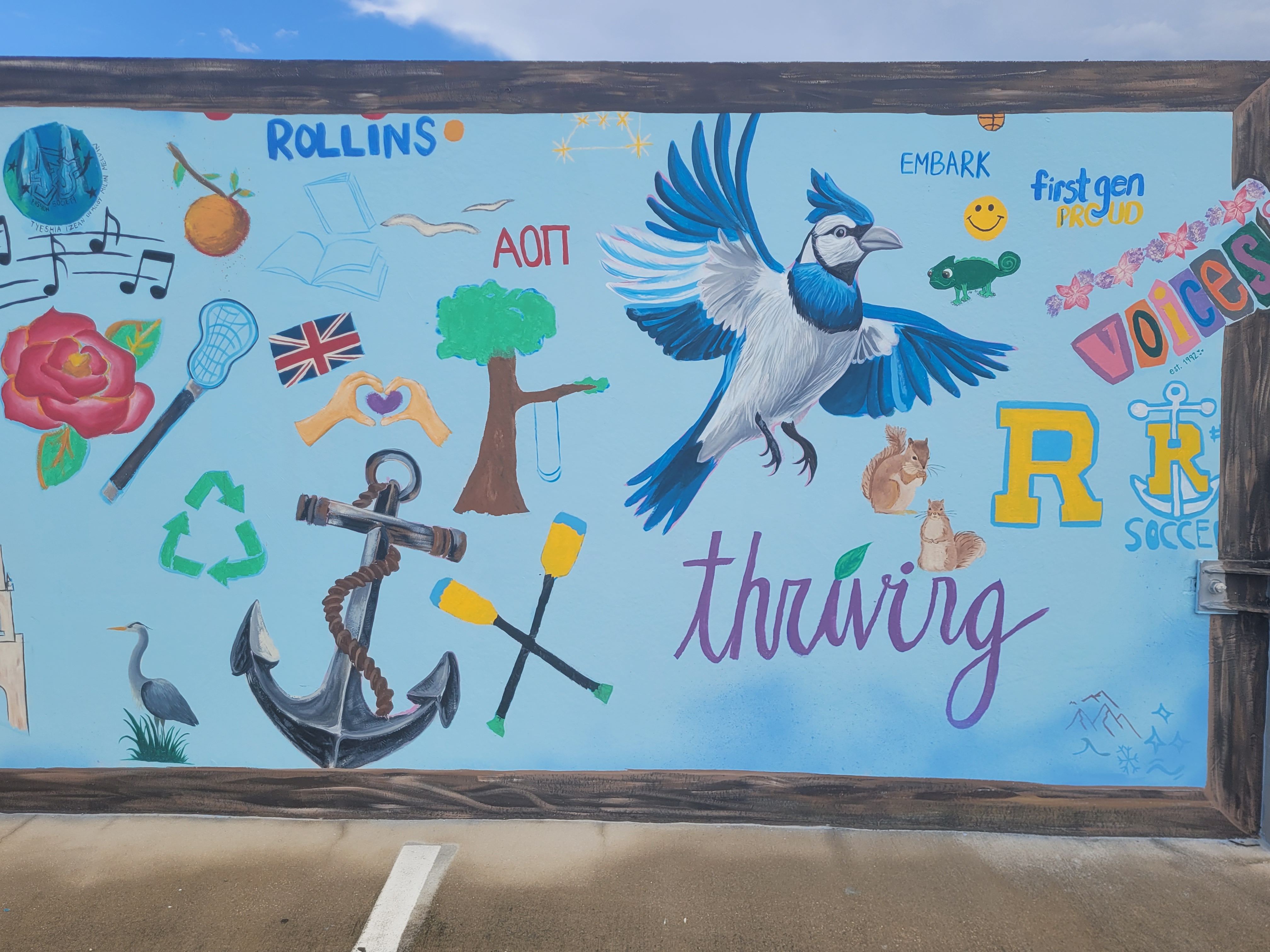
In response to the shifting political climate, last spring, Rollins College introduced the Thriving Together platform to be an illustration of the institution’s values.
What is the Nature of Thriving Together?
According to Marjorie Trueblood Ph.D., Dean of the Student Center for Community and Connection, Thriving Together is “an institution-wide effort to make sure that students, staff, and faculty from all kinds of backgrounds and experiences can find success here.” Trueblood acknowledges, “there’s going to be barriers, and as an institution, we still have an obligation to deliver on our promises for everyone.”
Trueblood discussed the importance of Rollins’ Intercultural Competency (ICMP) classes, which aim to “not just introduce students to diverse perspectives or diverse content, but to also help students dialogue across disagreement.” She also leans into the “golden rule” – treat others the way you want to be treated – and the “platinum rule” – treat others the way they want to be treated, which means discussion and connection.
Beyond a single program, Thriving Together links people to a variety of resources within the campus that aid academic and personal creation. These comprise accessibility services, the Office of International Student and Scholar Services (OISSS), the Student Center for Community and Connection, Religious and Spiritual Life, the Office of Title IX, the Wellness Center, the Student Support Foundation (SSF), the Office of Financial Aid, and Veteran and Military Services. Cooperatively, these bases make an outlet of care made to meet the demand for students going through school with variations of skills, cultural backgrounds, personal hurdles, and financial realities.
Thriving Together also relates to Rollins Employee Resource Groups (ERGs), voluntary faculty and staff-guided groups focused on collective experiences and identities. These involve EmpowHer (which supports women in the workplace), Prism (which promotes awareness of the LGBTQIA+ community), ¡Pa’lante! (which creates a community for Latin/Hispanic workers), and the Black/African Diaspora ERG (which celebrates the heritage of the Black and African Diaspora).
What Difference Does This Make Today?
Trueblood explains that Thriving Together is intended to keep the institution’s fundamental beliefs and allegiance independent from political influence. “Even in times of change, it’s important to reinforce that Rollins’ commitment to diversity and belonging is not negotiable,” she said.
Student groups have also been vocal about the significance of inclusion. Stella Stollings, President of the Rollins Pre-law Society, concurs: “We live in a time where laws around diversity and inclusion in school are changing very rapidly. It is important to have these groups actively working to keep everyone in the loop and make sure everyone can be involved.”
Rollins events – such as 100 Women Breathing, the annual community cookout, and culture fest – create opportunities for cultural interaction and connection across the community.
Toward the Future
Trueblood sees Thriving Together flourishing and fostering further involvement from the student body. “We want students to have a bigger stake in creating the programs,” she said. “It is only going to be successful if students are brought in. My hope is that they feel confident co-creating the community they want to be part of.”
For Stollings, that requires confidence and not being afraid to speak in difficult situations: “We need to be talking about advocacy, gender equity, disability equity, advocating for people of color and queer people in the legal system. If people are scared away by these topics, they are not the people we want leading the conversation.”
As educational and political climates evolve, Rollins remains devoted to promoting a thriving and diverse community. As Dr. Trueblood said, “Even through all the challenging things, we can make Rollins even better than what it is and have it be a space for all of us to thrive together – and because I believe it, I act like it can happen.”












Comments are closed.