
As educational attainment becomes a greater expectation for Americans, so too does the pressure to excel. Much pressure centers around attending college, demonstrated by how many high schools now have advanced programs. According to a 2024 report from the National Center for Education Statistics (NCES), 73 percent of schools for grades 9-12 offer at least one of the following: Advanced Placement (AP), pre-Advanced Placement (pre-AP), International Baccalaureate (IB), or dual enrollment.
On Oct. 29, 2025, The Sandspur sent a poll to be filled out by those who participated in college preparation programs. The survey asked about students’ experiences in these programs and asked them to reflect on how well they felt prepared for college. We received a total of 48 responses.
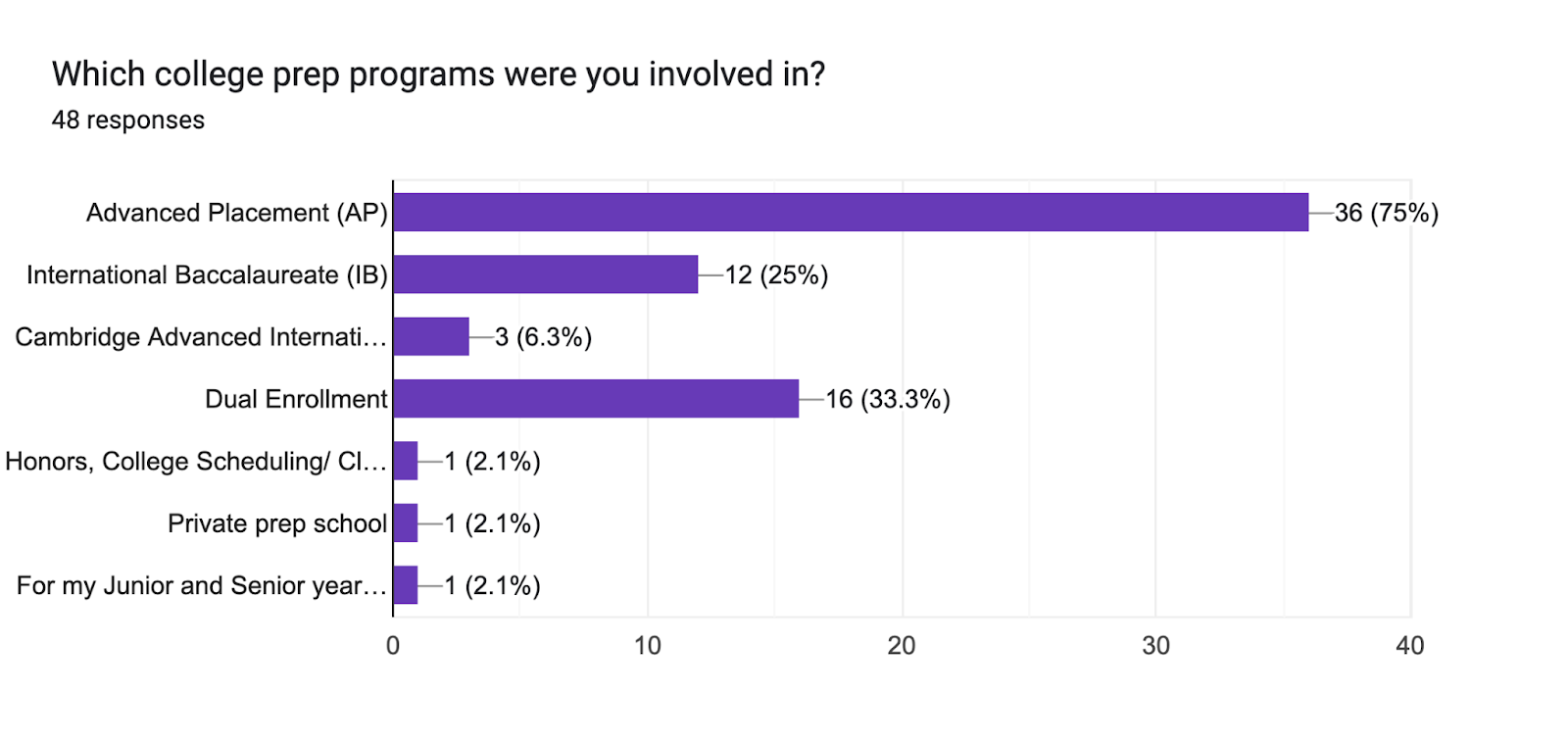
In terms of which program students participated in, 75 percent said they took part in AP, 25 percent said they participated in IB, 6.3 percent said they were a part of Cambridge Advanced International Certificate of Education (AICE), 33 percent reported involvement in dual enrollment, and just over 2 percent each said they were involved in honors, attended a private prep school, or took only college classes at a local university.
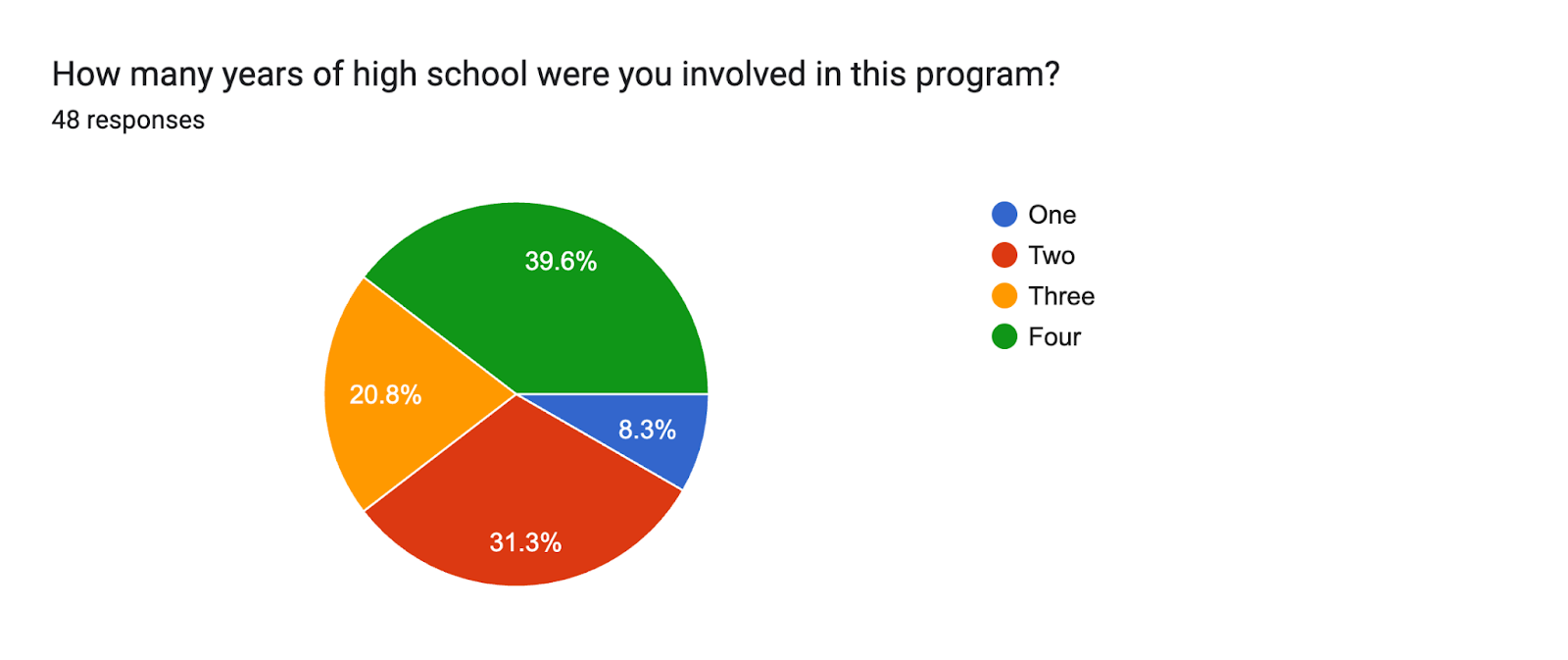
When asked how many years of high school they spent in these programs, almost 40 percent of respondents said they participated for all four years, roughly 31 percent said two years, close to 21 percent said three years, and about 8 percent said one year.
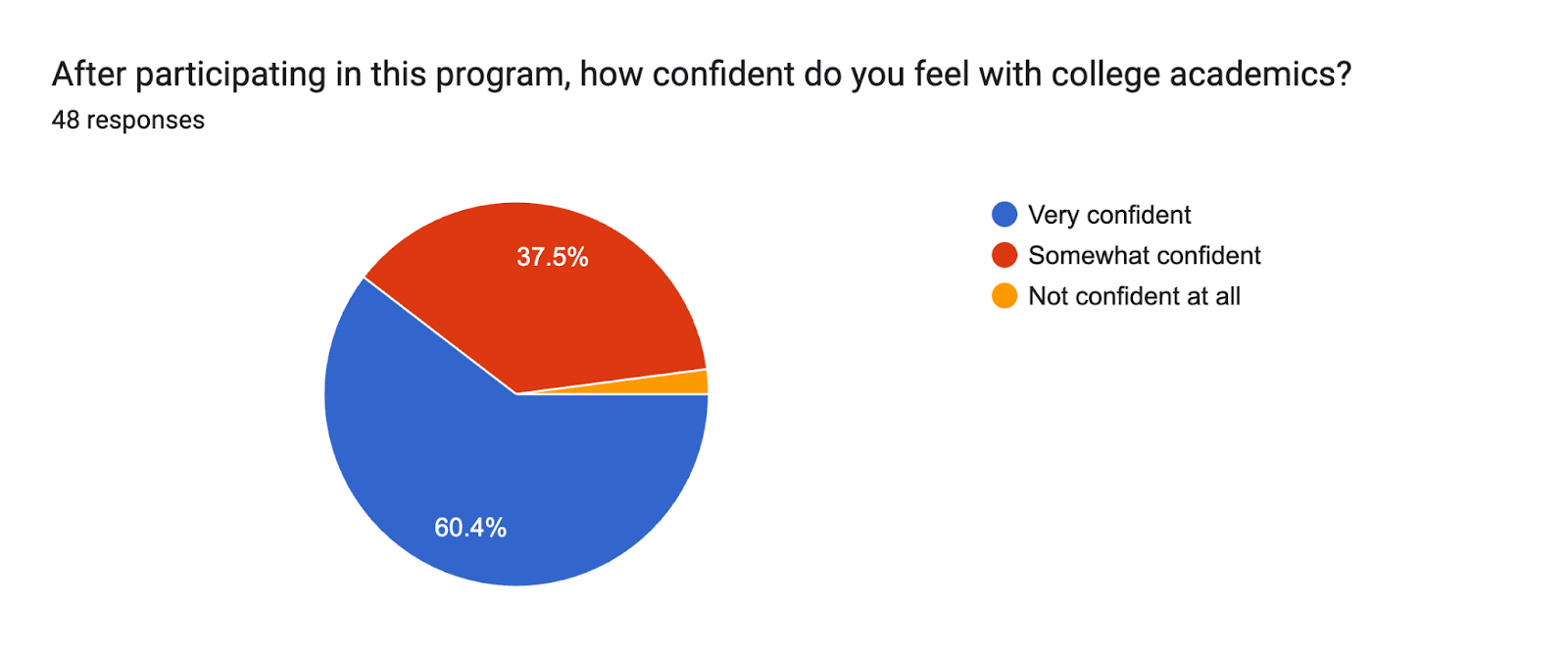
Asked to reflect on their levels of confidence with college academics after participating in college prep, over 60 percent of respondents said they felt very confident, just shy of 38 percent said they felt somewhat confident, and about 2 percent said they didn’t feel confident at all.
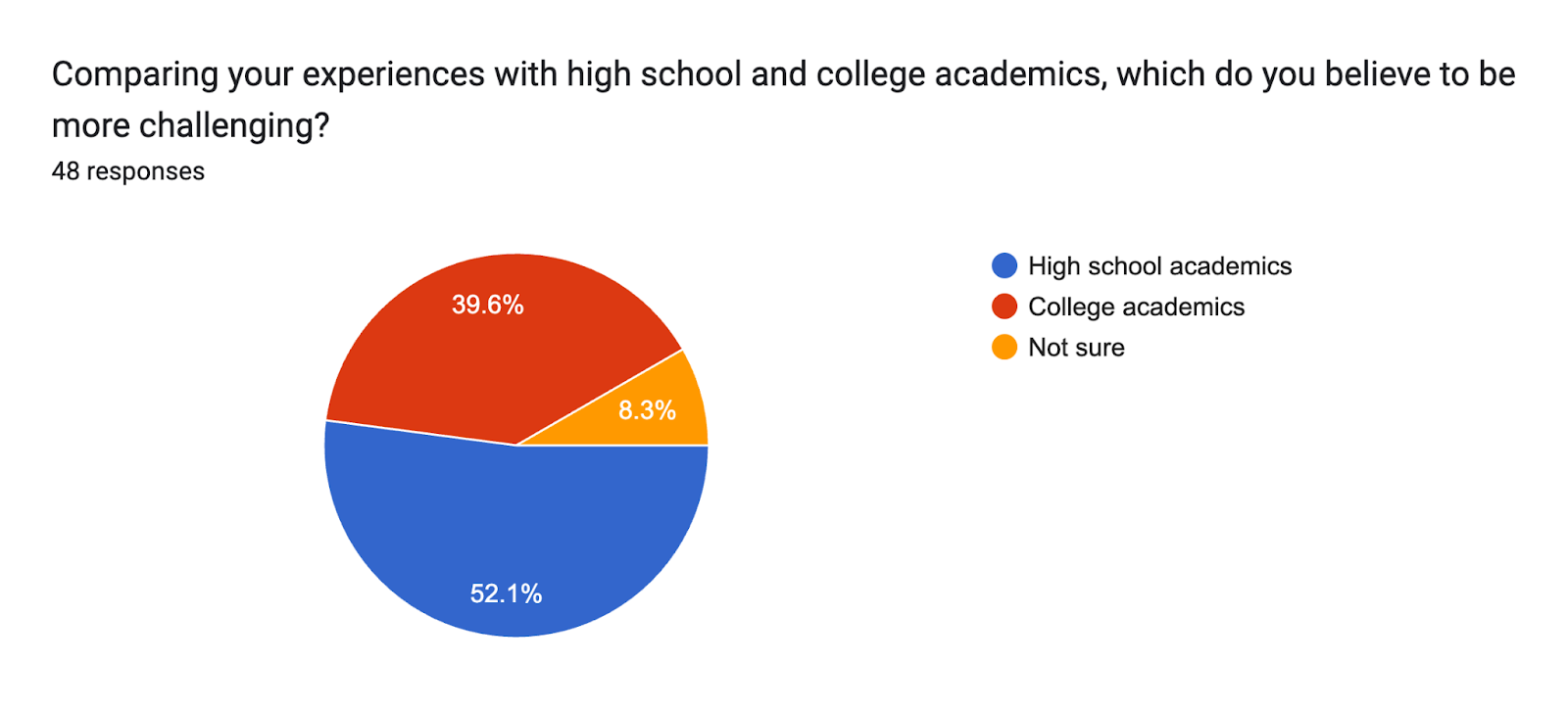
Comparing high school and college academics, just over 52 percent of respondents said they believed high school academics to be more challenging, while nearly 40 percent of respondents said college academics were more challenging, and about 8 percent were not sure.
At the end, students were given the option to comment on any part of their college prep program that they particularly appreciated or any part that they thought fell short in preparing them for college. In the comments, many respondents said that they felt prepared for college, particularly in terms of workload and writing. “I think taking five AP classes at a time, which I did junior and senior year, was frankly much much harder than college classes so far,” one student wrote. “I’m very grateful to have been prepared with high standards and large amounts of information to learn in short periods of time – it’s made my first semester worlds easier!” Another student commented on the IB Internal Assessment model. “It was like writing a mini-thesis paper for every course I took,” they said. “It prepared me for writing and research papers in college and is the reason I’m so confident in my writing abilities today.”
Other respondents pointed out that the programs they were involved in were not as helpful in preparing them for the differing structure of college. “They didn’t prepare me for how independent the work would be,” one student wrote. “You have to find the resources to keep yourself accountable.” Another student, focusing on AP, wrote that they “felt like the style of teaching for AP classes does not mimic how college classes are taught.”
We can use this survey to examine the benefits of college prep programs as helpful tools while also recognizing their drawbacks. While the majority of respondents found college prep programs in high school to be more challenging, the responses indicate that the prep programs left students underprepared for adjusting to the college lifestyle. This raises questions about how much a strong focus on academics in high school helps with long-term success, and whether such programs could also contribute to reduced confidence in other areas of the college transition.
In a future poll, it would be interesting to explore how students felt adjusting to college life outside the classroom, focusing on factors such as developing individual study schedules and acclimating to independent living.







Comments are closed.