
The first question every student encounters the first day back at Rollins is a predictable (and obvious) one: what did you do this summer? And for many of us, the answer each summer is also too obvious: either “I went home” or “not much.” The luckier or more adventurous recall traveling to a tropical paradise or working an internship abroad.
But what if you could do both?
This summer was Rollins College’s debut participation in the AIFS Abroad Costa Rica internship program. Four Rollins students and twenty interns from universities across the United States worked for Costa Rican companies selected by AIFS. As one of the four Rollins students, I was given the opportunity to work for FUNDEPOS, a graduate university offering business degrees for young entrepreneurs.
I learned about the internship program thanks to last year’s SGA Academic Affairs Chair, Charlie Curci (‘27), who invited other members to join the college’s weekly Curriculum Committee meetings. I decided to attend one week I was available, and the topic in discussion was the approval of the Costa Rica internship program. Upon the presentation of the program, I immediately recognized its benefits for me: complete my internship requirements for my major, gain an undeniably thorough study abroad experience, and maybe improve my Spanish along the way. Hence, I applied to the eight-week summer internship.
Before visiting Costa Rica, I will admit that I knew little about the country. Anyone can ask to learn about a place from former visitors, locals, or internet forums and encounter a thousand different opinions. But, as cringeworthy as it sounds, I realized there is only one way to find out: to go there.
Over the first weeks as we all settled into living in our new apartments, we began working at our internships. I was assigned my role with FUNDEPOS: to develop a program for potential study abroad students from the United States. How I would go about this was largely up to me, on the basis that I regularly checked with my supervisors on my progress and followed some guidelines. The students would need to spend time at Oikoumene, a campground and classroom on the slopes of Irazú Volcano. I would need to work with PROCOMER, an organization that promotes international trade between Costa Rica and the United States and has contacts in the education sector in both countries. For meetings with my supervisors and other FUNDEPOS employees, I would need to visit their office at Torre Mercedes in the capital or at Edificio Cooperativo in San Pedro – about ten minutes from where I was living. Edificio Cooperativo would prove to be a remarkably helpful locale for me, as I was able to meet with employees of a local political organization and attend a meeting of all the office’s constituent organizations.
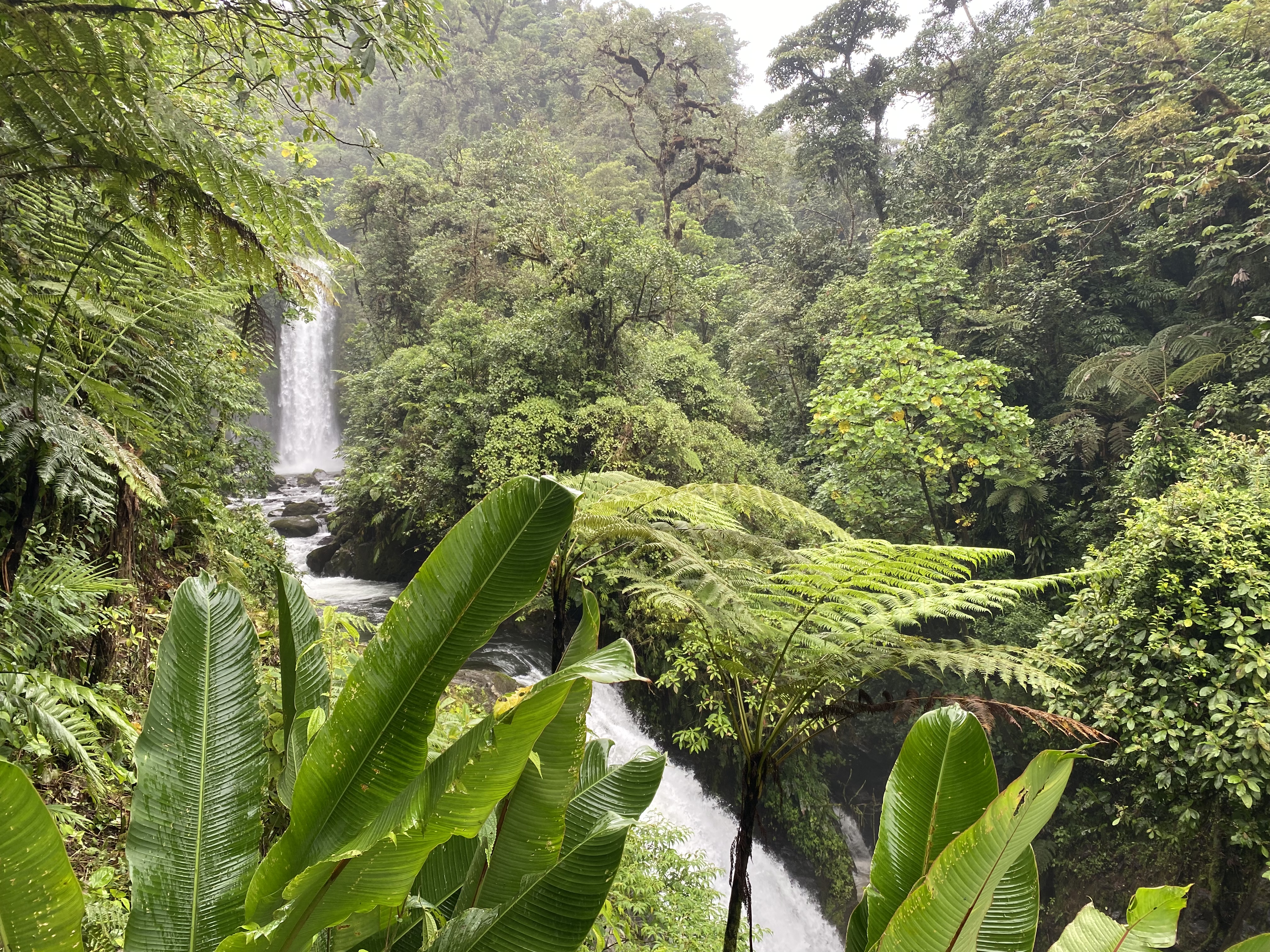
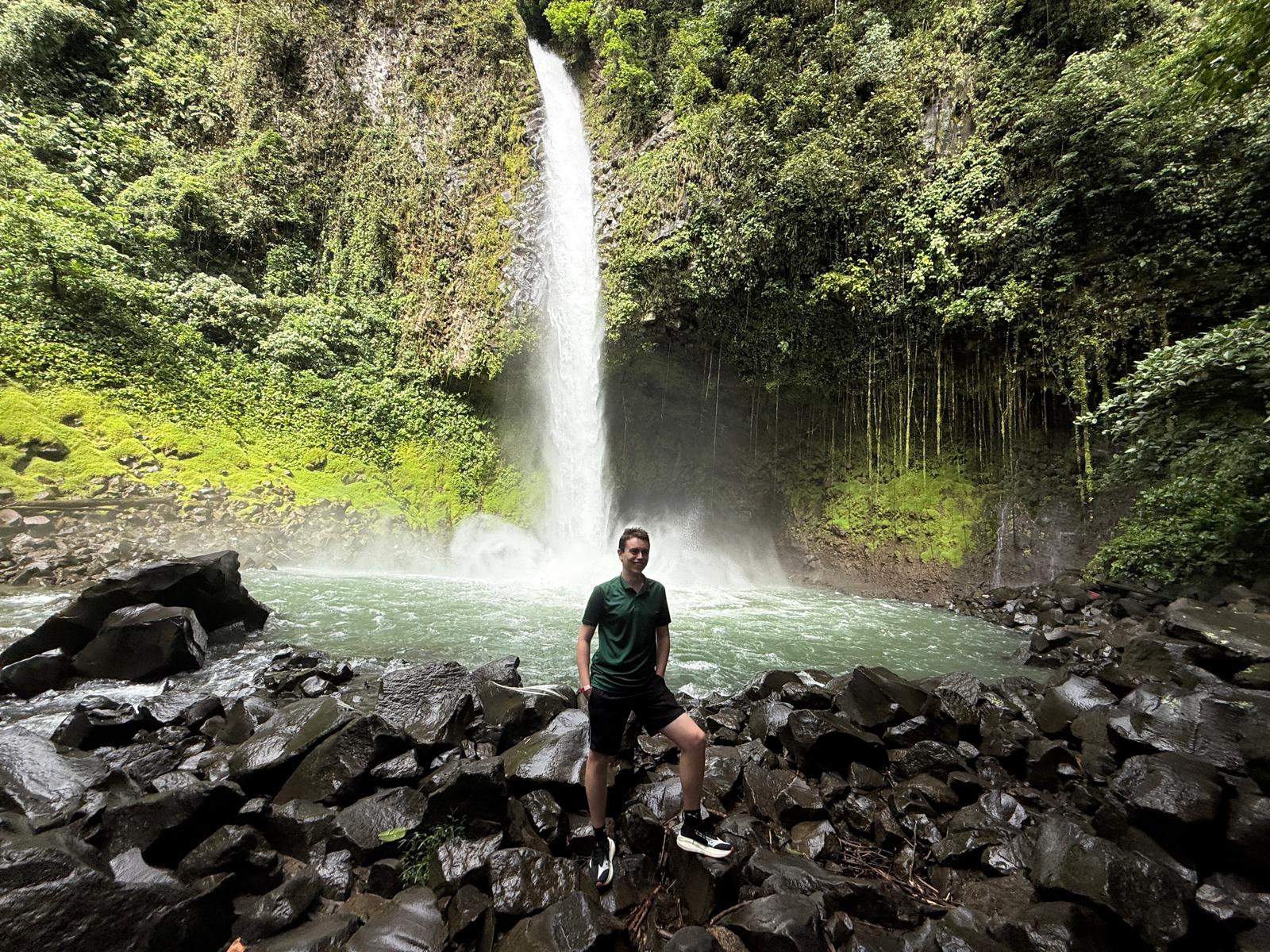
An early weekend excursion with the other interns, organized by AIFS, proved useful to my ultimate goal. We took a whistle-stop tour of northern Costa Rica, visiting La Fortuna Waterfall, Lake Arenal, and Monteverde, but with only a weekend before returning to work, there was only so much of each place that we could see. The trip left me wondering – what if a study abroad group had an entire week, or longer, to travel throughout the country and visit sites specific to what the group was studying?
When I returned to San José, I created a PowerPoint presentation and started my research. I divided study abroad students into three categories I believed would have the most interest in experiencing Costa Rica: the sustainability and ecotourism industry, the country’s history and culture, and the operations of local cooperatives.
Cooperatives are crucial to the Costa Rican economy because they enable workers of localized operations to hold collective ownership and therefore be fully represented in decision-making. For coffee producers that require land and processing facilities, cooperatives are a deal-breaker, as each coffee grower’s family owns a separate plot of land and receives $3-5 for each basket of coffee beans sold to the production facility.
As FUNDEPOS is a member of a cooperative, a cooperative-focused study abroad program was of particular importance to one of my supervisors, Jorge Campos. As for the other fields of study for which I developed itineraries, I chose sustainability due to its importance to American tourists who visit Costa Rica, and culture because I believe it is an underrepresented field in the country’s travel programming.
As work on my presentation progressed, I was able to see more of the country thanks both to plans made by all of us as interns and to events to which I had been invited by my direct supervisor, Sergio Navas. I was able to meet presidential candidate Natalia Díaz, swim in the beautiful but crocodile-infested waters of Manuel Antonio, ride the local buses, see the markets and museums of the capital, and visit the Legislative Assembly building for an AI conference. A high point came when I met with staff at United World College, a boarding school in the process of constructing a sustainable campus to accommodate high school and university students from more than a hundred countries. However, with local knowledge under my belt, I wanted to see one of the rural cooperatives personally before finalizing my study abroad itinerary. I chose a coffee cooperative in Hojancha, a small town on the Nicoya Peninsula of the country’s Guanacaste region. While there, I visited Coopepilangosta’s processing facilities for indigenous Matambú coffee.
After visiting Coopepilangosta, I decided to spend the afternoon at the Natural Reserve of Monte Alto. It is here that the increased altitude makes possible the cultivation of coffee, which needs moderated temperatures to flourish. I explored as much of the reserve as I could, including its brooks and waterfalls, extraordinarily diverse species of orchids, and steep mountain slopes surrounded by only rainforest and the raucous howler monkeys.
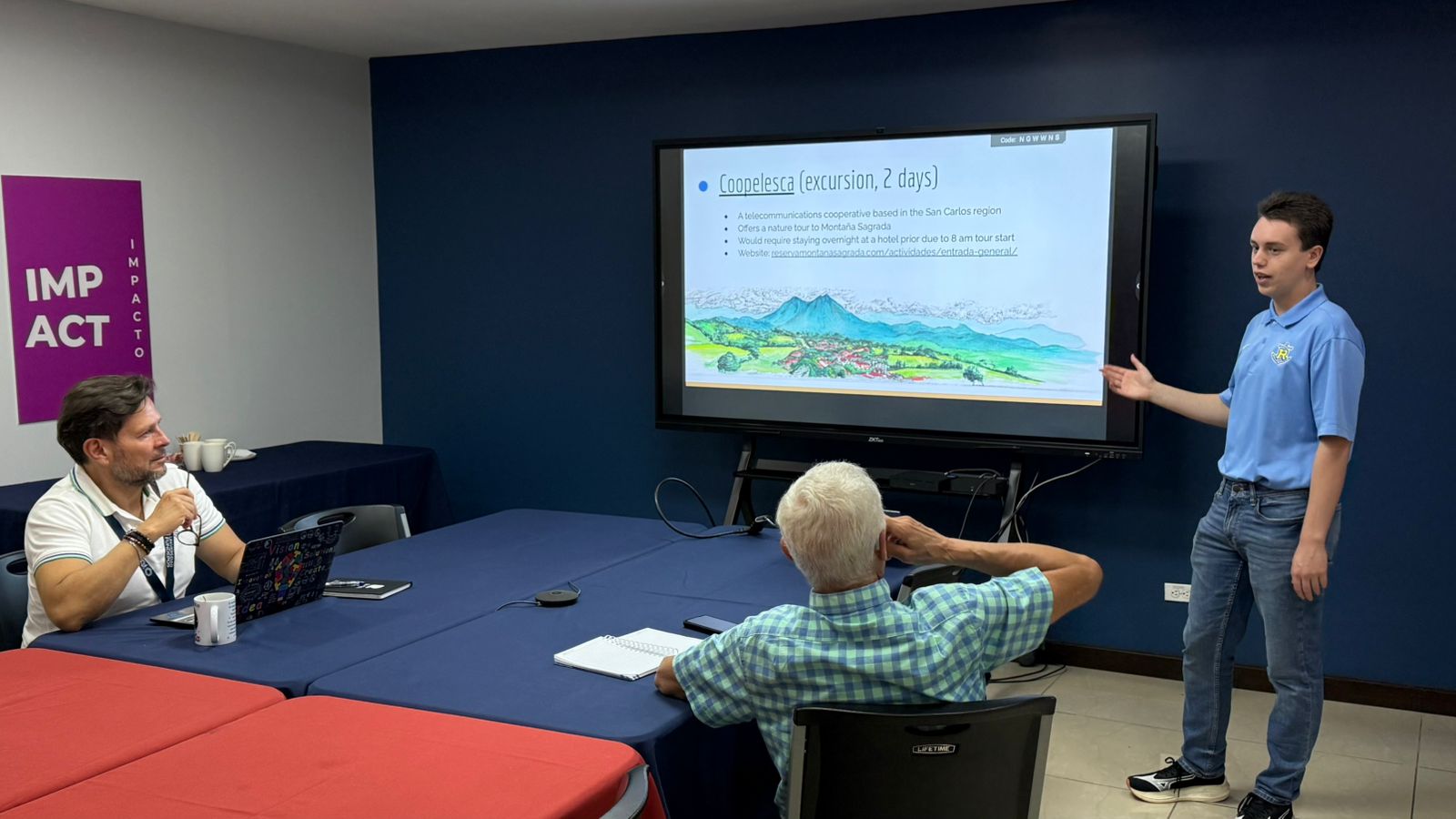
Upon returning to San José, I took advantage of my increased knowledge of the country’s diversity to complete my presentation. I formed two one-week itineraries – with consideration for modes of transport and travel times – for sustainability and history students, and a two-week itinerary for cooperative students. I took advantage of my photographs to add color to my presentation and made a one-pager of my best photographs to send to interested universities.
At the end of my internship, I realized that traveling across Costa Rica coupled with work experience abroad represented the culmination of a true learning experience. It brought to light a crucial component of the study abroad experience that students often fail to recognize – that to succeed, you must choose a place and a company that appeals to you and then take the opportunity to gain every thread of knowledge you can. Work with your bosses to go everywhere you can, learn from leaders, and open your eyes to the diversity of our world.
The opinions on this page do not necessarily reflect those of The Sandspur or Rollins College. Have any additional tips or opinions? Send us your response. We want to hear your voice.




Comments are closed.