
Sure, it can define cultures and be aesthetically pleasing, but can it create any real-world change? The short answer is yes, through arts activism.
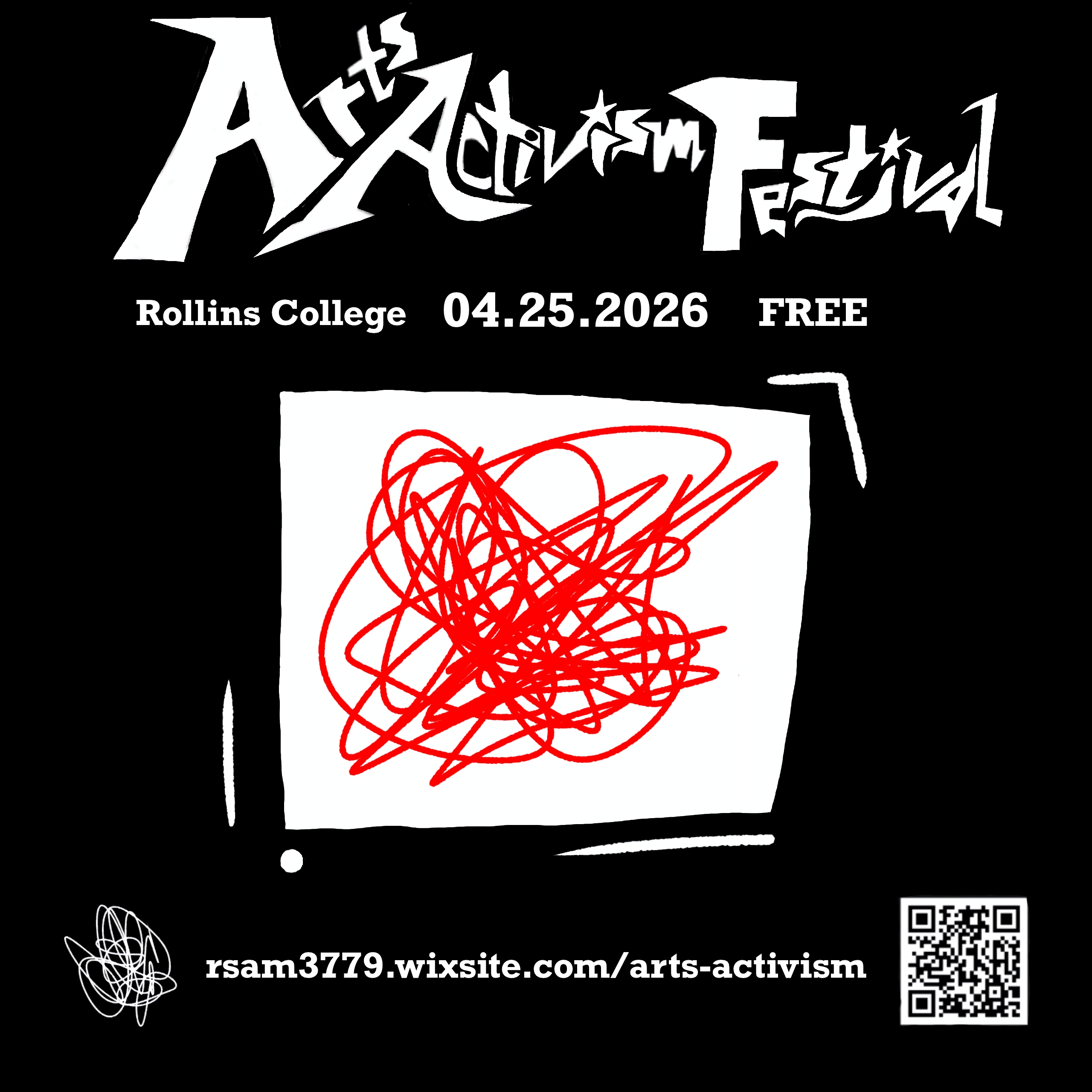
That’s what I’m trying to bring here to Rollins. The Arts Activism Festival that I am producing on April 25, 2026, will quite literally give the students of Rollins the stage to spotlight issues that matter to them.
For one day, we will have the opportunity to take over the Tiedtke Theatre & Dance Centre and tell our stories. The raw. The real. The important stories that shape us as human beings.
Everyone who wants to participate will have a place, whether that be performance, visual, music, fashion, or even a form of performance art — if you have an idea, we have a space for you. The only rule? It has to be based around a topic of importance, such as human rights, equality, or social norms. That’s it. No censorship. No jury. Just pure creativity.
What is Arts Activism anyway?
The Center for Artistic Activism defines this as “a dynamic practice combining the creative power of the arts to move us emotionally with the strategic planning of activism necessary to bring about social change.” To see how this works, let me break this up into the planning of activism and power of the arts.
The Planning of Activism
Bill Moyer describes four different roles of activists regarding planning a social movement: the rebel, change agent, citizen, and reformer. The rebel forces society to face its problems by showing how institutions and powerholders violate public trust by dramatic and nonviolent measures. An example of this could be protest demonstrations and can even be through political art, such as plays. Plays do this by raising awareness about issues, both current and historical, and building empathy toward others in the community. The change agent promotes citizen-based action in the broader society and can promote a paradigm shift, which fits into types of performances like Theatre of the Oppressed, which puts the spectator in the protagonist’s role and makes the spectator change the dramatic action, try out solutions, and discuss plans for change. The citizens are the ones who will be able to demonstrate a democratic society and vote on the change, which in the case of performance is the audience. The reformer works with official political and judicial structures to create and expand new laws and policies. A social movement needs all four roles in order to be successful. Arts, with three out of the four roles needed to advance social movements, can be the catalyst for change if we let it.
The Power of Art
The emotional movement of art is used to educate people through consciousness raising and building empathy and intimacy with a community. Empathy building through theatre is the most well-known and well-documented phenomenon. When we have to put ourselves in someone else’s shoes, it can make us connect to that person and people like them more.
Onstage, the most obvious way of consciousness raising is through historical work. Adrian Kear makes the argument that art shows the political by showing past historical events onstage.
Watching historical events onstage can show how the social conventions and ideological information of that time continue into the present day.
Of course, this isn’t just limited to the stage. The feminist movement used poetry for “giving a name to the ‘nameless’ forms of oppression” felt in women’s personal lives. It helped change what people thought of as political and made people understand that “the personal is political.”  by theatrical public demonstrations, such as “Die-ins,” and campy humor, such as “republican drag,” to spread awareness about AIDS. They also had a slew of flyers, artwork, and slogans, like the infamous “Silence=Death,” to accomplish this. These all work because arts activism makes the information more accessible to the masses and is often more effective than direct forms of political communication. It’s one thing to read manifestos and listen to political debates, and another thing entirely to peek into someone else’s life and their struggles with sexism or see chalk outlines and “dead” bodies at a die-in of those who might die from AIDS.who might die from AIDS.
Art can force you to look at the problem that everyone else is avoiding in ways that don’t require much language or background knowledge of policies and new terminology and can connect us to issues on a more human level. So why not be a part of putting that into practice? Head over to the website (rsam3779.wixsite.com/arts-activism) or Instagram account (@arts.activism.rollins) to see when drop-in hours are and other ways to get involved.
The opinions on this page do not necessarily reflect those of The Sandspur or Rollins College. Have any additional tips or opinions? Send us your response. We want to hear your voice.





Comments are closed.