
The Freshwater Alliance at Rollins (FAR), an organization on campus that monitors Lake Virginia’s water quality, is known by environmental science students for its participation in the University of Florida’s LAKEWATCH program. In July 2026, the alliance became the newest member in another program to check the lake’s health: installing a buoy in partnership with GLEON (the Global Lake Ecological Observatory Network) to share data on Lake Virginia with other lake scientists around the world.
The installation process began with a wooden crate that appeared in Olin Library during summer break. Kassy Holmes ’09, FAR’s program director, said, “We decided to drop the crate in Olin Library and see if students could guess what was inside.
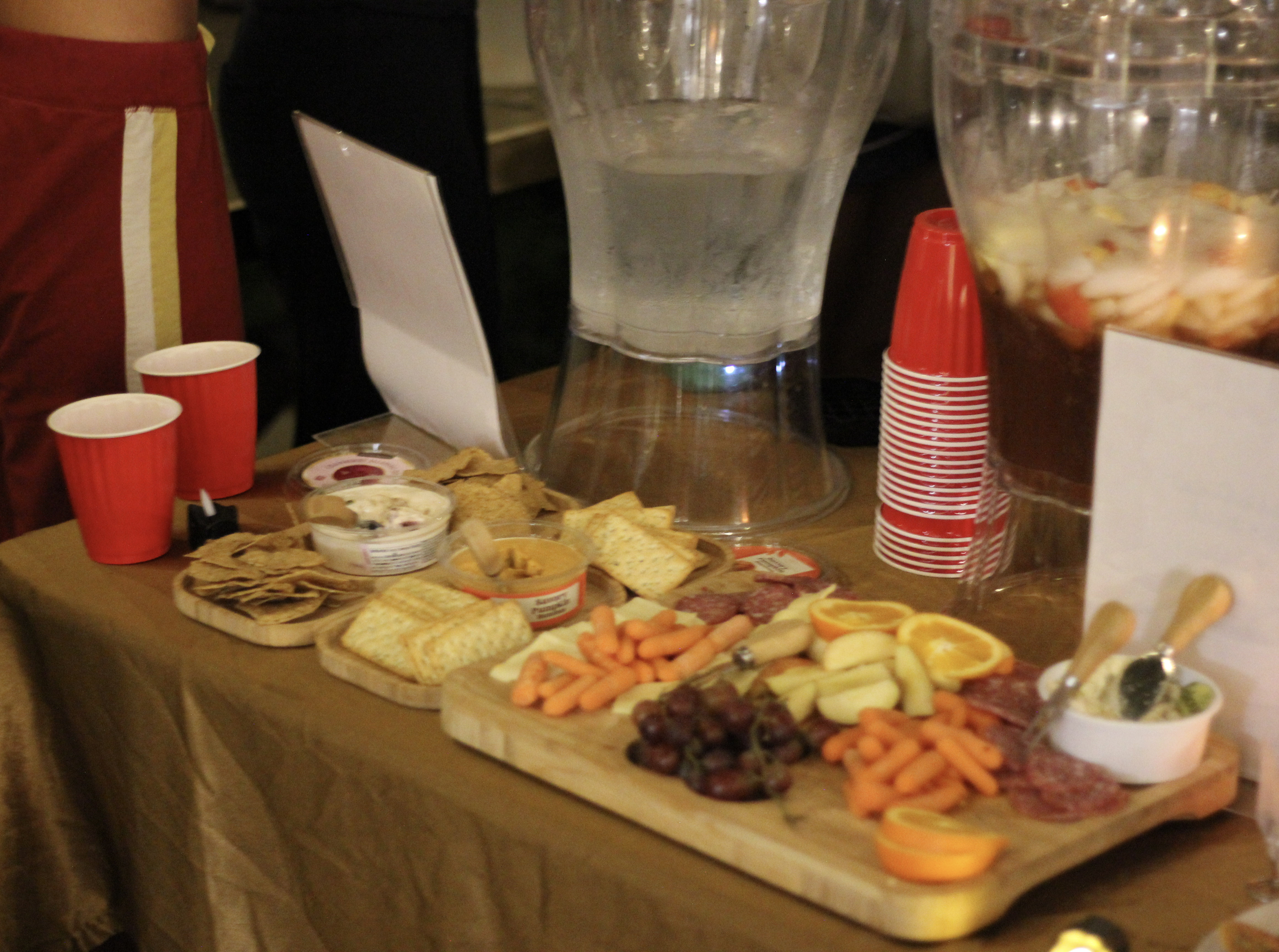
“But sitting in a crate is not its purpose! We wanted to get the buoy out as soon as possible.” Hence, FAR decided “to have an unveiling of the buoy, an unboxing party, during the summer break. People who wouldn’t normally be interested in lake monitoring did get interested in figuring out what was inside the crate.”
The buoy builds significantly on the foundation of data provided by the existing LAKEWATCH program.
“The main difference between what the buoy does and what LAKEWATCH does is that the buoy collects data 24/7, about every 15 minutes in real time. The LAKEWATCH data is collected only once a month,” Holmes said. “While the buoy is by far collecting more data, more often, it is supplemental to LAKEWATCH, which collects some data the buoy does not, such as nitrogen and phosphorus, which require lab processing. Both LAKEWATCH monitoring and the buoy contribute to a more robust and transparent data and information landscape regarding the health of Lake Virginia.”
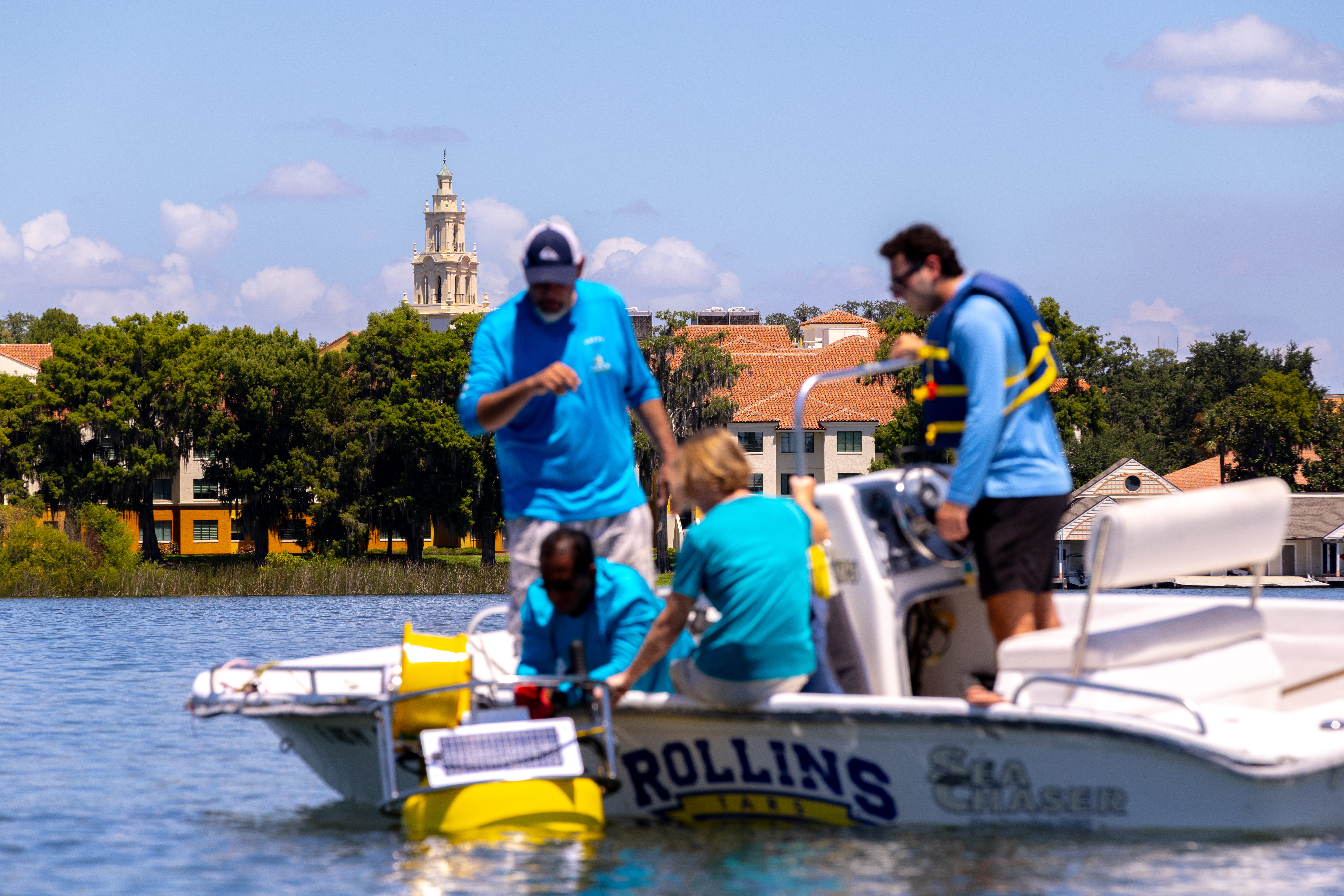
The number of participating buoys in the GLEON system globally remains low, however, with Rollins’ buoy marking 168, up from 12 when the program began in the early 2000s. FAR plans to continue monitoring Lake Virginia monthly through the LAKEWATCH program. That program, and other lake monitoring programs globally, measures changes to lakes through the trophic state system, which classifies all lakes into four states of “increasing biological productivity”: oligotrophic, mesotrophic, eutrophic, and hypereutrophic. The categorization was developed by Swedish scientists, but given Florida’s biodiversity and biologically diverse waterways, it proved an appropriate fit for classification by environmental scientists in Florida.
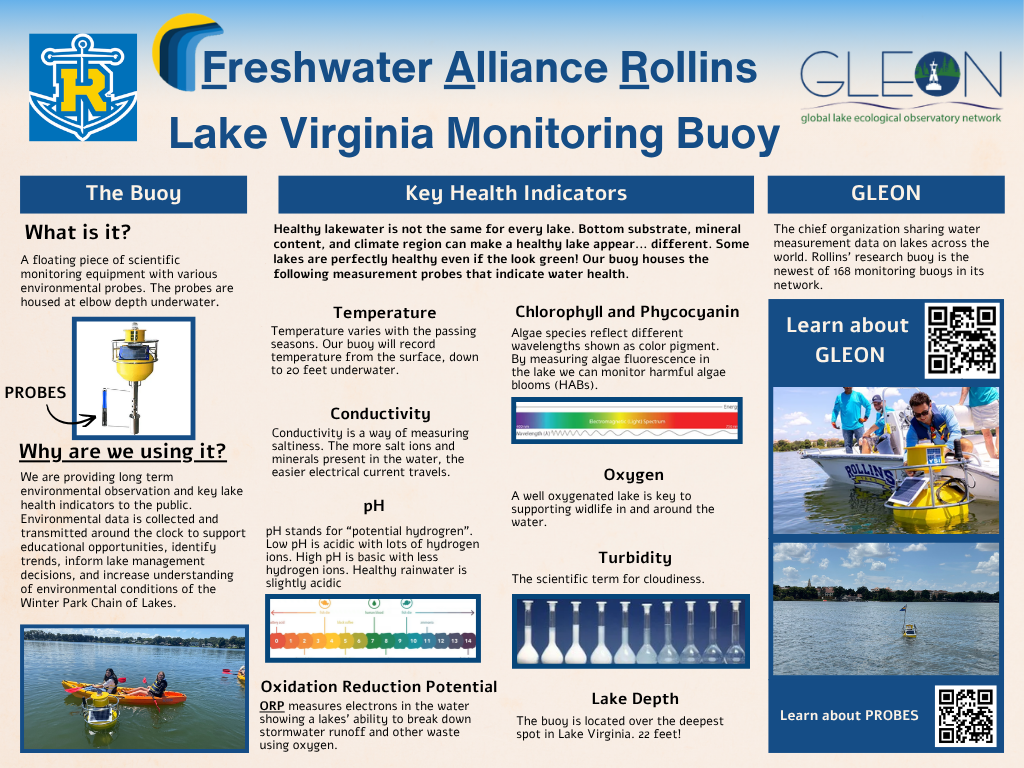
FAR has since installed a poster in Olin Library that details the functions of the buoy and the lake’s “key health indicators” that it measures, according to Matthew Dorsey ’27, a student employee of FAR and environmental studies graduate who is now pursuing an MBA at the Crummer School of Business. The poster explains which data points are used to understand the health of the lake, including water temperature, conductivity (saltiness), pH (acidity), oxygen levels, and turbidity (cloudiness).
Dorsey’s clarification to those unfamiliar with the trophic state system is that the shift in the lake’s state toward a mesotrophic lake “is not on a scale of whether the lake is getting better or worse.” According to Emily Nodine (Ph.D.), department chair of environmental studies at Rollins, “Trophic state is a complicated metric; it is what we call an ecological index, that consolidates a lot of different environmental variables into an easier-to-understand summary.”
Mesotrophic lakes feature relatively clear water and lower numbers of fish and aquatic plants compared to eutrophic lakes. The transition from eutrophic to mesotrophic, if the trajectory continues, could lead to the lake becoming more appealing to swimmers and kayakers. Water visibility of Lake Virginia could increase by about five feet relative to eutrophic levels.
The causes of the lake’s increased clarity–and reduced biological productivity–are harder to identify than the symptoms. Dorsey said it is “potentially due to homeowners using fewer pesticides and chemicals: such as nitrogen fertilizers followed by stormwater runoff.” Alternatively, “it could be caused by changes to the vegetation in and around the lake itself,” though Dorsey stresses that neither constitutes a definitive answer, according to FAR’s research thus far.
Following the installation of the buoy, FAR hopes it will better understand how conditions regarding the health of the lake change during severe weather events. Holmes and her colleagues at FAR “hope to receive data during a severe thunderstorm or a hurricane and engage the public” on how weather events may or may not affect the lake.
In the meantime, FAR is running a competition inspired by the naming process for Martian rovers to allow Rollins students to suggest names for the buoy. The winner “will receive a $50 gift card to the Rollins spirit store,” according to the Qualtrics form where students can enter a possible name.


Comments are closed.